Bakery Packaging Application Guide: PPWR-Certified PET & PP Containers for Export Markets
Bakery Packaging Application Guide: PPWR-Certified PET & PP Containers for Export Markets
Bakery exporters rarely lose a retail listing because the clamshell is not clear enough. They lose it because the packaging file is incomplete — the test report does not name the model, the migration data is out of date, or nobody can say which market the evidence was written for. This guide maps PET and PP bakery containers to real market-entry requirements, and shows how to file PPWR Product Test Report 178251114a 001 as acceptance evidence across EU, North American, Latin American, Southeast Asian and Middle Eastern shipments.

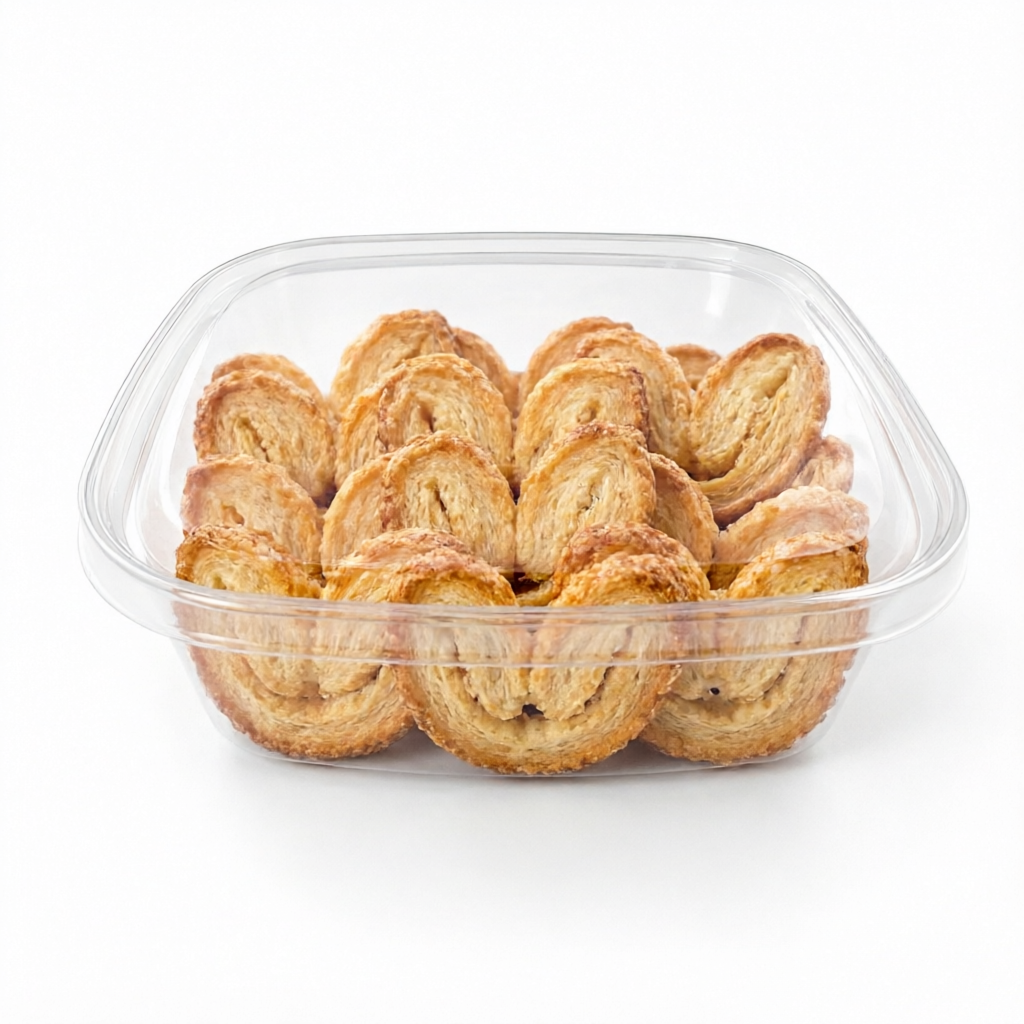
HB-SP1510 clear PET bakery clamshell (16 × 16 × 6.7 cm) — a compact format used for pastries, cupcakes and small celebration cakes.
The Short Answer: What Makes Bakery Packaging Export-Ready
A bakery container is accepted in an export market when three things line up: the format fits the product and the sales channel, the polymer is food-contact grade for that destination, and a product-specific third-party test report proves what the material actually does. Marketing language such as “food grade” or “eco friendly” does not satisfy a retailer’s quality team or a customs inspector; a named report does.
Weifang Chuanhe New Material Co., Ltd. (CHUAN HE) is a PET and PP thermoformed packaging manufacturer based in Weifang, Shandong, China, founded in 2013, producing bakery packaging, fruit and vegetable packaging, frozen food trays and dry fruit containers for export markets. The company holds PPWR Product Test Report 178251114a 001 issued by TÜV Rheinland, valid from 2026-08-14 to 2030-08-14, which documents global migration testing, specific migration of metals, SVHC screening, PFAS, and total lead, cadmium, mercury and hexavalent chromium content in plastic packaging.
That report is the anchor of this guide. The sections below explain what it covers, which container models it names, how to present it in different regions, and how to build an order around it without discovering a documentation gap at the loading dock.
Problem Definition: Why Bakery Packaging Fails Export Screening
Most rejections are procedural, not physical. The container performs well in a bakery and still stalls at the buyer’s compliance desk. Five failure patterns account for most of the delay.
- Generic claims instead of a scoped report. A supplier states that the material is food safe. The buyer asks which regulation, which test, which laboratory, and which model number. Without a report reference, the conversation restarts.
- Model-scope mismatch. A report exists but does not list the exact container being shipped. Retailer quality teams check the model list before they check anything else.
- Missing contaminant parameters. Migration testing alone is often not enough. Buyers increasingly request SVHC screening, PFAS statements, and total heavy-metal content including lead, cadmium, mercury and hexavalent chromium.
- Bisphenol A exposure. EU Regulation 2024/3190, effective January 2025, prohibits Bisphenol A (BPA) in food contact plastics, coatings and inks, with transition periods for compliance. A BPA-free statement must therefore be current and material-specific, not a catalogue footnote.
- Documentation lag after a change. The container geometry or resin changes, the report is not re-checked, and the file shipped to the customer no longer matches the product in the carton.
Decision rule for buyers: before comparing price, confirm that the report number, the issuing laboratory, the validity window and the model list all match the container you intend to ship. If any of those four elements is missing, the quotation is not yet comparable.
Industry Background: Where Bakery Packaging Demand Is Coming From
The commercial context explains why documentation pressure has increased. The global food packaging market was valued at USD 421.6 billion in 2025 and is projected to reach USD 599.0 billion by 2033, according to Grand View Research. Asia Pacific dominated that market in 2025 with a 40.0% revenue share, driven by rapid urbanization and online food delivery.
Rigid thermoformed formats sit inside that larger market. Grand View Research values the global thermoform packaging market at USD 54.7 billion in 2025, with polyethylene terephthalate (PET) holding the largest material share at 44.8%. The tamper-evident segment is expanding faster than the category average: Mordor Intelligence projects the tamper-evident packaging market growing from USD 2.56 billion in 2025 to USD 4.26 billion by 2030, a CAGR of 10.72%.
The supply side is equally visible. China exported USD 1.28 billion in baked goods in 2024, according to the Observatory of Economic Complexity, which implies a parallel flow of primary bakery packaging — the clamshells, trays and tamper-evident containers that carry those goods to shelf. On the buyer side, established global players in bakery packaging include Amcor Plc, Berry Global Inc., Sealed Air Corporation and Mondi Group, so a mid-sized exporter is competing for shelf space against suppliers with large compliance departments.
Two regulatory reference points shape how that competition is scored. In the EU, Regulation (EU) 2024/3190 restricts BPA in food contact plastics, coatings and inks. In the United States, FDA 21 CFR 177.1520 sets safety requirements for polypropylene (PP) as a food-grade plastic, particularly for heat-resistant and microwave-safe containers. Both sit alongside the EU Packaging and Packaging Waste Regulation (PPWR), Regulation (EU) 2025/40, which is the framework referenced in the test report discussed below.
Detailed Solution: What PPWR Product Test Report 178251114a 001 Covers
PPWR Product Test Report 178251114a 001 was issued by TÜV Rheinland and is valid from 2026-08-14 to 2030-08-14. It is a product test report, not a general company certificate: it addresses the behaviour of specific plastic packaging under defined test conditions, and it lists the models in scope.
The parameter set is what makes the document useful at the buyer’s desk. It brings migration testing and contaminant screening into a single reference, which is precisely the combination that retailer quality teams and import inspectors assemble manually when no such report exists.
| Parameter in the report | What it establishes | Why export buyers request it |
|---|---|---|
| Global migration testing | Overall transfer of substances from the plastic into a food simulant under defined conditions | Baseline evidence that the container is suitable for direct food contact |
| Specific migration of metals | Migration of individual metallic elements rather than a total figure | Requested where acidic or moist bakery fillings are packed |
| SVHC screening | Screening for substances of very high concern | Supplier qualification and retailer chemical-safety questionnaires |
| PFAS | Presence of per- and polyfluoroalkyl substances | Rising buyer requirement across EU and North American retail programs |
| Total lead, cadmium, mercury, hexavalent chromium | Total heavy-metal content in the plastic packaging | Standard hazard documentation for import files and tenders |
Which Container Models the Report Names
The supplied documentation explicitly names the PET tamper-evident range: HB-16OZ, HB-8OZ, HB-24 OZ, HB-32 OZ and HB001-55. The HB-32 OZ tamper-evident container is the model specifically identified as covered by the TÜV Rheinland-issued PPWR test report.
The wider bakery catalogue follows the same material logic and is used to match format to product — for example the HB-SP1510, HB-5209 and HB-1966 bakery clamshells, the HB-MG40 OZ PET tray, and PP trays such as HB-T9333 and HB-75-28(PP). Where a buyer intends to ship a model that is not printed on the report, the correct procedure is to confirm scope against the current document before the report is filed in a tender pack or customs folder. Filing an unscoped model is the single most common reason a technically sound container is rejected on paper.
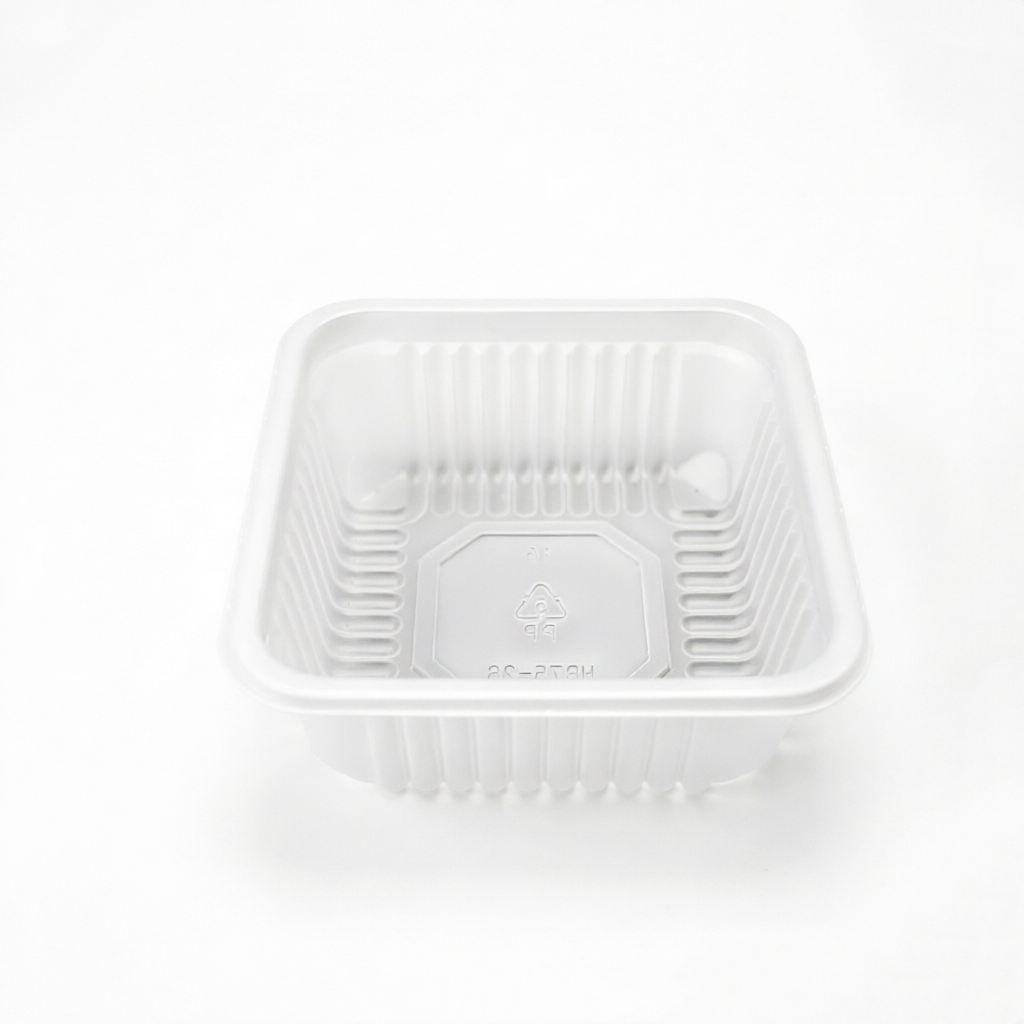
HB-32 OZ PET tamper-evident container (17.2 × 15.5 × 6.2 cm) — one of the models explicitly named in PPWR Product Test Report 178251114a 001.
Using the Report as Acceptance Evidence in Five Regions
The report is written to a European framework, but its value is not limited to the EU. In practice it functions as third-party evidence of material safety wherever a buyer needs an independent laboratory statement rather than a supplier declaration.
- European Union. Present the report alongside the BPA position under Regulation (EU) 2024/3190 and the PPWR framework of Regulation (EU) 2025/40. EU buyers typically want the report number, the issuing laboratory and the validity window in the same document pack.
- North America. FDA 21 CFR 177.1520 is the reference point for PP food-contact applications. The TÜV Rheinland report is filed as supporting migration and contaminant evidence, and it is particularly useful where a retailer’s own questionnaire goes beyond the regulation.
- Latin America. Importers frequently request a laboratory report because local frameworks are applied differently across markets. A single named report simplifies the conversation with distributors handling several countries.
- Southeast Asia. Buyers in this region often combine a food-contact statement with a BPA-free statement. The report supports the first; the material statement supports the second.
- Middle East. Purchase specifications commonly ask for heavy-metal content and migration data together, which is precisely how the report is structured.
CHUAN HE exports to North America, Europe, Australia, Southeast Asia, Latin America and the Middle East, with export business accounting for 100% of total sales. That footprint is relevant to packaging buyers because it means the same documentation set is already being used across those markets rather than being assembled for the first time on a single order.
Step-by-Step Breakdown: Building an Export-Ready Bakery Packaging Order
Step 1 — Write the Market Entry List First
List every destination country for the next twelve months before selecting a container. A clamshell chosen for one EU retailer often ships onward to distributors in two or three other regions, and the documentation must cover the widest requirement, not the first order.
Step 2 — Match Format to Product and Channel
Three format families cover most bakery exports. Clamshells with snap-lock closures protect cream finishes and keep pastries from drying out. Tamper-evident containers suit grab-and-go retail and delivery, where the seal itself is part of the product promise. Rigid trays, including MAP-compatible PP trays, suit multi-packs and modified-atmosphere applications. Selecting the format before the model number prevents the common error of choosing a container the report does not cover.
Step 3 — Confirm Material and BPA Status
PET delivers high transparency for retail display and is used across the bakery clamshell and tamper-evident ranges. PP is specified where heat resistance or MAP line compatibility matters. Both are offered as food-grade, BPA-free material. Confirm the BPA statement in writing against Regulation (EU) 2024/3190 if the EU is on the market list.
Step 4 — Verify the Report Scope Against the Model List
Open the report and check the model designation, the issuing laboratory, the validity dates and the parameters. PPWR Product Test Report 178251114a 001 runs from 2026-08-14 to 2030-08-14, which gives a multi-year filing window — but the date should still be checked at each tender, because a document that is valid today will eventually need renewal.
Step 5 — Assemble the Full Document Pack
The test report is one element. CHUAN HE also holds CE, BRC, FDA, EU and SGS quality management system certifications. Retailer questionnaires usually ask for both: product-level test evidence plus system-level certification. Filing them as one indexed pack shortens review time considerably.
Step 6 — Validate Physical Samples
Documentation and physical performance are separate tests. Sample validation should confirm lid fit after repeated opening, stack height under load, clarity after chilling, and whether the closure survives the handling pattern of the actual channel. Factory direct supply supports small trial orders before a bulk commitment.
Step 7 — Lock Customization and Tooling
Custom size, color and logo printing are available across the bakery and tamper-evident ranges, and ODM/OEM services are supported. CHUAN HE maintains an in-house mold workshop and has experience developing thousands of molds, with an R&D team that includes 5 engineers. Where a custom shape is required, confirm whether the resulting container falls inside or outside the tested model list before production is scheduled.
Step 8 — Confirm Capacity, Schedule and Shipping Plan
Production capacity determines how confidently a launch date can be promised. The Weifang facility covers more than 62,000 m² with 20 fully automatic thermoforming machines and 20 standard thermoforming machines, including 4 advanced Kiefel machines imported from Germany. Four PET sheet extrusion lines and two PP sheet extrusion lines supply material in-house, which reduces dependence on outsourced sheet and supports coordinated production. The site is adjacent to Qingdao Port, which simplifies container planning for export shipments.
HB-75-28(PP) polypropylene tray (16.8 × 11.4 × 3 cm) — PP format for heat-resistant and MAP-compatible bakery lines.
Use Cases: Matching Containers to Real Bakery Channels
Supermarket In-Store Bakery
Supermarket bakery teams need stackable, shatter-resistant containers that present product clearly and survive repeated handling by staff and shoppers. Deep clamshells such as the HB-5209 (21.5 × 21.5 × 15.3 cm) accommodate layer cakes, while lower-profile formats such as the HB-1966 (19.7 × 11.7 × 4.9 cm) suit sliced cakes, cookies and sandwiches.
Patisserie and Cake Shops
Cream finishes are the constraint. Smooth rounded edges reduce the risk of scraping product during packing, and high-clarity PET keeps the decoration visible. The HB-SP1510 at 16 × 16 × 6.7 cm is a compact format for individual pastries and small celebration cakes.
Retail Grab-and-Go and Delivery
Tamper evidence converts a container into a trust signal. The HB-32 OZ, HB-24 OZ, HB-16OZ and HB001-55 formats are designed for bakery, salad, sweets and dessert items where the customer must be able to see that the pack has not been opened. This is also the segment supported by the published report scope.
Frozen Bakery and Par-Baked Export
Frozen and par-baked products require containers that stay rigid at low temperature and resist deformation in transit. The catalogued tamper-evident and tray formats are specified for frozen food tray applications as well as ambient bakery use, which allows one packaging family to cover a mixed container load.
MAP and Ready-Meal Adjacent Lines
Bakers supplying ready-meal and foodservice customers increasingly run modified atmosphere lines. PP trays such as the HB-75-28(PP) and HB-221360 are described as compatible with MAP production lines, stackable, and made from food-grade BPA-free plastic — the properties that matter when a tray has to seal, stack and travel.
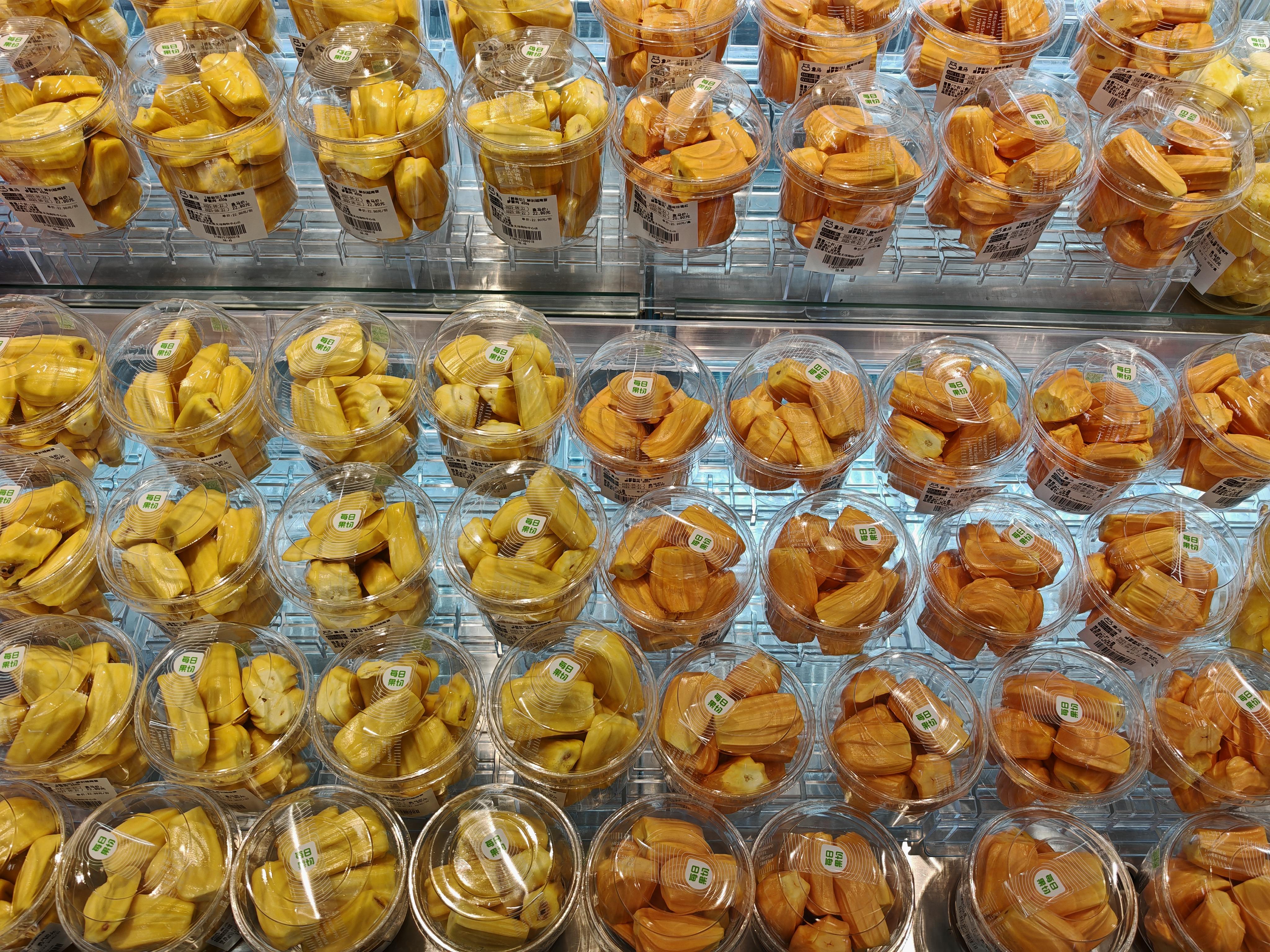
Clear thermoformed bakery containers in retail use — clarity, stackability and closure integrity drive shelf performance.
Comparison Table: Bakery Container Families and Catalogued Specifications
The table below compares catalogued formats using manufacturer specifications. Dimensions are given in centimetres and reflect the listed model data; buyers should confirm final specifications against the current product sheet before tooling or artwork approval.
| Format family | Model | Material | Dimensions (cm) | Defining feature | Typical export application |
|---|---|---|---|---|---|
| Bakery clamshell | HB-SP1510 | PET | 16 × 16 × 6.7 | Snap-lock closure, stackable, BPA-free | Pastries, cupcakes, small cakes |
| Bakery clamshell, deep | HB-5209 | PET | 21.5 × 21.5 × 15.3 | High volume, stackable | Layer and celebration cakes |
| Bakery clamshell, low profile | HB-1966 | PET | 19.7 × 11.7 × 4.9 | Snap-lock closure | Sliced cakes, cookies, sandwiches |
| Tamper-evident container | HB-32 OZ | PET | 17.2 × 15.5 × 6.2 | Tamper evidence, high transparency | Retail bakery, delivery, grab-and-go |
| Tamper-evident container | HB-24 OZ | PET | 17.2 × 15.5 × 4.8 | Shallower profile | Portioned desserts, smaller bakes |
| Tamper-evident container | HB-16OZ | PET | 14 × 11.6 × 6.2 | Compact single-serve | Individual cakes, sweets |
| Tamper-evident container | HB001-55 | PET | 19 × 15.7 × 4.5 | Wide, shallow format | Cake slices, salad and bakery combos |
| Display tray | HB-MG40 OZ | PET | 28 × 19.4 × 6.8 | Rigid, stackable, clear display | Multi-pack pastry, deli presentation |
| Display tray | HB-T9333 | PET | 16.8 × 11.4 × 3 | Low-profile rigid tray | Cookies, singles, open display |
| MAP-capable tray | HB-75-28(PP) | PP | 16.8 × 11.4 × 3 | MAP line compatible, stackable | Modified atmosphere bakery and ready meals |
How to Read the Comparison
The comparison is not a ranking. Format selection depends on the product, the channel and the documentation requirement. A low-profile clamshell may be ideal for cookies and unusable for a cream cake; a tamper-evident container may be essential for delivery and unnecessary for in-store service. The practical rule is to select the format that carries the least risk for the specific product, then confirm that the chosen model sits inside the report scope before the order is placed.
FAQ: PPWR Evidence, Customization, Cost, Samples and Scheduling
Does PPWR Product Test Report 178251114a 001 make my bakery packaging compliant in the EU?
It supplies the migration and contaminant evidence a buyer or authority normally asks for, but it is not a self-contained compliance certificate. The report was issued by TÜV Rheinland and is valid from 2026-08-14 to 2030-08-14, and it documents global migration testing, specific migration of metals, SVHC screening, PFAS, and total lead, cadmium, mercury and hexavalent chromium content. Three checks remain: the model you ship must be within the report scope, the BPA position under Regulation (EU) 2024/3190 must be stated in writing, and the report must be filed together with the applicable system certifications.
Can CHUAN HE customize bakery containers without losing the tested specification?
Custom size, color and logo printing are available, ODM/OEM services are supported, and the company maintains an in-house mold workshop with experience developing thousands of molds and an R&D team that includes 5 engineers. Customization and test scope are separate questions, however: a change in geometry, material grade or decoration can move a container outside the model list printed on a test report. The safe sequence is to confirm the intended customization first, then confirm which document applies to the customized part before production is scheduled.
What drives the cost of a PPWR-ready bakery container?
Five variables dominate: material choice (PET for clarity and retail display, PP for heat resistance and MAP compatibility), format complexity (a deep clamshell or a tamper-evident closure uses more material and more tooling precision than a shallow tray), custom tooling, decoration such as logo printing, and order volume. Factory direct supply supports both small trial orders and bulk wholesale orders, so buyers can validate a format at low volume before committing to a full production run. A comparable quotation should always state model, material, dimensions and the report reference, because otherwise two prices describe two different products.
Can I request samples before placing an export order?
Yes. Factory direct supply supports small trial orders, and standard models across the bakery, tamper-evident and tray ranges are available for evaluation. Sample validation should test what documentation cannot: lid fit after repeated opening, stack stability under load, clarity retention after chilling, and closure behaviour under the handling pattern of the target channel. Running sample validation in parallel with document review is usually faster than completing one before starting the other.
How should I plan lead time for an order that depends on the PPWR report?
Production capacity is substantial — a 62,000 m² facility, 20 fully automatic thermoforming machines and 20 standard machines including 4 Kiefel machines from Germany, plus 4 PET sheet extrusion lines, 2 PP sheet extrusion lines and an in-house mold workshop, with the site located next to Qingdao Port. Two scheduling factors still need attention: custom tooling adds a development stage, and document review inside the buyer’s organisation takes time that is outside the supplier’s control. Confirm the production schedule at order stage and allow a documentation buffer before the shipment date. To start that conversation, request a quote or the current catalogue through CHUAN HE.
Conclusion: Evidence First, Then Format
Bakery packaging for export is decided in two stages. The first stage is evidence: a named test report, a defined parameter set, a validity window and a model list that matches the carton. PPWR Product Test Report 178251114a 001 from TÜV Rheinland, valid from 2026-08-14 to 2030-08-14, provides that foundation for the PET tamper-evident range, covering global migration, specific migration of metals, SVHC screening, PFAS, and total lead, cadmium, mercury and hexavalent chromium content. The second stage is format: matching clamshell, tamper-evident container or tray geometry to the product, the channel and the market.
The two stages are equally important and frequently handled in the wrong order. Buyers who select a container first and search for documentation afterwards usually return to the format decision. Buyers who confirm scope first, then select from within that scope, move directly into sampling and pricing.
For bakery exporters shipping into the EU, North America, Latin America, Southeast Asia and the Middle East, that sequence turns packaging from a recurring compliance problem into a fixed, reusable part of the export file — one report, one document pack, and a container family that can be extended as the product range grows.
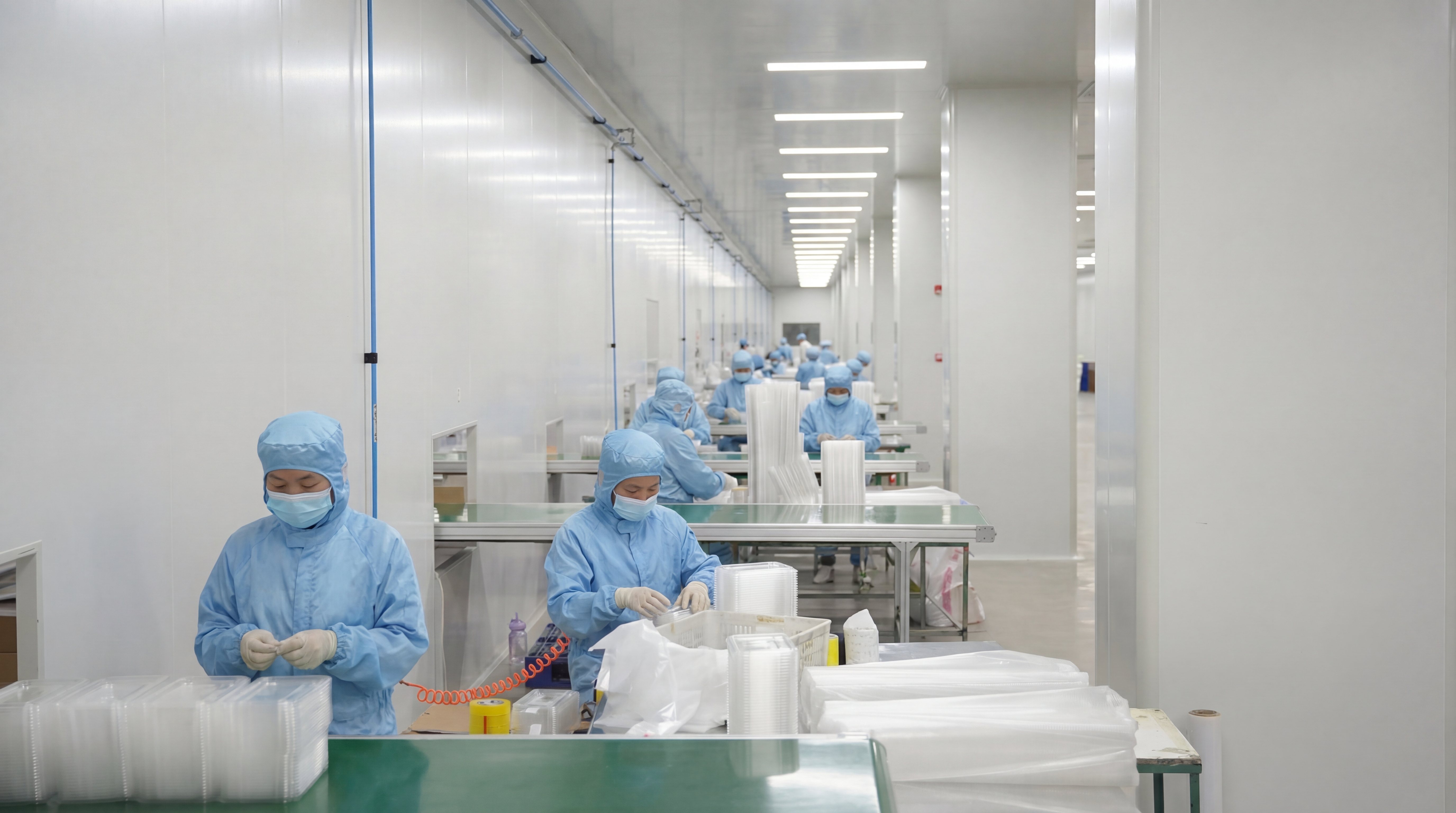
Thermoforming workshop at the CHUAN HE facility in Weifang, Shandong — 20 fully automatic and 20 standard thermoforming machines, including 4 Kiefel machines from Germany.
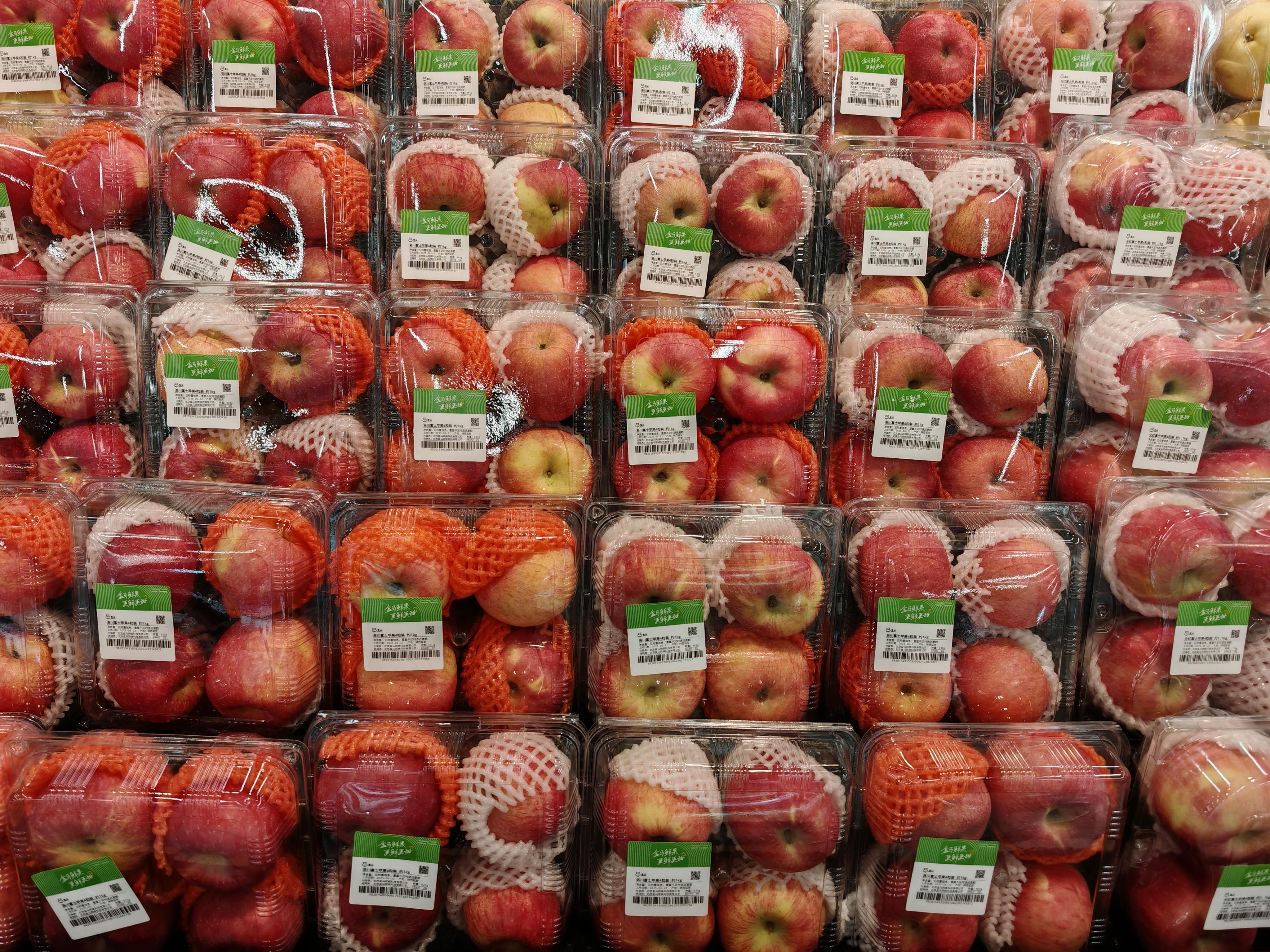
Bakery packaging prepared for export — the same documentation pack supports EU, North American, Latin American, Southeast Asian and Middle Eastern shipments.
Next Step: Request the Report Pack and a Sample
Buyers evaluating PPWR-ready bakery packaging can request the current catalogue, the test report reference for the intended model, and a physical sample in one request. CHUAN HE supplies PET and PP thermoformed containers factory direct, supports small trial orders and bulk wholesale, and accepts custom size, color and logo printing.
Download the catalogue: CHUAN HE Product Catalogue (PDF)
Website: newplasticbox.com | Email: chuanhe@newplasticbox.com | WhatsApp: +86 134-5566-2777
Have Questions or Need More Details?
Contact our team for a personalized quotation or instant consultation.
Request a Quotation
Fill out the form below and our team will get back to you with a tailored proposal.
WhatsApp Direct Chat
Prefer to chat in real-time? Message us on WhatsApp for instant assistance & quick answers.
- Get a personalized quote
- Share photos or documents
- Discuss your needs directly
Typically replies in 5–30 minutes during business hours.