
MAP-Ready Bakery Trays: PP Material, Sizes & Fit Guide
MAP-Ready Bakery Trays: PP Material, Sizes & Fit Guide
A bakery tray only earns the label “MAP-ready” when it survives a modified atmosphere packaging line without deforming under the sealing head, jamming a denester, or losing its seal geometry. In most cases the failure does not come from the film or the gas mix — it comes from the tray specification. This technical guide sets out the four parameters that decide whether a thermoformed tray runs cleanly on a MAP line: material, dimensions, structural rigidity and stackability, and customization. Two reference formats carry the discussion: the HB-1912 PP tray at 16.8 × 11.4 × 3 cm and the HB-75-28(PP) tray at 22.2 × 13 × 6 cm.
Both formats are produced by Weifang Chuanhe New Material Co., Ltd. (CHUAN HE), a manufacturer of PET and PP thermoformed packaging containers based in Weifang, China. CHUAN HE specializes in the innovative design and customized production of PET and PP thermoformed packaging containers, with main products in baking packaging and fruit and vegetable packaging. The company exports 100% of its output to North America, Europe, Australia, Southeast Asia, Latin America, and the Middle East, and holds CE, BRC, FDA, EU, and SGS certification. Its official site is newplasticbox.com.
Why MAP-Ready Tray Selection Goes Wrong
Tray problems on a MAP line trace back to three specification gaps, and all three are decided before a single tray is moulded: structural flex, stack and denest behaviour, and depth mismatch against the product envelope.
1. Structural flex under load
A tray wall that is not rigid enough distorts when the sealing platen closes. Distortion changes the geometry of the sealing area, and inconsistent geometry produces inconsistent seals. The specification to look for is not “thin wall” or “thick wall” but documented rigidity: both the HB-1912 and HB-75-28(PP) formats are listed with a rigid sturdy structure, an anti-deformation design intended to reduce goods damage during transit, and a food-grade BPA-free composition.
2. Stack and denest behaviour
Stackability is usually treated as a logistics feature — and it is, since a stackable design saves warehouse and retail display space. On an automated line, however, the same stacking geometry determines how trays separate in the magazine, how they accumulate at the outfeed, and how packed cases behave in a chilled distribution chain. A tray that stacks well on a shelf but denests inconsistently will still stop a line.
3. Depth mismatch
Depth is the parameter buyers most often under-check. A cavity depth of 3 cm and a cavity depth of 6 cm solve different problems, and the required headspace for gas flushing has to be added on top of the product height. Choosing depth from product footprint alone is the single most common cause of a failed trial.
Industry Background: Rigid Thermoformed Trays Inside a Growing Packaging Market
Demand for rigid food trays sits inside a packaging segment that continues to expand. The global food packaging market was valued at USD 421.6 billion in 2025 and is projected to reach USD 599.0 billion by 2033, according to Grand View Research. Asia Pacific dominated that market in 2025 with a 40.0% revenue share, driven by rapid urbanization and online food delivery — a demand pattern that pushes directly into ready-to-eat and takeaway tray formats.
The material picture is equally relevant to tray selection. The global thermoform packaging market was valued at USD 54.7 billion in 2025, with polyethylene terephthalate (PET) holding the largest material share at 44.8%, based on Grand View Research data. That figure is often misread as “PET wins”. What it actually shows is a large, material-diverse segment in which more than half of the volume sits with materials other than PET — including PP. Material choice in this market is driven by application fit, not by a single dominant polymer.
Bakery volume on the demand side reinforces the same point. China exported USD 1.28 billion in baked goods in 2024, according to the Observatory of Economic Complexity (OEC) — primary bakery packaging demand follows exported bakery production, and a large share of that packaging is rigid thermoformed trays and containers.
Regulation now sits alongside volume as a selection criterion. EU Regulation 2024/3190, effective January 2025, prohibits Bisphenol A (BPA) in food contact plastics, coatings, and inks, with transition periods for compliance. In the United States, FDA 21 CFR 177.1520 specifies the safety requirements for polypropylene (PP) as a food-grade plastic, particularly for heat-resistant and microwave-safe containers. For a buyer, this means “food grade” is no longer a marketing phrase — it is a documented entry condition, and the material declaration has to be part of the tray specification.
The Material Answer: Why PP Fits a MAP Bakery Tray
PP earns its place in MAP tray work for three practical reasons: it has a defined food-contact regulatory framework, it supports the rigidity that automated lines demand, and it can be produced in a clear, retail-visible format.
- Defined food-contact framework. FDA 21 CFR 177.1520 sets the safety requirements for polypropylene as a food-grade plastic, including heat-resistant and microwave-safe applications. This gives PP a clear compliance reference for US-facing projects.
- Rigidity where the line touches the tray. CHUAN HE’s tray range is documented with a rigid sturdy structure, an anti-deformation design, and food-grade BPA-free plastic compliant with food contact safety standards — the properties a MAP line actually tests.
- Retail visibility. The HB-1912 is specified as a clear display tray and the HB-75-28(PP) as a clear transparent tray, described as delivering an excellent visual effect for supermarket sales. Transparency is a fit criterion, not a decoration: it decides whether the tray can carry a bakery product onto an open retail display at all.
One boundary worth stating honestly: PP is not the only correct answer in this category. PET holds the largest material share in the global thermoform segment at 44.8%, and CHUAN HE runs both material systems in-house — 4 PET sheet extrusion lines and 2 PP sheet extrusion lines. PP is the right specification when the tray has to combine rigidity, stackability, MAP-line compatibility, and BPA-free food contact in a tray format; PET remains relevant where maximum clarity or clamshell geometries are the priority.
The Size Answer: HB-1912 at 16.8 × 11.4 × 3 cm and HB-75-28(PP) at 22.2 × 13 × 6 cm
Two standard formats cover most bakery tray enquiries, and their published dimensions are the starting point for any fit calculation.
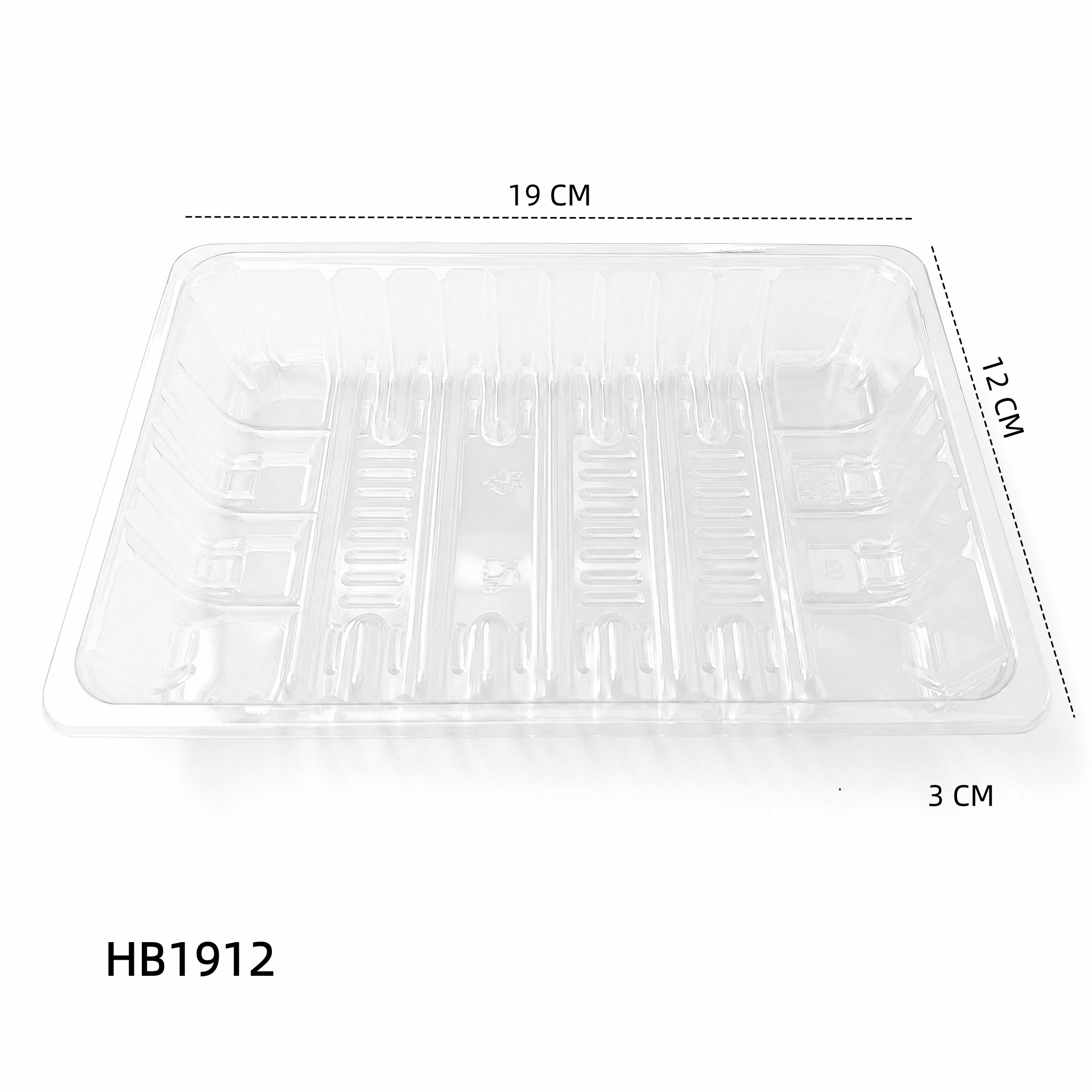
HB-1912 — 16.8 × 11.4 × 3 cm, PP
HB-1912 is a food plastic tray from the trays packaging category, made of PP (polypropylene) with overall dimensions of 16.8 × 11.4 × 3 cm. It is available as a clear display tray, compartment tray, meat tray, MAP packaging tray, bakery tray, and produce tray. The tray features a stackable design, a rigid sturdy structure, and compatibility with MAP modified atmosphere packaging lines, and it is made from food-grade BPA-free plastic. Intended users include produce wholesalers, supermarket chains, agricultural exporters, bakeries and food retailers, and e-commerce brands.
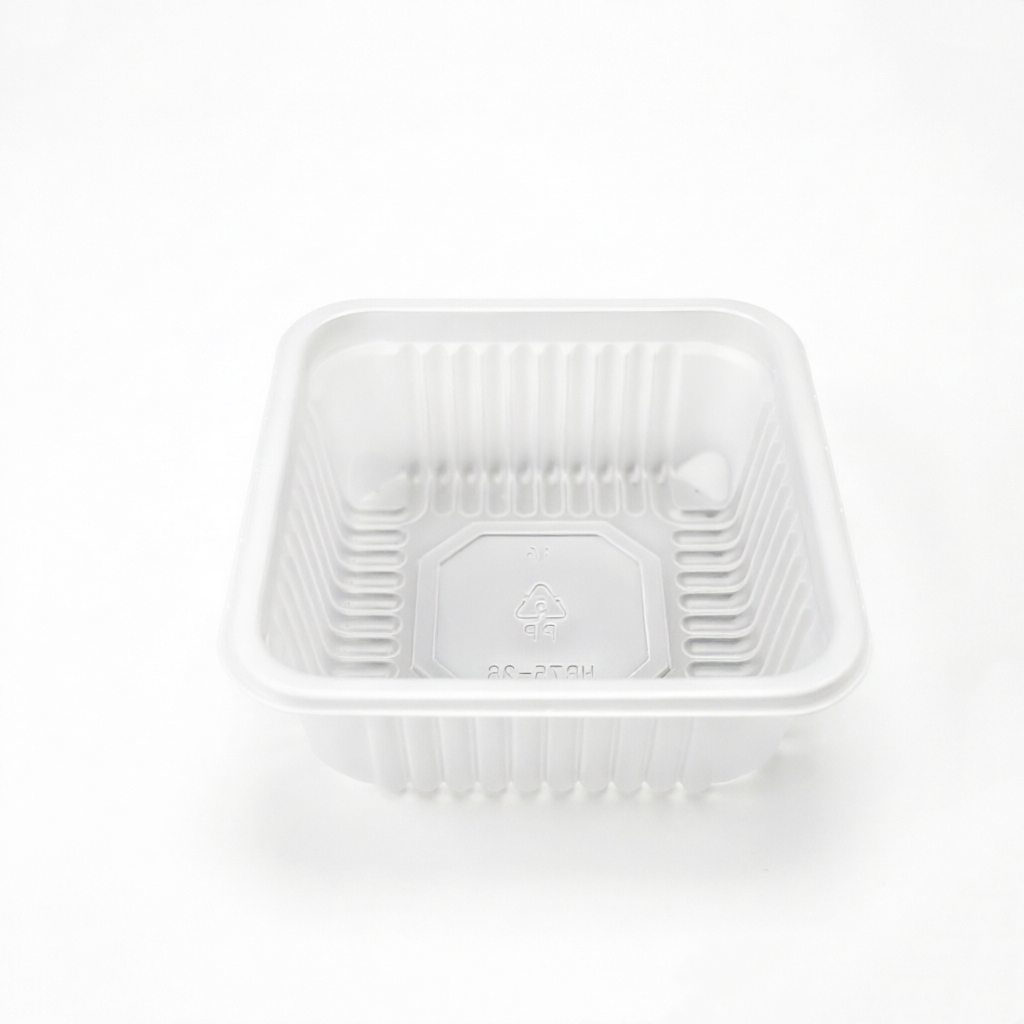
HB-75-28(PP) — 22.2 × 13 × 6 cm, PP
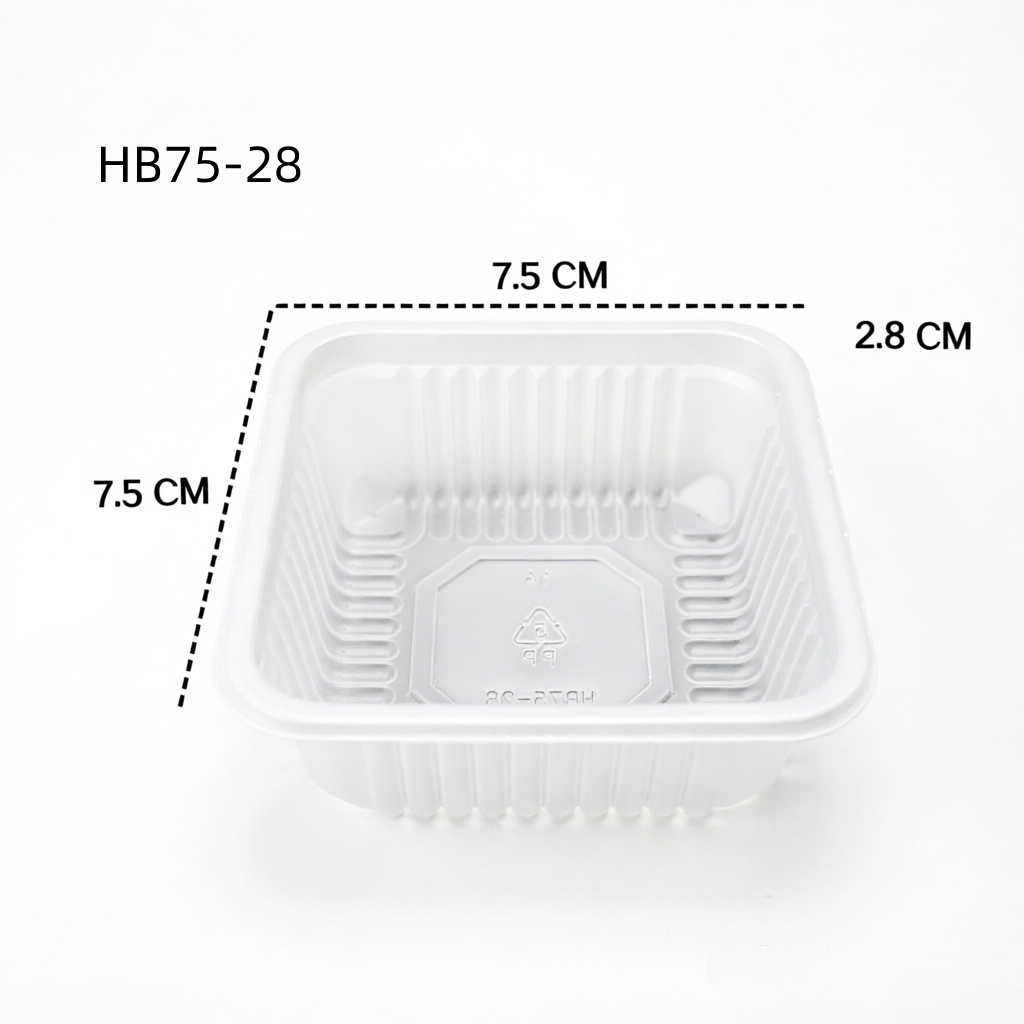
HB-75-28(PP) is a food plastic tray packaging with overall dimensions of 22.2 × 13 × 6 cm, classified as a meat tray, bakery tray, and produce tray. It is intended for supermarket chains, produce wholesalers, and other food industry clients. The format is clear transparent with a stackable design, uses food-grade BPA-free plastic, is compatible with MAP production lines, and offers customization options for shape, color, embossing, and logo printing.
How to choose between the two
Footprint sets the loading pattern; depth decides what can physically be packed. The 16.8 × 11.4 cm footprint at 3 cm depth is a low-profile format suited to single-layer bakery items and compartment presentations, where a shallow cavity still allows the headspace needed for gas flushing. The 22.2 × 13 cm footprint at 6 cm depth adds both floor area and vertical room, which is what taller or layered products require — and it also suits the same tray range’s documented use for meat, poultry, and ready meals, allowing one tray family across several production lines. In both cases the rule is the same: take the maximum product height, add the headspace your gas mix and sealing process require, and let that number select the depth.
The Fit Answer: Rigidity, Stackability, and Line Behaviour
Fit is where a datasheet becomes a decision. Four behaviours determine whether a PP tray will actually run on a given MAP line, and each one maps to a documented property of these formats.
- Denesting consistency. The tray must separate reliably and repeatably in the magazine at line speed. This is governed by wall geometry and stack design — the HB-1912 and HB-75-28(PP) both use a stackable design, which is the same geometry that saves warehouse and retail display space.
- Form retention through sealing. The tray must resist deformation under sealing pressure so that the sealing area stays geometrically consistent across the run. Both formats are specified with a rigid sturdy structure.
- Dimensional stability in chilled distribution. Anti-deformation behaviour is documented for the tray range as a means of reducing goods damage during transit — the same property that keeps stacked retail displays presentable.
- Retail transfer. The tray has to move from line to chill to shelf without losing presentation. Clear transparent construction is specified across the range precisely because supermarket sales depend on product visibility.
The practical consequence for buyers is that fit should be validated on the machine, not argued on paper. Denesting consistency, dimensional stability after filling, stacking stability in the transit configuration, and sealing-area flatness are all verifiable in a short line trial with a small trial order.
Customization: Embossing, Logo, and Shape
Customization is where a standard tray becomes a brand-carrying asset, and the two features buyers ask about most are embossing and logo printing. HB-75-28(PP) is documented with customization options for shape, color, embossing, and logo printing, and the wider CHUAN HE tray range lists custom shape, color, embossing and logo printing as available. Custom size and color options are also standard across the company’s thermoformed packaging, and ODM/OEM services are supported.
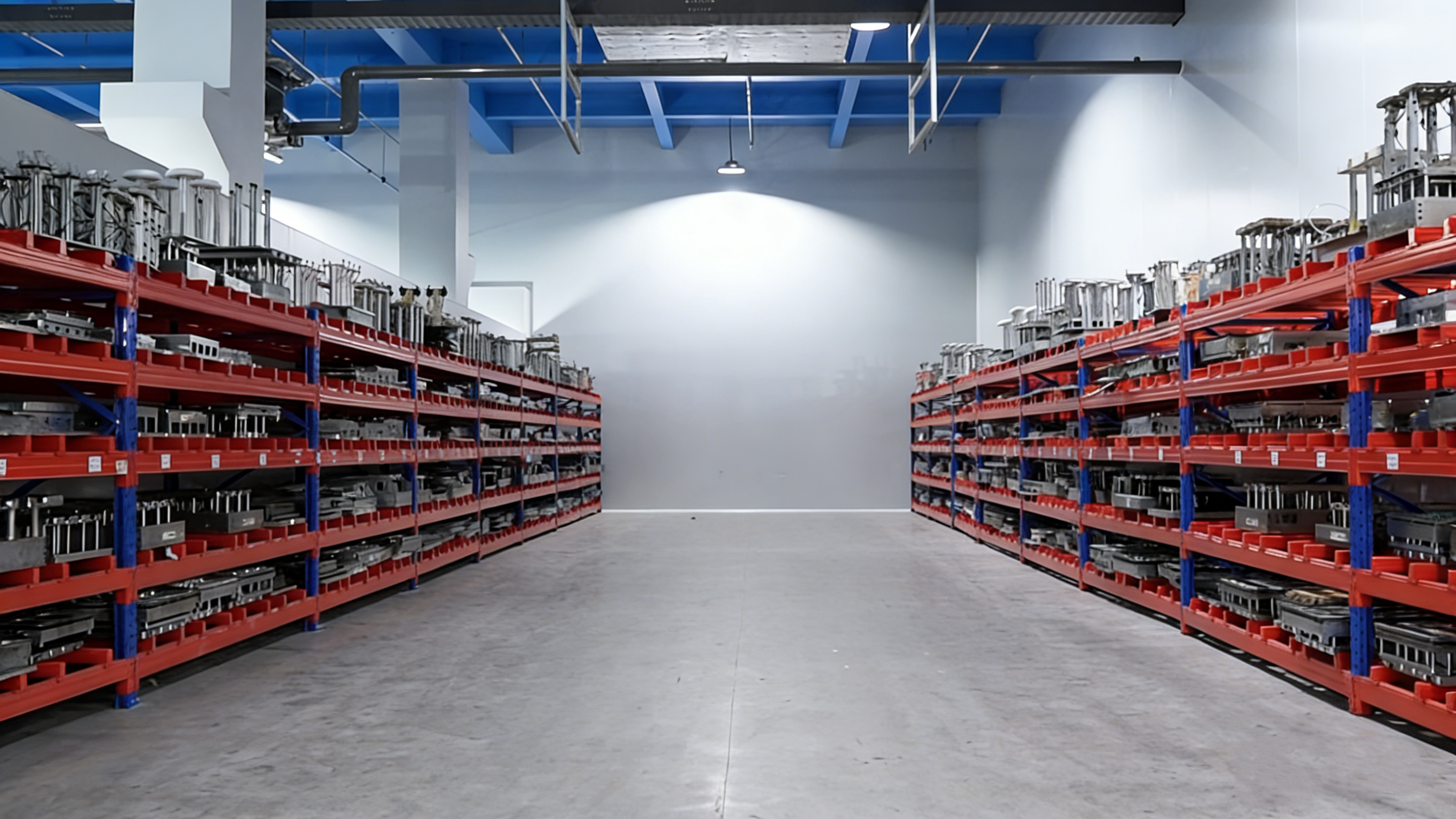
The engineering detail that matters commercially is where those features are created. Embossing and logos are formed in the mould, not applied afterwards, which means they have to be settled at the tooling stage together with the tray’s footprint and cavity depth. CHUAN HE maintains an in-house mold workshop and reports experience developing thousands of molds, supported by continued investment in R&D. For a bakery brand, that means an embossed base or a logo on the tray wall can be engineered into the same tooling that defines the MAP-relevant geometry — instead of being added as a separate process that risks disturbing it.
Step-by-Step: Specifying and Qualifying a MAP-Ready Bakery Tray
The following sequence keeps a tray project from drifting into an expensive line stop. It assumes the buyer already knows the product and the machine, and needs to convert both into a tray specification.
- Define the product envelope. Record maximum length × width × height for the largest item in the range, not the average item. Add the headspace the gas mix and sealing process require. This produces the minimum internal cavity you can accept.
- Match the envelope to a standard footprint. Compare the requirement against the 16.8 × 11.4 × 3 cm HB-1912 and the 22.2 × 13 × 6 cm HB-75-28(PP). If a standard footprint fits, tooling can be avoided entirely.
- Confirm material and compliance documentation per model. Specify PP, food-grade and BPA-free, and request the food contact documentation for the exact model. CHUAN HE holds CE, BRC, FDA, EU, and SGS certification; FDA 21 CFR 177.1520 is the PP reference for US-facing work, and EU Regulation 2024/3190 governs BPA in food contact materials for European projects.
- Validate structural behaviour on the line. Run a small trial order and check denesting consistency, form retention at sealing, stacking stability in the transit configuration, and dimensional stability after chilling.
- Decide customization after the geometry is fixed. Embossing, logo printing, and color are all available; because they are formed in the mould, they should be specified once the footprint and depth are settled, not before.
- Plan supply around the trial outcome. Factory direct supply supports small trial orders and bulk wholesale orders, so the transition from validated trial to volume supply stays within one production system.
Manufacturing background relevant to tray projects
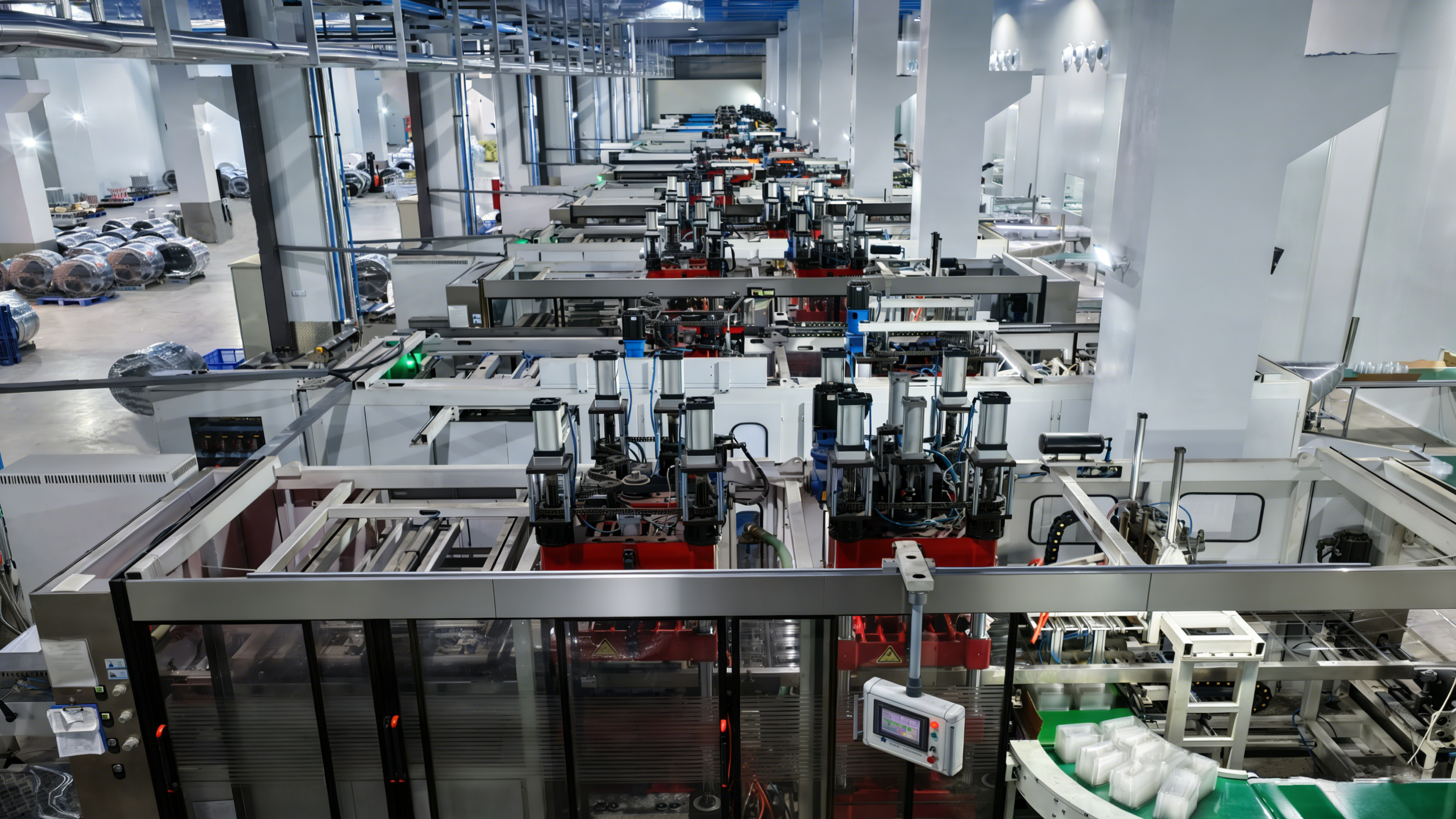
Weifang Chuanhe New Material Co., Ltd. was established in 2013 and operates a manufacturing base of more than 62,000 m² in Weifang, China, adjacent to Qingdao Port. The facility runs 20 fully automatic thermoforming machines and 20 standard thermoforming machines, including 4 advanced Kiefel machines imported from Germany, alongside 4 PET sheet extrusion lines, 2 PP sheet extrusion lines, and an in-house mold workshop. In practical terms, in-house sheet extrusion and mould capability keep raw material sourcing and tooling inside one production system rather than split across suppliers — which is what allows tray trials and production runs to stay coordinated.
Use Cases: Where These Two PP Formats Fit
The tray range is documented for produce, bakery, meat, poultry, and ready meals, which means one tray family can serve several lines. In practice, the two reference formats divide work as follows.
- Bakery and sweet treats. Single-layer pastries, cookies, and portioned cakes fit the low-profile HB-1912 cavity at 3 cm depth; layered or taller items move to the 6 cm HB-75-28(PP) cavity. Both are classified as bakery trays.
- Takeaway and ready meals. The 22.2 × 13 × 6 cm format is documented for ready meals within the tray range, where depth and rigidity matter more than merchandise visibility alone.
- Meat, poultry, and seafood. Both formats carry meat tray classification, and MAP compatibility matters most here, where gas flushing is a functional requirement rather than a presentation choice.
- Produce. HB-1912 is also specified as a produce tray and is intended for produce wholesalers, supermarket chains, and agricultural exporters — useful when one packaging specification has to cover a mixed fresh range.
- Retail display. Clear transparent construction is the reason these trays move from line to supermarket shelf without repacking, supporting the display function that bakery and produce sales depend on.
When a MAP Tray Is Not the Right Format
A MAP-ready tray is not automatically the correct packaging for every bakery item. When the product does not require gas flushing and the primary job is protection plus display, a clamshell or bakery container is simpler to run and easier to seal. CHUAN HE’s range includes clear plastic bakery containers such as the HB-7097 clamshell at 16.1 × 14.9 × 7.8 cm and the HB-5115 bakery container at 11.7 × 11.2 × 7.6 cm, both made of PET and intended for bakery and food retail applications. The decision rule is straightforward: choose a MAP-compatible PP tray when shelf-life extension and line automation are the objectives, and choose a display container when presentation, dust protection, and stacking are the objectives.
Comparison Table: HB-1912 vs HB-75-28(PP)
| Parameter | HB-1912 | HB-75-28(PP) |
|---|---|---|
| Material | PP (polypropylene) | PP (polypropylene) |
| Overall dimensions | 16.8 × 11.4 × 3 cm | 22.2 × 13 × 6 cm |
| Tray classification | Clear display tray, compartment tray, meat tray, MAP packaging tray, bakery tray, produce tray | Meat tray, bakery tray, produce tray |
| MAP line compatibility | Compatible with MAP modified atmosphere packaging lines | Compatible with MAP production lines |
| Structure | Rigid sturdy structure | Rigid sturdy structure |
| Stackability | Stackable design | Stackable design |
| Food contact | Food-grade BPA-free plastic | Food-grade BPA-free plastic |
| Appearance | Clear display tray | Clear transparent tray |
| Customization | Custom shape, color, embossing and logo printing available across the tray range | Customization options for shape, color, embossing and logo printing |
| Intended users | Produce wholesalers, supermarket chains, agricultural exporters, bakeries & food retailers, e-commerce brands | Supermarket chains, produce wholesalers, and other food industry clients |
FAQ
Are CHUAN HE’s PP bakery trays compliant for food contact in the EU and the US?
Tray products in this range are made from food-grade, BPA-free plastic and are described as compliant with food contact safety standards, and the company holds CE, BRC, FDA, EU, and SGS certification. Two regulatory anchors matter for buyers: FDA 21 CFR 177.1520 specifies the safety requirements for polypropylene as a food-grade plastic, including heat-resistant and microwave-safe applications, and EU Regulation 2024/3190, effective January 2025, prohibits Bisphenol A (BPA) in food contact plastics, coatings, and inks, with transition periods for compliance. Separately, CHUAN HE’s tamper-evident line — HB001-55, HB-24 OZ, HB-16OZ, HB-8OZ, and HB-32 OZ — carries PPWR (Regulation (EU) 2025/40) coverage, with the PPWR test report covering HB-32 OZ issued by TÜV Rheinland. Because coverage differs by model and by range, documentation should be requested for the exact SKU.
Can a MAP bakery tray be customized with embossing and a logo?
Yes. HB-75-28(PP) is documented with customization options for shape, color, embossing, and logo printing, and the wider tray range lists custom shape, color, embossing and logo printing as available, alongside custom size and color and ODM/OEM support. Because embossing and logos are formed in the mould rather than applied afterwards, they are engineered together with the tray’s footprint and cavity depth — which is why CHUAN HE maintains an in-house mold workshop and reports experience developing thousands of molds.
Do custom tray formats require new tooling, and how does that affect cost?
A new footprint, cavity depth, or embossed feature is created as a mold, so tooling is the fixed part of a custom tray project and the standard formats avoid it entirely. CHUAN HE’s in-house mold workshop and in-house sheet extrusion are structured to reduce reliance on outsourced raw materials while keeping production coordinated and delivery faster. The practical budgeting rule is to fix the product envelope and the line interface before committing to a custom footprint, and to test tooling cost against a real line trial — factory direct supply supports small trial orders as well as bulk wholesale orders.
Can we validate a tray on our own line before placing bulk orders?
Yes. Factory direct supply supports small trial orders alongside bulk wholesale orders, which is the intended path for line validation. A trial should confirm four behaviours: denesting consistency in the magazine, dimensional stability after filling, stacking stability in the transit configuration, and sealing-area flatness on your specific machine. Because CHUAN HE extrudes PET and PP sheet in-house, trial trays and production trays come from the same coordinated process rather than from two different suppliers.
What affects lead time, and what is the next step?
Lead time is driven by two stages: the mold and tooling step, and material availability at the sheet stage. CHUAN HE operates 4 PET sheet extrusion lines and 2 PP sheet extrusion lines alongside 20 fully automatic thermoforming machines and 20 standard thermoforming machines, including 4 Kiefel machines imported from Germany, and states that this in-house setup supports coordinated production and faster delivery. To move forward, request the specifications for HB-1912 and HB-75-28(PP) or download the product brochure, then send your product envelope, headspace requirement, and line details to chuanhe@newplasticbox.com for a tray recommendation and sample request.
Conclusion: Turning Tray Selection into a Line Decision
MAP-ready bakery tray selection comes down to four checkable questions: is the material a food-grade, BPA-free PP with a clear regulatory reference; does the footprint and depth match the product envelope plus headspace; does the tray hold a rigid, stackable form that survives denesting, sealing, and chilled distribution; and can the tray carry the brand through embossing or a logo without disturbing that geometry. The HB-1912 at 16.8 × 11.4 × 3 cm and the HB-75-28(PP) at 22.2 × 13 × 6 cm answer those questions for low-profile and deeper bakery applications respectively, both specified as compatible with MAP production lines and both available with custom shape, color, embossing, and logo printing.
Because these trays are produced by a manufacturer that extrudes its own PET and PP sheet and builds moulds in-house, a trial order is a realistic first step rather than a special request. That is the shortest path from specification to a validated line.
Next step: download the CHUAN HE packaging brochure for the full tray and container range, or send your product envelope and MAP line details for a tray recommendation and sample request.
Brochure: CHUAN HE packaging brochure (PDF)
Website: www.newplasticbox.com
Email: chuanhe@newplasticbox.com
Tel / WhatsApp: +86 134-5566-2777
Contact: Ever Liu
Address: No. 2301 Industrial Third Street, Weicheng Economic Development Zone, Weifang City, Shandong Province, China
Have Questions or Need More Details?
Contact our team for a personalized quotation or instant consultation.
Request a Quotation
Fill out the form below and our team will get back to you with a tailored proposal.
WhatsApp Direct Chat
Prefer to chat in real-time? Message us on WhatsApp for instant assistance & quick answers.
- Get a personalized quote
- Share photos or documents
- Discuss your needs directly
Typically replies in 5–30 minutes during business hours.