
Cutting Produce Spoilage: How Tamper-Evident PET Containers Solve Retail Shrink
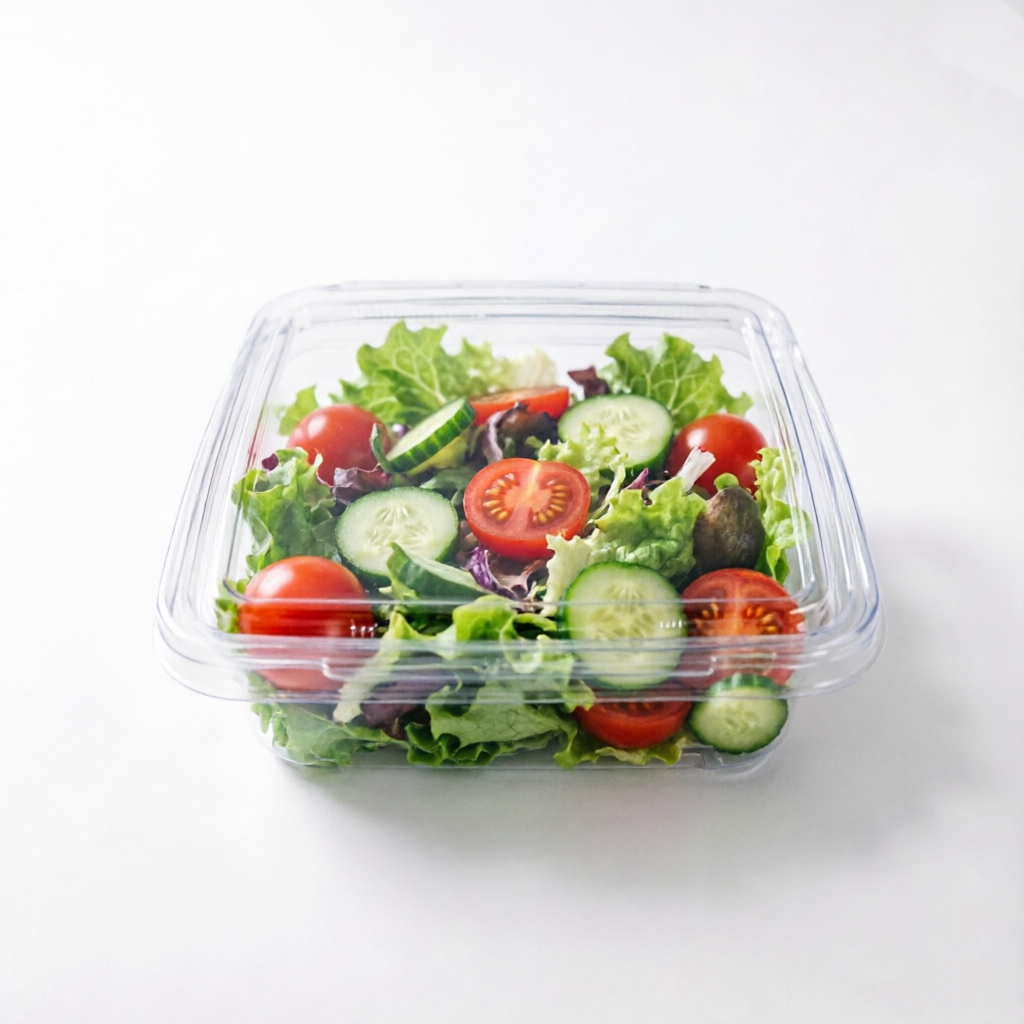
Most produce spoilage is discussed as a cold-chain problem: harvest temperature, transit time, ripening control. A significant share of the loss, however, happens after the pallet reaches the sales floor. Shoppers lift lids to check berry firmness, a punnet is opened and closed imperfectly, and product that was saleable at 9 a.m. is culled or marked down by mid-afternoon. Packaging rarely appears in the shrink report, but it is often the variable that decides whether a pack survives the day.
Tamper-evident PET containers address that specific failure point. Weifang Chuanhe New Material Co., Ltd. (brand: CHUAN HE) is a thermoformed packaging manufacturer based in Weifang, China, producing PET and PP containers for fruit and vegetable packaging, bakery packaging, frozen food trays and dry fruit containers. Its tamper-evident series is offered in HB-8OZ, HB-20OZ, HB-24OZ and HB-32OZ formats in food-grade, BPA-free PET. This article explains the mechanism behind in-store produce shrink, why supermarket chains and produce wholesalers are writing closure design into packaging specifications, and how the series is specified in practice — using the HB-20OZ at 14 × 11.6 × 7.9 cm as a working reference.
The Problem: Shrink That Starts at the Shelf Edge
Shrink is the gap between the value of product received and the value of product sold. In fresh produce it has three components: product that becomes unsellable, markdowns applied before it reaches that point, and the labour spent inspecting, consolidating and removing it. Consumer tampering and accidental opening feed all three, and the loss is usually recorded as a produce problem rather than a packaging problem.
The failure mechanism is consistent across formats and markets:
- Inspection opening. A shopper opens a container to judge ripeness or firmness. The fruit is handled and the lid is left ajar or resting on top.
- Failed reseating. Many closures look closed without actually sealing. The pack returns to the fixture in a state that no longer protects the contents.
- Displaced product. Opened packs are frequently left on neighbouring fixtures or in the wrong bay, and are discovered during the next store walk rather than at the moment of opening.
- Food-safety removal. Once a seal is broken, the unit shares air and contact surfaces with adjacent packs. Retail food-safety policy generally removes the unit from sale rather than restocking it.
- Handling damage. Nested stacks are compressed and pulled apart during replenishment, and lids that were never designed for repeated opening can pop during handling.
Transparency makes inspection more likely, not less. Clarity is simultaneously a sales asset and a shrink risk, and that tension is precisely what a tamper-evident format resolves: the closure carries the evidence, rather than the shopper's memory or the store associate's judgement.
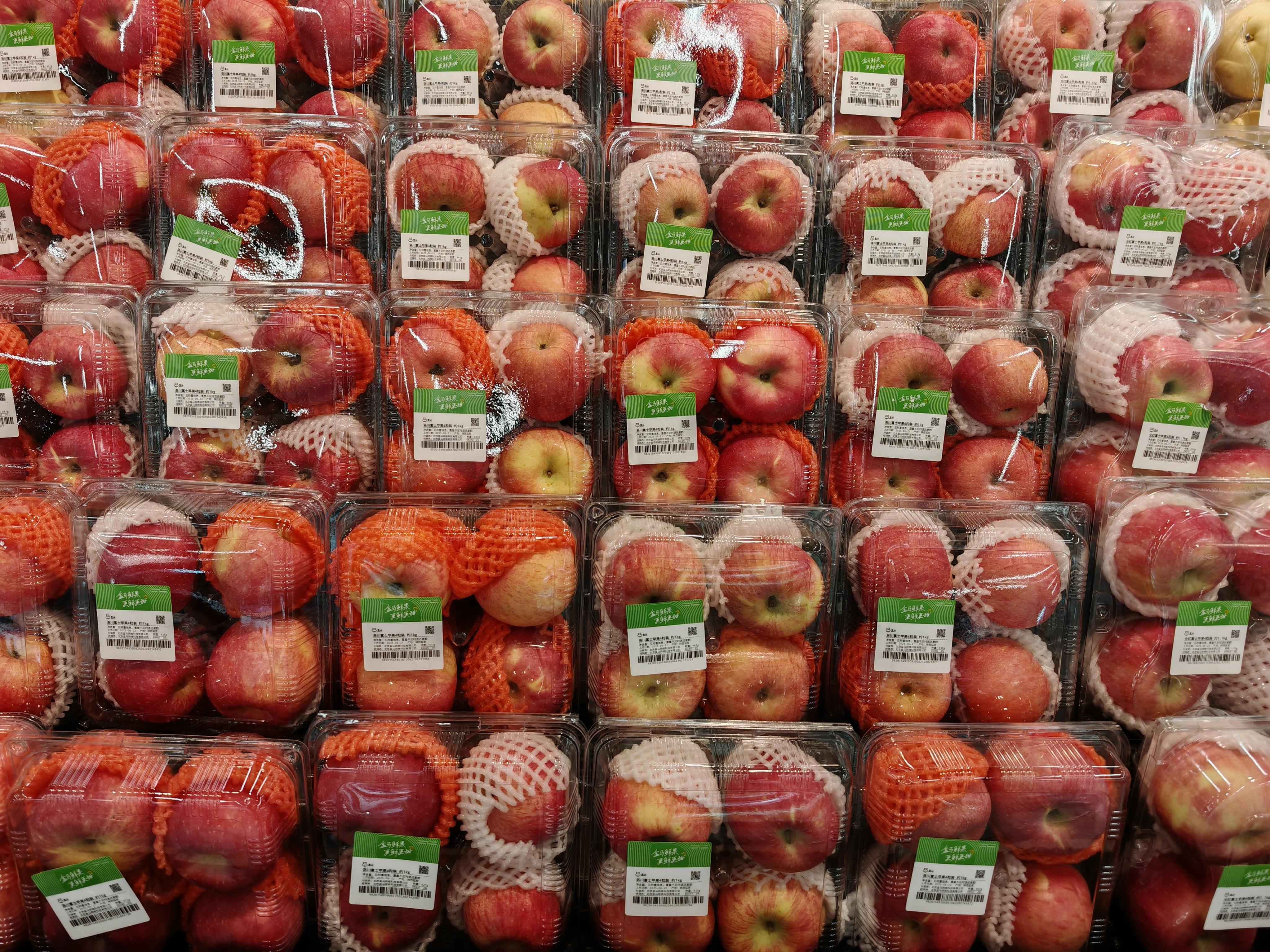
Industry Background: Why Closure Design Is Now a Packaging Specification
The commercial context is expanding. The global fresh food packaging market was valued at USD 134.60 billion in 2024 and is projected to reach USD 240.50 billion by 2035, according to Spherical Insights & Consulting. Produce packaging specifically was valued at approximately USD 38.08 billion in 2024, per Market Research Future. Europe's fresh food packaging market stood at USD 15.2 billion in 2024 with a projected CAGR of 4.5% through 2033, also reported by Market Research Future, while thermoformed plastics for food packaging are growing at a CAGR of 4.9% toward an expected USD 20.66 billion by 2030, according to Grand View Research.
Growth alone does not explain the specification shift. Retailers manage produce against cull rate, sell-through and presentation standards, and a container that survives shopper inspection supports all three at once. For wholesalers and exporters, the container also has to survive handling and transit. In practice, supermarkets place produce or pre-made salads in trays and boxes for consumer selection; e-commerce requires sturdier, volume- and weight-optimized packs to reduce logistics cost; and exporters must account for shipping, inspection and overseas regulations.
Regulatory watch for EU-facing programs: under the EU Packaging and Packaging Waste Regulation (PPWR), single-use plastic packaging for fresh fruit and vegetables under 1.5 kg is scheduled to be banned from 2030, as published by the European Commission and reported by Earth.Org. Buyers specifying formats today should confirm material direction and recyclability with their supplier rather than assume a five-year horizon.
The Solution: Tamper-Evident PET Containers in Practice
What changes at the fixture
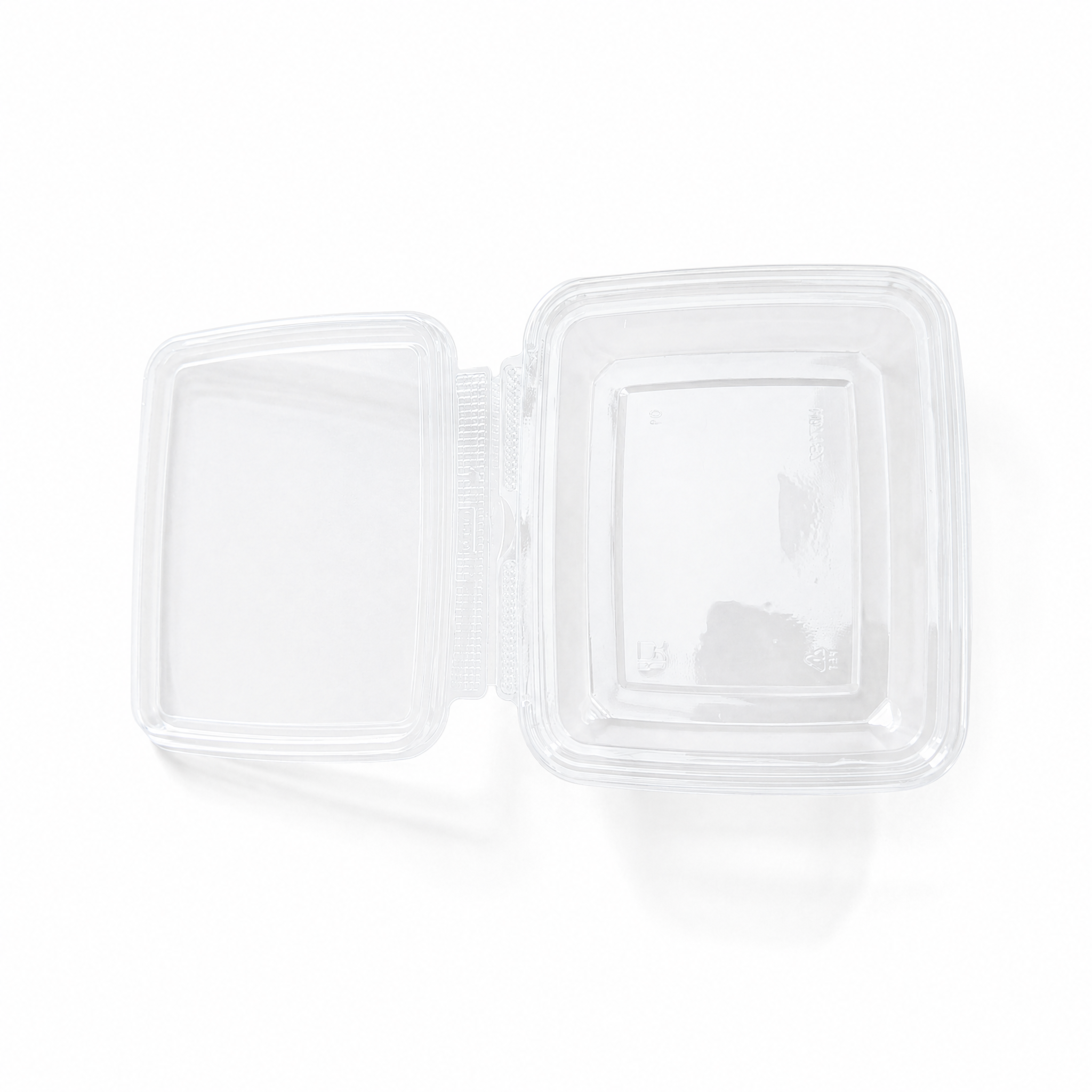
A tamper-evident container is designed so that it cannot be opened and returned to its original sealed appearance. The practical effect is not that shoppers stop looking — the clear PET body still allows 360° visibility of the contents — but that opening leaves evidence. Store teams can identify affected units during a routine walk instead of finding them at the waste audit, and the retailer can defend the integrity claim to its own quality function without relying on observation alone.
The series: HB-8OZ, HB-20OZ, HB-24OZ and HB-32OZ
Chuanhe's tamper-evident packaging is manufactured in PET with high transparency, and is available in customized shapes including rectangle, square and round, with customizable colors and sizes. The format range covers the common retail portion sizes:
- HB-8OZ — 13.4 × 12.1 × 3.6 cm. A shallow, compact pack for small berry punnets and single-portion formats.
- HB-20OZ — 14 × 11.6 × 7.9 cm. A deeper pack on a moderate footprint, suited to berries and cut fruit that need headroom.
- HB-24OZ — 17.2 × 15.5 × 4.8 cm. A larger footprint with a shallow body, suited to family-size cherries, grapes and mixed fruit.
- HB-32OZ — 17.2 × 15.5 × 6.2 cm. The same footprint as the HB-24OZ with a deeper body, suited to larger cut fruit and salad volumes.
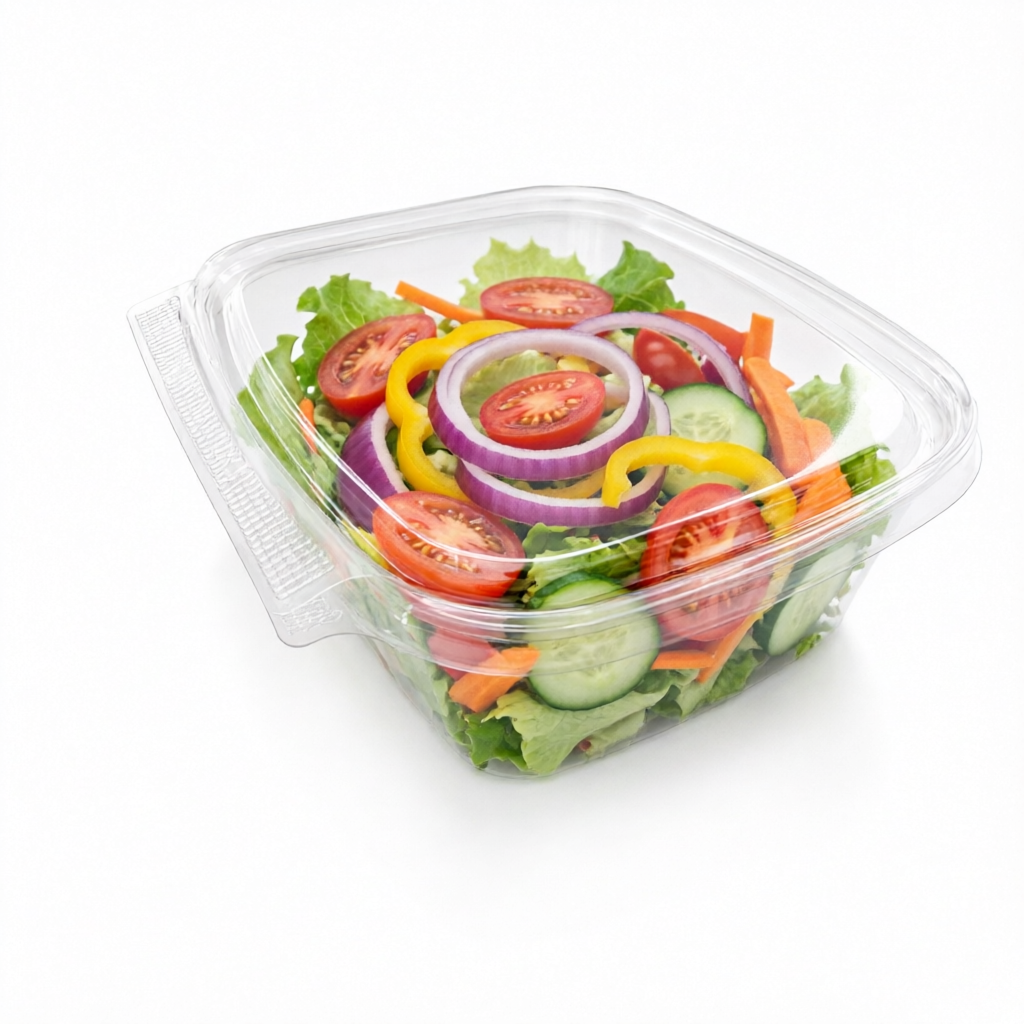
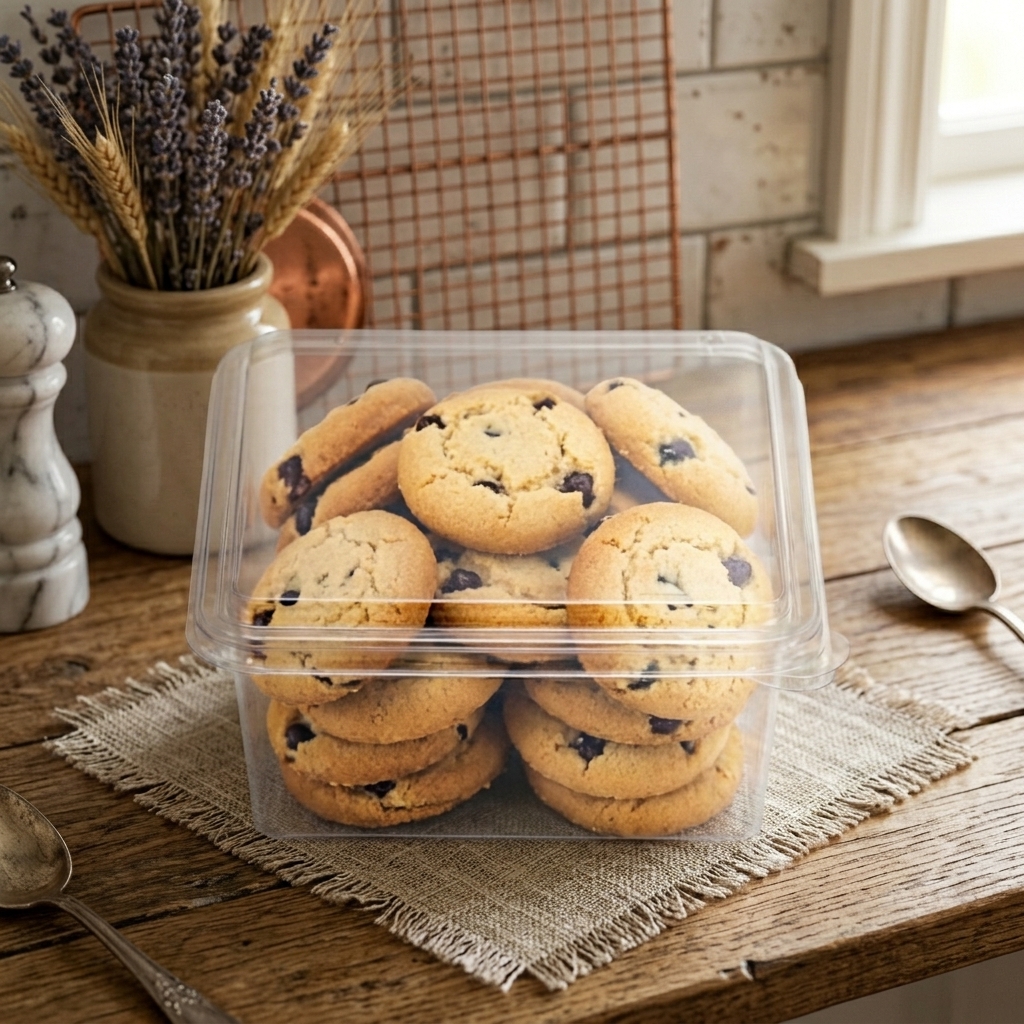
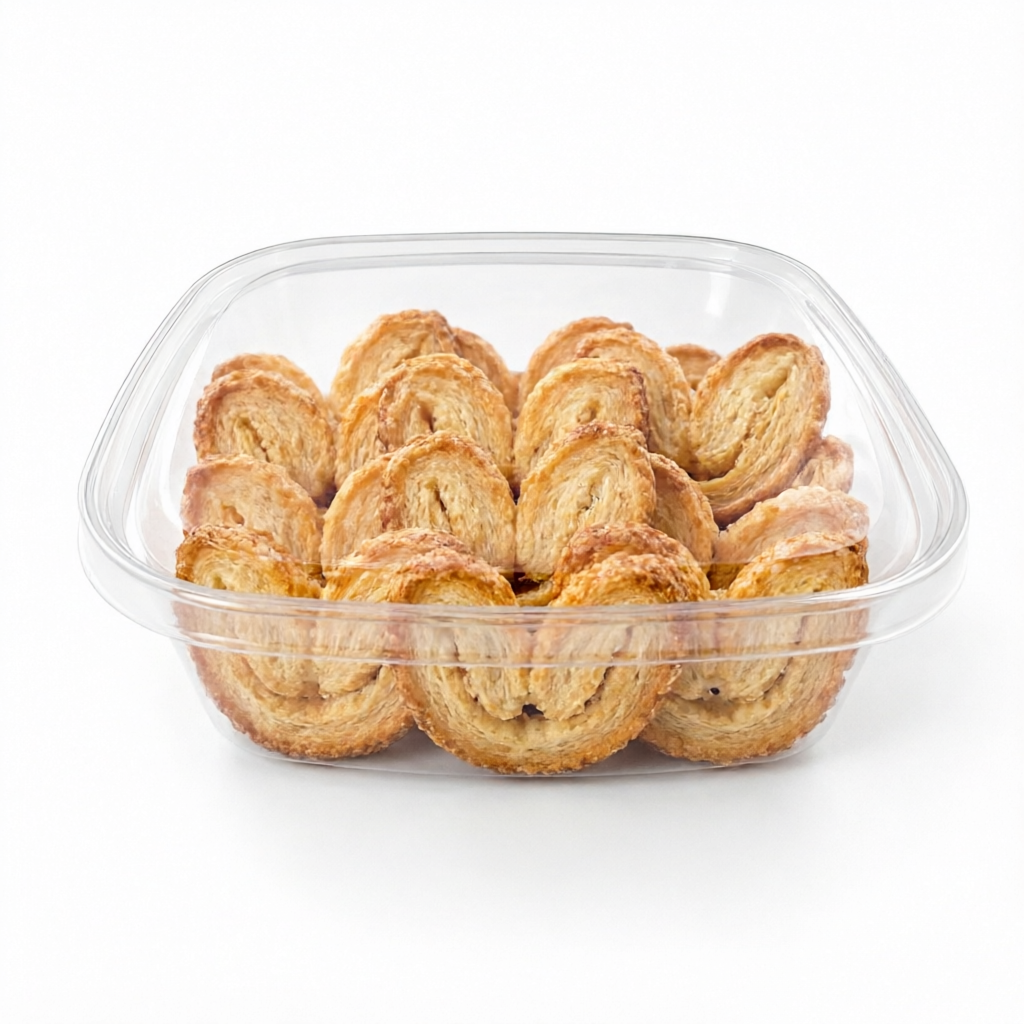
The format family is not limited to produce. The same container type is used for salad, candy, sushi, cookies, sandwiches, bread, nuts, snacks, noodles, cake and sugar packaging, as well as non-food applications such as seedling protection transport pallets.
HB-20OZ as a reference format
The HB-20OZ is a useful reference because its footprint (14 × 11.6 cm) is shared with the HB-16OZ (14 × 11.6 × 6.2 cm), while its depth of 7.9 cm is greater. For a retailer already running a 14 × 11.6 cm planogram position, that means berry or cut-fruit volume can be increased without changing the tray footprint, the shelf divider or the label position. Compared with the HB-24OZ and HB-32OZ, which use a 17.2 × 15.5 cm footprint, the HB-20OZ remains a small-format pack rather than a family-size one — a distinction worth checking before samples are approved.
Material and construction facts buyers can verify
- Food-grade, BPA-free plastic, produced to comply with food contact standards.
- Clear PET body for full product visibility at the fixture.
- Stackable construction for back-of-store and warehouse storage.
- Custom size, color and logo printing available, with ODM/OEM support.
- Chuanhe's blister container is tested to withstand a 1.2 m vertical drop without rupture — relevant when packs are nested in totes and moved between cold storage and the sales floor.
Step-by-Step: Specifying a Tamper-Evident Format for Your Produce Line
- Locate the failure. Walk the fixture and identify which SKUs are actually being opened. The pattern is usually concentrated in transparent, high-value, high-rotation items — berries, cherry tomatoes and cut fruit rather than bagged root vegetables.
- Match footprint to the planogram. Keep the existing tray footprint wherever possible so that shelf dividers, labels and replenishment trolleys do not need to change.
- Set depth from the product, not from habit. Moving from the HB-16OZ to the HB-20OZ adds 1.7 cm of depth at an identical 14 × 11.6 cm footprint, which reduces compression on soft fruit without disturbing the shelf layout.
- Confirm food-contact documentation for the destination market. For EU programs that means confirming compliance with Regulation (EC) No 1935/2004 and Regulation (EU) No 10/2011; for North America, FDA food contact requirements.
- Verify closure and stack behaviour at retail speed. Test how the pack behaves when it is nested, stacked, pulled apart and opened by hand — not only how it seals in a controlled environment.
- Validate with a trial order. Chuanhe supports small trial orders alongside bulk wholesale orders, and production runs pass 100% test quality control before shipment.
- Lock customization and lead time. Confirm size, color and logo requirements early; standard MOQ is 10,000 pcs with a 30–45 day lead time, so specification changes late in the process carry schedule risk.
Use Cases: Where the Format Pays Back
Berries and cherry tomatoes in high-traffic displays
This is the classic shrink scenario. These are the packs shoppers most often open, and the packs least able to tolerate it. In the Middle East, a program using clear PET clamshell containers for farm fresh fruit and vegetable packaging, cherry tomato and berry clamshells, and harvest sorting runs at 250,000 pieces per month across the UAE and Saudi Arabia, with vent holes for freshness, stackable and food-grade construction, and more than three years of continuous supply.
Cut fruit and prepared salad formats
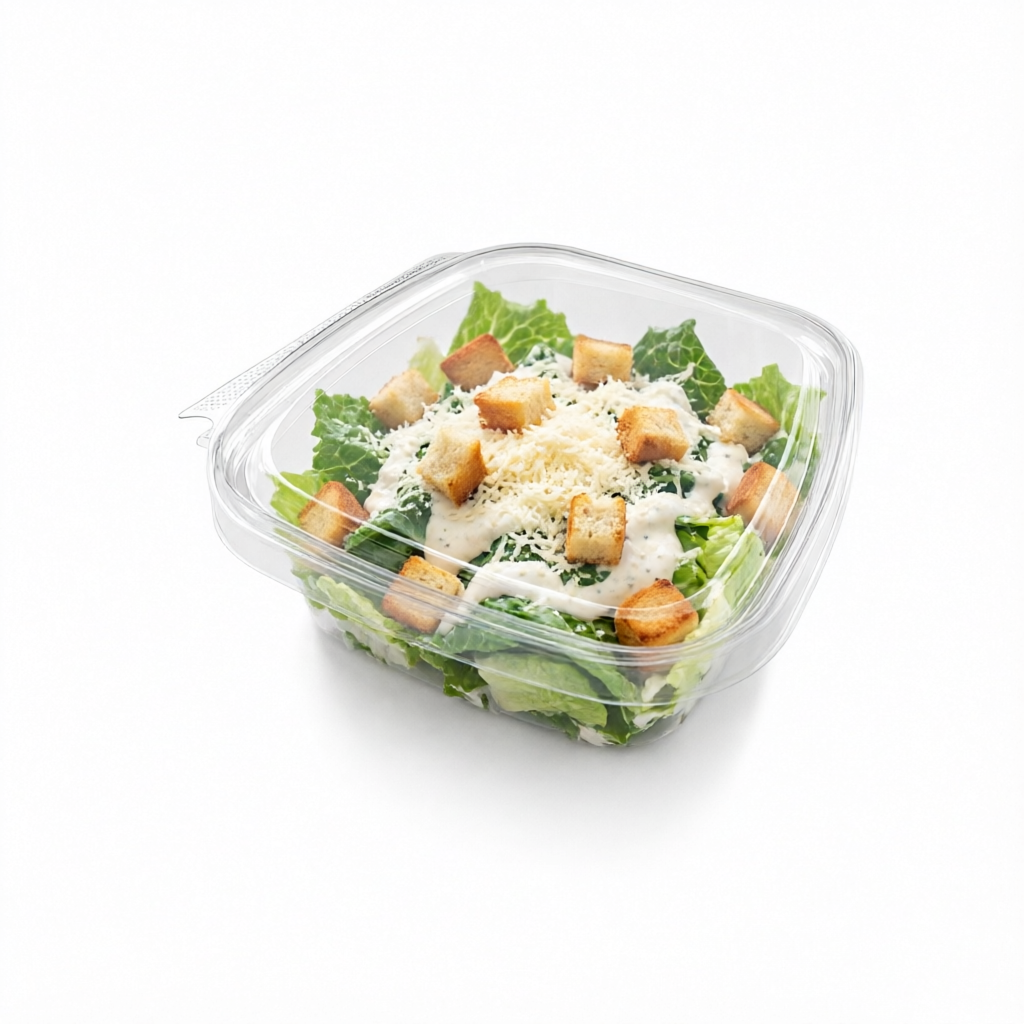
Multi-item packs fail differently: the unit is opened, one item is taken, and the whole pack is unsellable. Tamper-evident closure addresses the format directly, while adjacent Chuanhe formats cover the surrounding range — the HB5053 salad container, for example, is a clear PET box with an airtight, leakproof lid and an optional compartment that separates sauce from vegetables, with a stackable structure and custom logo printing available.
Retail programs in regulated markets
Compliance documentation is part of the specification, not an afterthought. A North American importer and food retail distributor has used Chuanhe containers for more than three years at 120,000 pieces per month for fresh fruit and ready meal packaging in supermarket retail, with custom sizes, PET material, microwave-safe capability and customized printing, and with FDA food contact standard qualification achieved.
Promotional and seasonal volume
Promotional displays concentrate handling and inspection into short windows. Buyers should plan the packaging volume alongside the promotional calendar, because custom sizes and printed formats are tied to tooling and to the 30–45 day production lead time.
Comparison Table: Tamper-Evident Container Series at a Glance
| Model | Outer dimensions | Material | Format | Customization | Typical retail fit |
|---|---|---|---|---|---|
| HB-8OZ | 13.4 × 12.1 × 3.6 cm | PET | Tamper evident | Custom shape, color, size, logo; ODM/OEM | Small berry punnets, single-portion packs |
| HB-20OZ | 14 × 11.6 × 7.9 cm | PET | Tamper evident | Custom shape, color, size, logo; ODM/OEM | Berries and cut fruit requiring headroom |
| HB-24OZ | 17.2 × 15.5 × 4.8 cm | PET | Tamper evident | Custom shape, color, size, logo; ODM/OEM | Family-size cherries, grapes, mixed fruit |
| HB-32OZ | 17.2 × 15.5 × 6.2 cm | PET | Tamper evident | Custom shape, color, size, logo; ODM/OEM | Larger cut fruit and salad volumes |
| HB-16OZ (reference) | 14 × 11.6 × 6.2 cm | PET | Tamper evident | Custom shape, color, size, logo; ODM/OEM | Same footprint as HB-20OZ with a shallower body |
Compliance boundaries to confirm before sign-off
Three points are worth checking explicitly. First, food contact compliance: the containers are made from food-grade, BPA-free PET produced to comply with EU and FDA food contact standards, and Chuanhe holds CE, BRC, FDA, EU and SGS quality management certifications — but national enforcement and individual retailer clauses still differ, so documentation should be confirmed per market. Second, material direction: PET is a mainstream recyclable polymer stream, yet the PPWR timeline above means buyers should confirm that the format they approve today remains viable in the markets they serve. Third, application fit: the same container type is used across fruit, vegetables, salad, bakery and snack categories, so the specification should be locked against the actual product and pack weight rather than against a neighbouring SKU.
FAQ
Are these tamper-evident PET containers compliant with EU and FDA food contact requirements?
The containers are made from food-grade, BPA-free PET and are produced to comply with EU and FDA food contact standards. In the EU, the framework is set by Regulation (EC) No 1935/2004, which requires food contact materials not to release constituents into food at levels harmful to human health, while plastic materials such as PET are specifically governed by Regulation (EU) No 10/2011. Weifang Chuanhe New Material Co., Ltd. holds CE, BRC, FDA, EU and SGS quality management certifications, and a North American retail program supplying Chuanhe containers for fresh fruit and ready meal packaging achieved FDA food contact standard qualification. Buyers should still validate documentation against their own market requirements and retailer clauses, because enforcement and specification details differ by country and by customer.
Can the containers be customized for our produce formats and branding?
Yes. Chuanhe operates on OEM/ODM terms and supports custom size, color and logo printing, with customized shapes available in rectangle, square and round. The manufacturing base in Weifang covers more than 62,000 m² and runs 20 fully automatic thermoforming machines and 20 standard thermoforming machines, including four Kiefel machines imported from Germany, alongside four PET sheet extrusion lines, two PP sheet extrusion lines and an in-house mold workshop. Monthly capacity is 4,500 tons. That combination matters when a format needs dimensional adjustment: tooling, sheet supply and forming sit inside one facility rather than across separate suppliers.
What drives the cost of a tamper-evident PET container?
Cost follows the specification rather than a single unit price. The main variables are material choice (PET versus PP), container footprint and wall construction, closure design, color and logo customization, and order volume. Two structural factors shape the delivered cost structure at Chuanhe: in-house PET and PP sheet extrusion reduces reliance on outsourced raw material, and the in-house mold workshop shortens the loop between design change and production. Because of this, requests are quoted per specification rather than from a list. Standard MOQ is 10,000 pcs, and the team can advise on the volume band that fits a given retail program.
How do we validate the format before committing to a full production run?
Validation starts with the physical container rather than with a drawing. Chuanhe supports small trial orders alongside bulk wholesale orders, and production passes 100% test quality control before shipment. For handling confidence, the company's blister container is tested to withstand a 1.2 m vertical drop without rupture — relevant when packs are nested in totes and moved repeatedly between cold storage and the fixture. Most buyers evaluate closure behaviour, stack stability and clarity first, then confirm a trial order before scaling. Sample and specification requests can be sent to chuanhe@newplasticbox.com.
What is the lead time, and how do we start a program?
Standard lead time is 30–45 days, with an MOQ of 10,000 pcs for standard production runs. Chuanhe exports to North America, Europe, the Middle East, Southeast Asia and Latin America, with an export ratio of 100%, and after-sales support covers real-time order and shipment tracking, documentation assistance for customs clearance, technical consultation on product parameters, and resolution of quality or damage issues. To start, send the container specification — footprint, depth, product type, monthly volume and destination market — to chuanhe@newplasticbox.com or WhatsApp +86 134-5566-2777, and download the catalogue for the full format range.
Conclusion: Treat Closure Design as a Shrink-Control Spec
Produce shrink is usually recorded against the produce category, but a meaningful part of it is decided by the container. A tamper-evident PET format does not stop shoppers from looking — high transparency keeps the product sellable on the shelf — it simply makes the act of opening visible, so the unit is removed quickly instead of quietly spoiling next to unopened stock.
For supermarket chains and produce wholesalers evaluating the change, the practical sequence is straightforward: identify which SKUs are being opened, keep the existing footprint, adjust depth from the product rather than from habit, confirm food-contact compliance for each destination market, and validate the closure with a trial order. Formats such as the HB-20OZ at 14 × 11.6 × 7.9 cm exist precisely to make that transition low-friction, because the shelf layout stays the same while the pack gains headroom.
Next step: specification review and samples
Send your container footprint, depth, product type and monthly volume to chuanhe@newplasticbox.com or WhatsApp +86 134-5566-2777 (contact: Ever Liu), and the team can advise on the tamper-evident format that fits your fixture. You can also review the manufacturer profile at newplasticbox.com and download the full product catalogue: 2026 Chuanhe New Material catalogue.
Have Questions or Need More Details?
Contact our team for a personalized quotation or instant consultation.
Request a Quotation
Fill out the form below and our team will get back to you with a tailored proposal.
WhatsApp Direct Chat
Prefer to chat in real-time? Message us on WhatsApp for instant assistance & quick answers.
- Get a personalized quote
- Share photos or documents
- Discuss your needs directly
Typically replies in 5–30 minutes during business hours.