
Fruit & Vegetable Packaging: Containers vs Trays vs Salad Boxes vs Tamper-Evident
Fruit & Vegetable Packaging: Containers vs Trays vs Salad Boxes vs Tamper-Evident
Four formats cover almost every fresh produce packing line, and each one solves a different problem. PET fruit & vegetable containers manage ventilation and refrigerated storage; food plastic trays carry flat, uniform packs through display and MAP-compatible lines; salad boxes hold larger or mixed loads in an airtight clamshell; tamper-evident packaging protects high-value and ready-to-eat items after the pack leaves the factory. This comparison puts the four formats side by side on material, dimensions, transparency, stacking behavior, cold-chain fit and food-contact compliance, using verified models from Weifang Chuanhe New Material Co., Ltd. — including HB-SG300ML, HB-T9333, HB1720 and the HB-8OZ tamper-evident series.
It is written for buyers at the evaluation-to-execution stage: produce wholesalers, supermarket chains, agricultural exporters, bakeries and food retailers, and e-commerce brands that have already shortlisted thermoformed packaging and now need to lock a format, a dimension and a supplier file before the first purchase order.
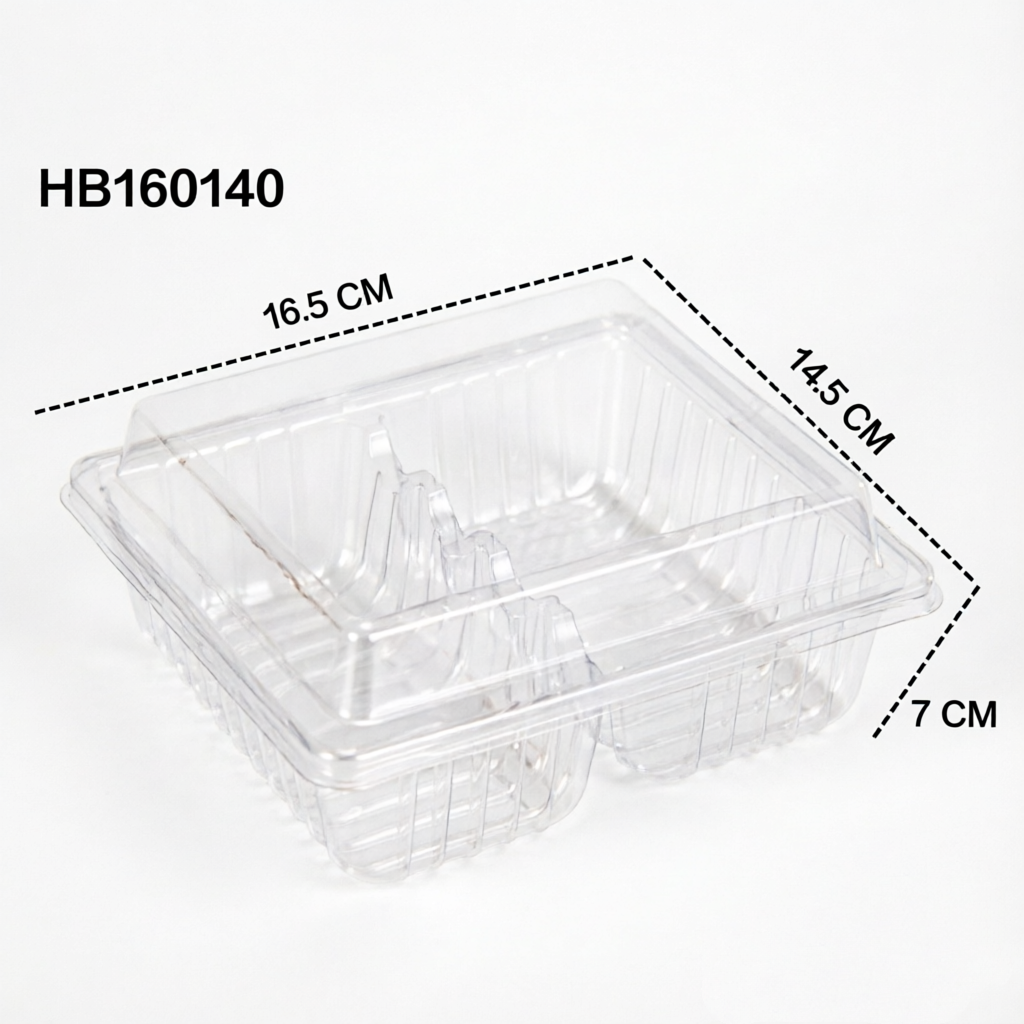
Cover: transparent PET fresh produce packaging from Weifang Chuanhe New Material Co., Ltd. (brand: CHUAN HE), covering container, tray, salad box and tamper-evident formats.
Problem definition: why these four formats are compared instead of one
The same punnet of cherry tomatoes, the same tray of berries or the same bag of cut vegetables behaves differently in each format, and the failure modes are predictable:
- Crush and bruise when the format does not match the load — deep bulk packs versus single-layer display packs.
- Loss of clarity in refrigerated display when condensation forms on the pack surface, changing how the produce reads on shelf.
- Rejected shipments when the material declaration does not match the food-contact rules of the destination market.
- Retail shrink where a pack can be opened and closed again without visible evidence.
- Cube inefficiency when non-stacking packs are mixed into the same case pack and pallet.
These are specification problems, not production problems. Once a mold is cut and a first pallet is packed, changing format usually means new tooling, changed packaging-line settings and a new validation cycle. That is why a format comparison belongs before the quotation stage, not after it.
A practical way to frame the decision: each format has to carry three loads at the same time — the produce through the cold chain, the pack on the retail shelf, and the compliance file your buyer will request. A format that fails any one of those three is the wrong format, even when its unit price looks better.
Industry background: what is changing in fresh produce packaging
Fresh produce packaging is growing, and the rules around it are tightening at the same time. The market data behind this category:
- The global fresh food packaging market reached USD 134.60 billion in 2024 and is projected to reach USD 240.50 billion by 2035 (Spherical Insights & Consulting).
- The produce-specific packaging market — fruit and vegetables only — was valued at approximately USD 38.08 billion in 2024 (Market Research Future).
- Europe's fresh food packaging market was valued at USD 15.2 billion in 2024, with a projected CAGR of 4.5% through 2033 (Market Research Future).
- Thermoformed plastic packaging for food is expected to grow at a CAGR of 4.9%, reaching USD 20.66 billion by 2030 (Grand View Research).
Regulation is moving in parallel with that demand:
- EU Regulation (EC) No 1935/2004 provides the framework for all food contact materials, ensuring they do not release constituents into food at levels harmful to human health (European Commission).
- EU Regulation (EU) No 10/2011 specifically governs plastic materials and articles intended to come into contact with food, including PET and PP containers (EUR-Lex).
- Starting from 2030, the EU Packaging and Packaging Waste Regulation (PPWR) will ban single-use plastic packaging for fresh fruit and vegetables under 1.5 kg (European Commission / Earth.Org).
Global packaging groups such as Amcor PLC, Berry Global Group, Sealed Air Corp, Mondi Group and Smurfit Kappa operate across the category (Mordor Intelligence). At container level, however, a format is decided by the mold, the resin and the thermoforming line — which is exactly where the four formats below diverge.
The four formats in verified detail
Weifang Chuanhe New Material Co., Ltd. (brand: CHUAN HE) is a PET and PP thermoformed packaging manufacturer founded in 2013 in Weifang, Shandong Province, China, producing fruit and vegetable packaging and bakery packaging, with 100% of output exported to North America, Europe, the Middle East, Southeast Asia and Latin America. All four formats below are manufactured in-house on the same thermoforming platform.
1. PET fruit & vegetable containers
This format is made of food-grade BPA-free PET, is refrigerator safe, and combines a clear transparent body with a stackable design for space saving. Custom size, color and logo printing are available. The range is positioned for produce storage, berry storage, fridge vegetable crisping and ventilated produce keeping.
| Model | Dimensions | Material |
|---|---|---|
| HB-SG250ML | 13.5 × 11.5 × 6.5 cm | PET |
| HB-SG300ML | 17.5 × 13.5 × 6 cm | PET |
| HB-SG500ML | 17.5 × 13.5 × 7.5 cm | PET |
| HB-SG1000ML | 23 × 17.5 × 9 cm | PET |
| HB-8OZ-235 | 14.3 × 12.5 × 6 cm | PET |
| HB-7123 | 12.9 × 9.7 × 7.2 cm | PET |
| HB-PG02 | 22.5 × 12 × 10 cm | PET |
| HB-7001 | 19.5 × 19.5 × 5 cm | PET |
In a Middle East and North Africa project, clear PET clamshell containers from this family are used for farm fresh fruit and vegetable packaging, including cherry tomato and berry clamshell packaging, harvest sorting and retail display, with vent holes for freshness and a monthly order volume of 250,000 pieces.
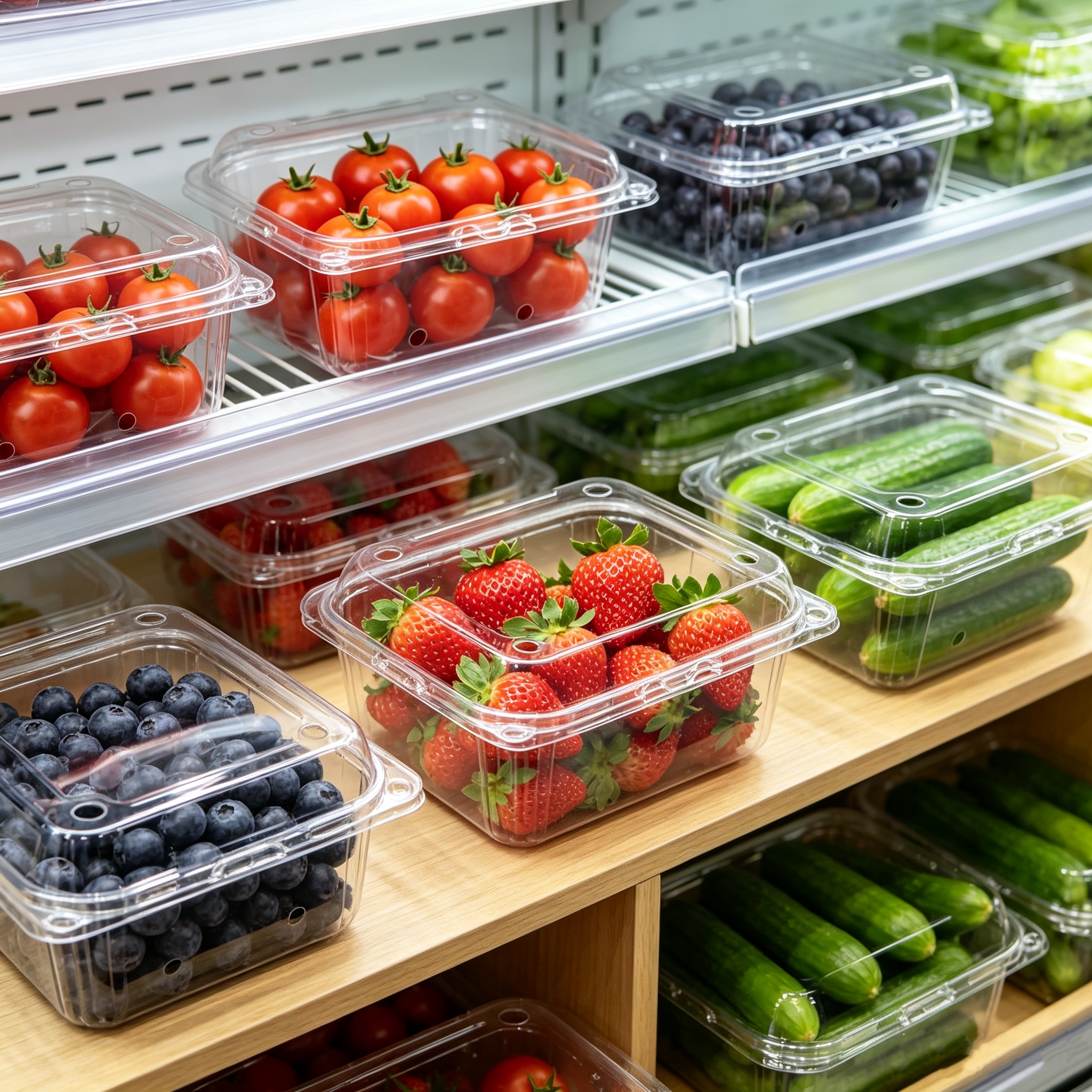
Clear PET clamshell containers used for cherry tomato and berry packaging in a MENA produce project.
2. Food plastic trays
Trays are the flat, wide-footprint format. The primary material of this tray range is PET, and some models are made of food-grade BPA-free plastic. Model HB-T9333 is a food plastic tray made of PET; it is stackable, custom shape, color, embossing and logo printing are available, and the material is food-grade BPA-free plastic. The tray family is specified as produce trays, bakery trays, MAP packaging trays, meat trays, compartment trays, clear display trays, disposable serving trays and custom blister trays.
| Model | Dimensions | Material |
|---|---|---|
| HB-T9333 | 16.8 × 11.4 × 3 cm | PET |
| HB-3066 | 14.4 × 12.2 × 4.7 cm | PET |
| HB-1912 | 19 × 12 × 3 cm | PET |
| HB-T9576 | 19.4 × 11.4 × 5.8 cm | PET |
| WSF-01 | 23.3 × 18 × 5 cm | PET |
| HB-MG08 OZ | 14.2 × 12.5 × 6.8 cm | PET |
| HB-MG24 OZ | 18.6 × 18.6 × 8.9 cm | PET |
| HB-MG40 OZ | 28 × 19.4 × 6.8 cm | PET |
| HB-75-28(PP) | 16.8 × 11.4 × 3 cm | PP |
| HB-221360(PP) | 22.2 × 13 × 6 cm | PP |
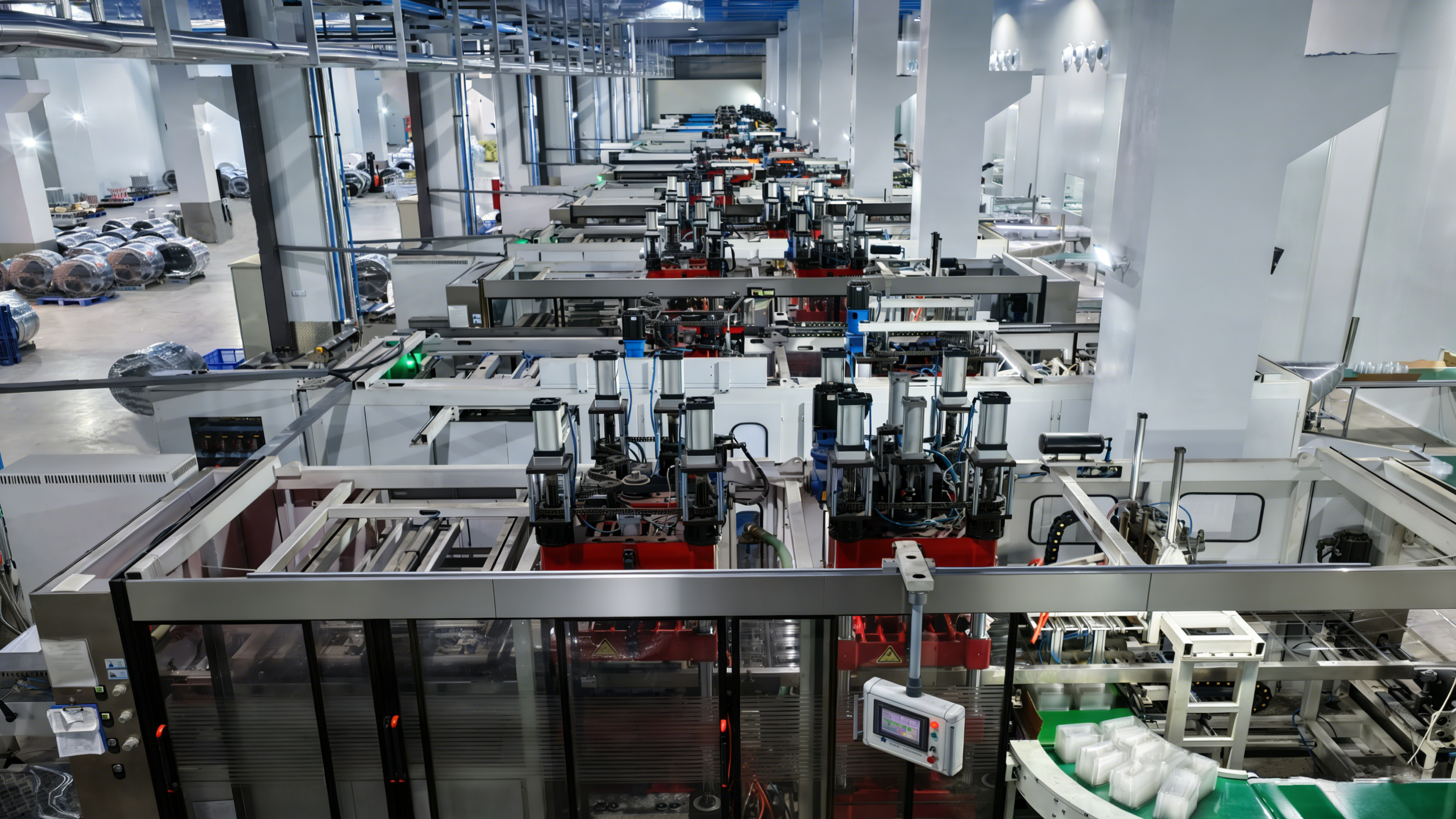
Thermoforming equipment at the CHUAN HE plant, where PET trays, containers and salad boxes are formed in-house.
3. Salad boxes
Salad boxes are the large-footprint option: a single clear PET body for mixed salads, prepared vegetables and deli combinations. The family is specified as clear plastic salad boxes, airtight salad containers, stackable salad containers, clamshell salad containers, compartment salad containers, fridge salad storage containers and salad bowls.
| Model | Dimensions | Material |
|---|---|---|
| HB1720 | 18.5 × 18.5 × 6 cm | PET |
| HB5224 | 17.1 × 12.3 × 5.6 cm | PET |
| HB7047 | 15.6 × 11.7 × 4.5 cm | PET |
| HB5240 | 17 × 11.5 × 3.7 cm | PET |
| HB5053 | 15.2 × 10.2 × 5.3 cm | PET |
HB1720, at 18.5 × 18.5 cm, is the square-footprint model in this family; HB5240, at 17 × 11.5 × 3.7 cm, is the shallowest and suits low-profile fills where shelf height is limited.
4. Tamper-evident packaging
Tamper-evident packs add a closure integrity step to the same PET container logic. The oz series runs from HB-8OZ to HB-32 OZ and is declared for fruit and vegetable, salad, cake, sweets and bakery contents. Ten models are available in this format, all in PET.
| Model | Dimensions | Material |
|---|---|---|
| HB-8OZ | 13.4 × 12.1 × 3.6 cm | PET |
| HB-16OZ | 14 × 11.6 × 6.2 cm | PET |
| HB-20 OZ | 14 × 11.6 × 7.9 cm | PET |
| HB-24 OZ | 17.2 × 15.5 × 4.8 cm | PET |
| HB-32 OZ | 17.2 × 15.5 × 6.2 cm | PET |
Additional models in the same format include HB001-55 (19 × 15.7 × 4.5 cm), HB002-63 (14.6 × 12.3 × 6.7 cm), HB5298 (15.4 × 15.4 × 6.1 cm), HB005-7402 (19 × 15.7 × 7.5 cm) and HB006-6102 (19 × 15.7 × 6.3 cm).
Manufacturing and customization behind all four formats
The manufacturing base is located in Weifang, Shandong Province, adjacent to Qingdao Port, and covers more than 62,000 m². It operates 20 fully automatic thermoforming machines and 20 standard thermoforming machines, including 4 advanced Kiefel machines imported from Germany, plus 4 PET sheet extrusion lines, 2 PP sheet extrusion lines and an in-house mold workshop. Annual output is 54,000 ton, with a monthly capacity of 4,500 ton. Customization covers logo, size and color under OEM/ODM and customizable production services, with 100% test quality control.
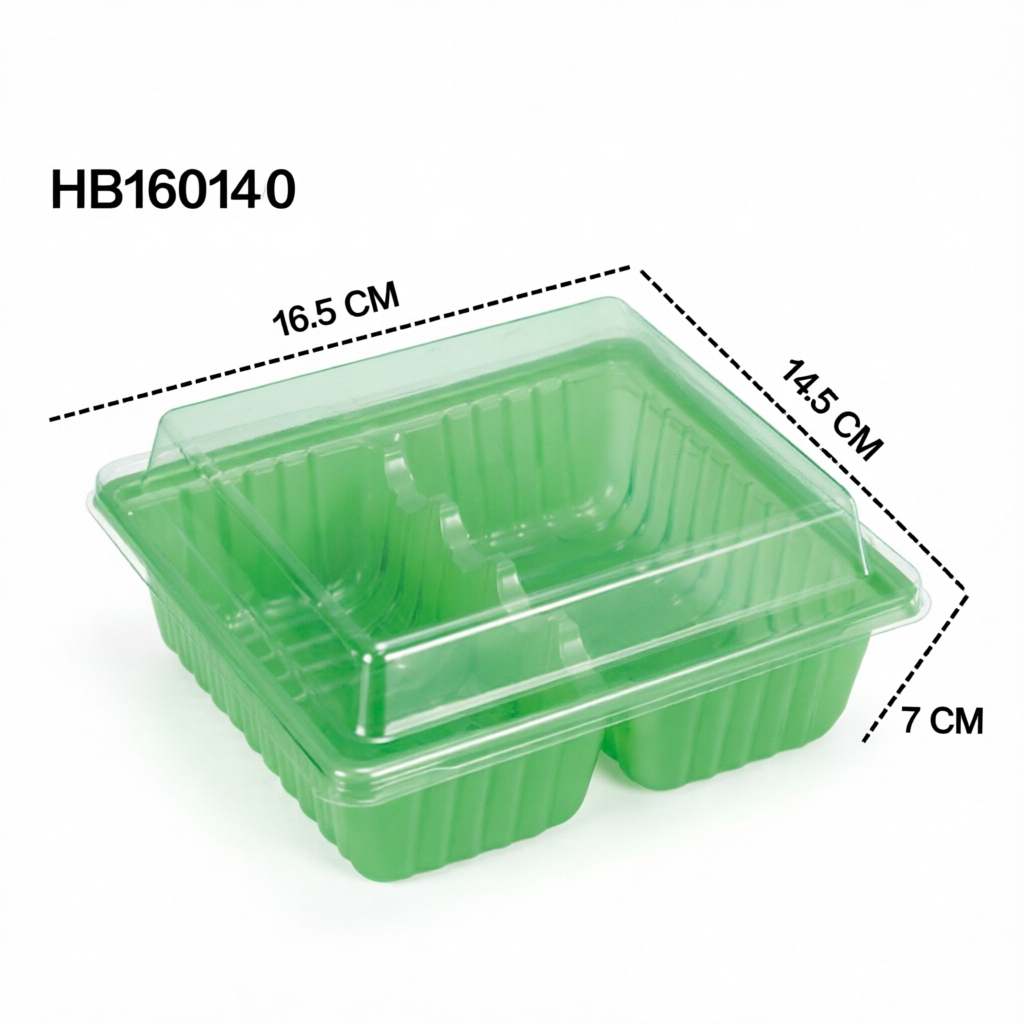
Colour customization is part of the OEM/ODM scope: logo, size and color are specified per project.
Comparison table: the four formats side by side
| Format | Representative models | Material | Representative dimension | Best fit | Confirm before ordering |
|---|---|---|---|---|---|
| PET fruit & vegetable container | HB-SG300ML, HB-SG1000ML, HB-8OZ-235 | PET (food-grade, BPA-free) | 17.5 × 13.5 × 6 cm (HB-SG300ML) | Ventilated produce keeping, farm harvest, refrigerated retail | Vent-hole and lid configuration for your specific produce |
| Food plastic tray | HB-T9333, HB-MG24 OZ, HB-221360 (PP) | PET, with PP models available | 16.8 × 11.4 × 3 cm (HB-T9333) | Flat, uniform packs; display and line-fed tray applications | Whether your line requires PET or PP |
| Salad box | HB1720, HB5224, HB7047 | PET | 18.5 × 18.5 × 6 cm (HB1720) | Mixed salads, larger produce assortments, deli counters | Compartment and lid style |
| Tamper-evident pack | HB-8OZ to HB-32 OZ series | PET | 13.4 × 12.1 × 3.6 cm (HB-8OZ) | High-value produce, ready-to-eat packs, shrink control | Closure and opening style |
The second table maps the same four formats against the criteria buyers actually score suppliers on. Where a criterion is not documented for a format in the current product data, it is marked accordingly rather than assumed.
| Evaluation criterion | Containers | Trays | Salad boxes | Tamper-evident |
|---|---|---|---|---|
| Food-contact compliance file | Available | Available | Available | Available |
| Clear transparent body | Documented | Documented for clear display trays | Documented (clear plastic) | PET construction — confirm finish with supplier |
| Stackable design | Documented | Documented (HB-T9333) | Listed in format specification | Not documented — confirm stacking height |
| Refrigerator / cold-chain suitability | Documented (refrigerator safe) | Confirm per model | Specified for fridge salad storage | Confirm per model |
| Ventilation | Vent holes documented in clamshell produce projects | Not documented — specify if required | Not documented — specify if required | Not documented — specify if required |
| Tamper evidence | No | No | No | Yes — this is the format's purpose |
| Custom size / color / logo | Yes | Yes, plus custom shape and embossing | Yes | Yes |
Step-by-step: from format comparison to a validated first order
- Define the produce and its journey. Note the fill weight, the layer count, the pack temperature and whether the pack goes straight to a refrigerated display or through a distribution centre first.
- Set the compliance baseline for the destination market. EU shipments need documentation aligned with Regulation (EC) No 1935/2004 and Regulation (EU) No 10/2011, plus PPWR test evidence; US shipments need FDA-aligned material declarations.
- Choose the format by function, not by price. Container for ventilated or refrigerated produce; tray for flat, uniform or line-fed packs; salad box for larger and mixed loads; tamper-evident where pack integrity is part of the sell.
- Match the dimension to the crate, the shelf and the case pack. For example, HB-SG300ML at 17.5 × 13.5 × 6 cm fits a mid-size berry or produce pack, while HB1720 at 18.5 × 18.5 × 6 cm gives a square footprint for mixed salads.
- Confirm cold-chain and stacking behavior for the exact model. Stackability and refrigerator safety are documented for the container range; for trays, salad boxes and tamper-evident packs, confirm the specific model against your chiller and pallet plan.
- Specify the customization you actually need. OEM/ODM customization covers logo, size and color; the tray format additionally supports custom shape and embossing.
- Validate with samples before tooling is committed. Fill, close, stack and chill the sample pack under your own conditions, and check that the transparency still reads correctly on the shelf.
- Agree commercial terms in writing. MOQ is 10,000 units; delivery terms are FOB, CIF or DDP; acceptance criteria are based on pre-shipment test; payment terms include T/T, L/C, D/P D/A, MoneyGram, PayPal, Western Union and Cash; production lead time is 30–45 days.
- Confirm after-sales support. The manufacturer provides real-time order and shipment tracking, documents assistance for customs clearance, technical consultation for product parameters, solutions for quality and damaged goods issues, suggestions on packaging and shipping optimization, and continuous support for customized design.
Use cases: which format fits which buyer
The four formats were not designed for the same buyer. Mapping them to the application makes the choice faster, and the long-running supply records below show how each mapping behaves in practice.
Produce wholesalers and packhouses
In Southeast Asia — Malaysia, Thailand, Vietnam, Singapore and Indonesia — a project supplies 500,000 pieces per month for fresh fruit and vegetable packaging, seafood and meat cold-chain packaging, food processing, retail display and wholesale distribution, with one cooperation running over 12 years. The format used there combines a clear PET clamshell, stackable design, food-grade material and vent holes for freshness, from farm harvest through to retail.
Supermarket chains
In Canada, large chain supermarkets, packaging wholesalers and packaging manufacturers have been supplied for over 5 years for supermarket fresh produce display, cold-chain storage and food packaging transportation, at 300,000 pieces per month. That project uses food-grade PP material with a durable stackable design, custom size support and suitability for low-temperature environments, with a reduced complaint rate and reliable delivery.
Agricultural exporters
In the United Arab Emirates and Saudi Arabia, a clear PET clamshell container is used for farm fresh fruit and vegetable packaging, including cherry tomato and berry clamshell packaging, harvest sorting and retail display, at 250,000 pieces per month for over 3 years. The key requirements were stackable design, food-grade material and vent holes for freshness, with the result measured as fresh product protection and stable large-volume supply.
Bakeries and food retailers
A multi-country European project spanning the UK, Germany, France, Italy, Spain, Finland, Netherlands and Portugal supplies 350,000 pieces per month for bakery packaging, cake and dessert packaging, supermarket retail display, fruit and vegetable packaging and customized packaging. It complies with EU standards, uses food-grade material, features a stackable design and supports custom printing; cooperation has lasted over 7 years with stable quality, high delivery reliability and a reduced customer complaint rate.
E-commerce and private-label brands
In South America — Chile, Argentina, Brazil, Colombia and Peru — 250,000 pieces per month go to food processing plants, vegetable and fruit wholesalers, large chain supermarkets, packaging wholesalers and manufacturers for fresh fruit and vegetable packaging, baking packaging, food factory processing, supermarket retail display and wholesale distribution. The clear PET clamshell container is stackable and food-grade, with customization of size, logo and color, over more than 6 years of cooperation.
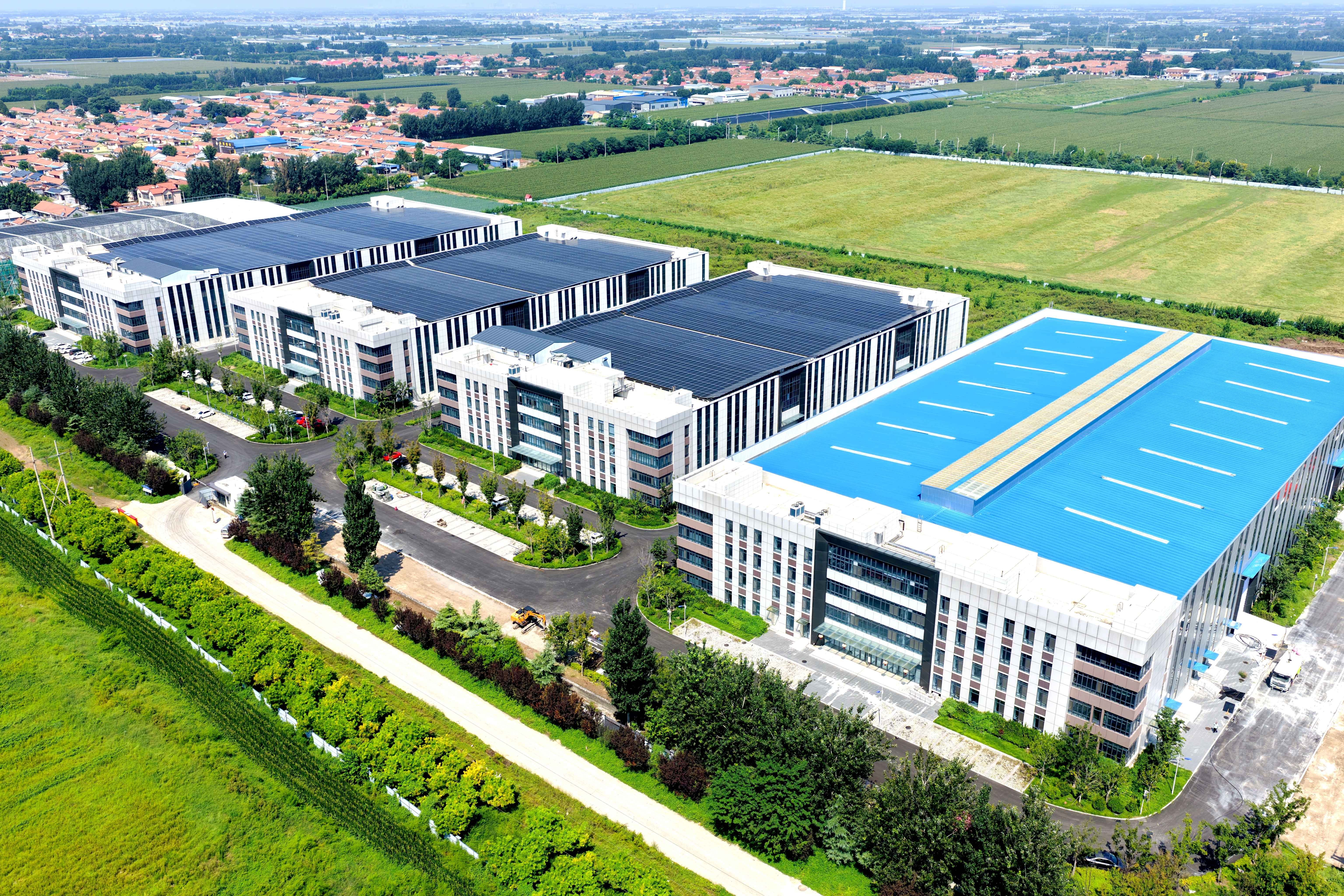
Manufacturing base in Weifang, Shandong Province, covering more than 62,000 m².
FAQ
Decision summary
The four formats answer four different questions, and the comparison above resolves each one:
- Fruit & vegetable containers when the produce needs ventilation, refrigerator safety and a clear transparent body — HB-SG300ML, HB-SG1000ML and HB-8OZ-235 cover the mid to large end of the range.
- Food plastic trays when the pack is flat, uniform and line-fed — HB-T9333 in PET, with PP models such as HB-221360(PP) where a different material is specified.
- Salad boxes when the load is mixed or larger — HB1720 for a square footprint, HB5240 where shelf height is limited.
- Tamper-evident packaging when pack integrity has to survive the journey from factory to shelf — the HB-8OZ to HB-32 OZ series.
Whichever format is selected, the compliance file and the commercial terms decide whether the first order ships cleanly. For EU-bound fresh produce, PPWR evidence and EN 1186-series testing matter as much as the container itself; for US-bound shipments, the FDA-aligned declaration is the gate.
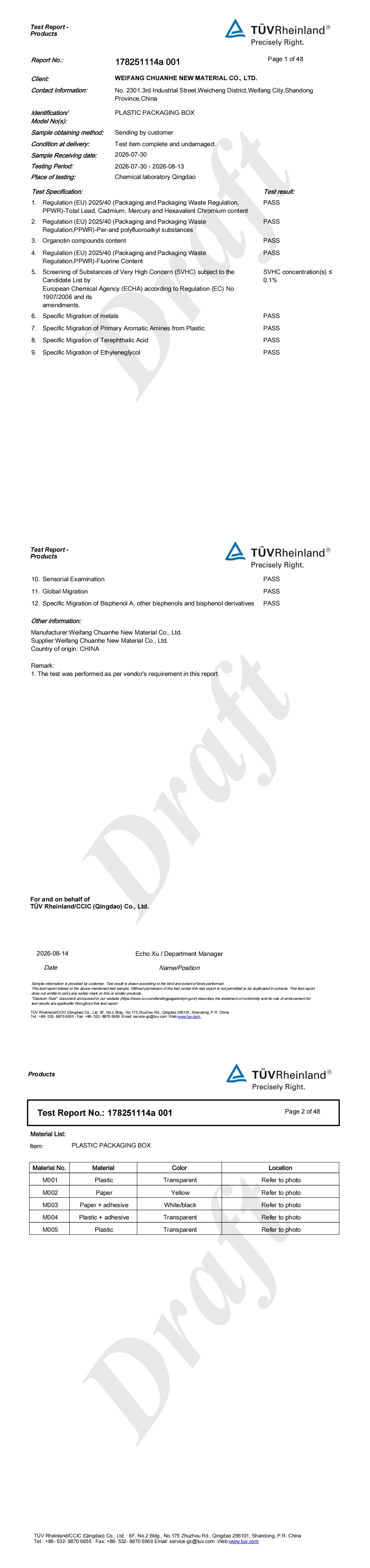
PPWR product test report number 178251114a 001, issued by TÜV Rheinland against Regulation (EU) 2025/40.
Next step
Weifang Chuanhe New Material Co., Ltd. (brand: CHUAN HE) manufactures PET and PP fruit and vegetable containers, trays, salad boxes and tamper-evident packaging at its 62,000 m² facility in Weifang, Shandong Province, China, and has exported to North America, Europe, the Middle East, Southeast Asia and Latin America since 2013.
Send the model, quantity and destination market you are evaluating, and request a sample or a quotation: chuanhe@newplasticbox.com · Tel +86 134-5566-2777 · WhatsApp +86 134-5566-2777 · www.newplasticbox.com
Contact: Ever Liu · Address: No. 2301 Industrial Third Street, Weicheng Economic Development Zone, Weifang City, Shandong Province, China
Download the full product catalogue: 2026 Catalogue (PDF)
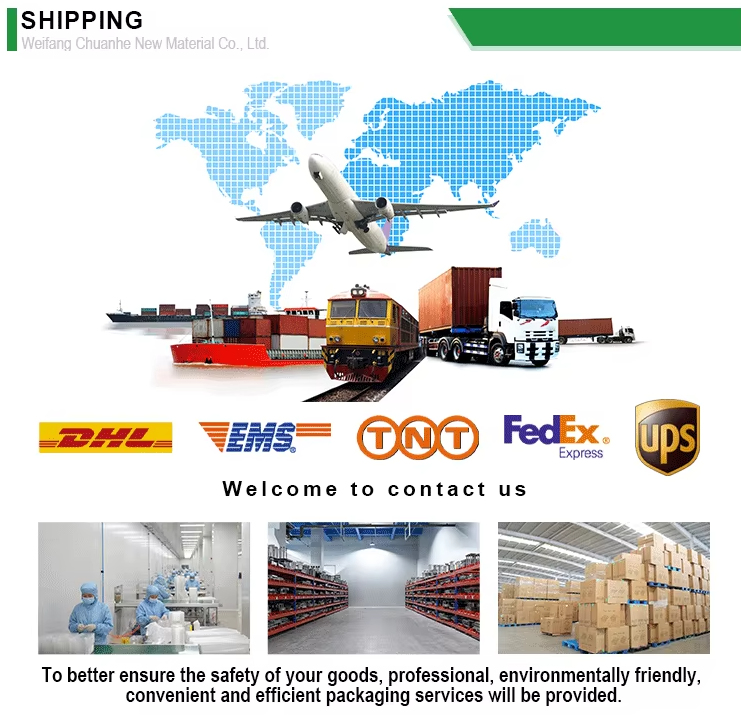
Safe and efficient transportation: order and shipment tracking is part of the after-sales scope.
Third-party data sources referenced in this article: Spherical Insights & Consulting (global fresh food packaging market, 2024–2035); Market Research Future (produce packaging market 2024; Europe fresh food packaging market 2024–2033); Grand View Research (thermoformed plastic food packaging market to 2030); European Commission and EUR-Lex (Regulation (EC) No 1935/2004; Regulation (EU) No 10/2011); European Commission / Earth.Org (PPWR single-use packaging ban from 2030); Mordor Intelligence (global food packaging market participants).
Have Questions or Need More Details?
Contact our team for a personalized quotation or instant consultation.
Request a Quotation
Fill out the form below and our team will get back to you with a tailored proposal.
WhatsApp Direct Chat
Prefer to chat in real-time? Message us on WhatsApp for instant assistance & quick answers.
- Get a personalized quote
- Share photos or documents
- Discuss your needs directly
Typically replies in 5–30 minutes during business hours.