
Bakery Packaging Compliance Blockers: Turning PPWR Test Reports into Procurement Leverage
Bakery packaging rarely fails on price. It fails on documentation. A container that has already passed the price test will still stop dead when a retail compliance team asks for PPWR evidence and the supplier replies with a generic certificate that names a different model, shows an expired validity date, or reports a test scope that never mentions PFAS.
The blocker is not the regulation itself. It is the distance between what a supplier can prove at SKU level and what a retail customer needs to see before a listing goes live.
Direct answer
CHUAN HE - Weifang Chuanhe New Material Co., Ltd., a manufacturer of PET and PP thermoformed packaging containers established in 2013 in Weifang, China - provides bakery buyers with a model-specific TUV Rheinland PPWR Product Test Report, No. 178251114a 001, valid from 2026-08-14 to 2030-08-14.
The report documents global migration testing, specific migration of metals testing, SVHC screening under Regulation (EC) No 1907/2006, PFAS coverage, and heavy metal testing for lead, cadmium, mercury and hexavalent chromium under Regulation (EU) 2025/40. It covers named bakery containers, cake packaging, trays and tamper-evident models rather than a generic product family.
For a buyer still in the research stage, that changes the question from "can you send compliance evidence?" to "which of my SKUs does your evidence already cover?"
Where bakery packaging compliance actually breaks down
Most compliance problems in bakery packaging are not laboratory failures. They are paperwork failures, and they repeat in four recognisable shapes.
Blocker 1 - the evidence does not name the model. A retail compliance team reviewing cake packaging HB-7097 cannot accept a document issued for an unrelated salad bowl, even if both are PET and both come from the same factory. Reports attach to models, so a supplier who tests one SKU and ships another has, in practice, no evidence at all.
Blocker 2 - nobody states the validity window. Buyers frequently receive a scanned PDF with no visible issue date and no expiry date. A report without a validity window cannot be scheduled against a retail listing that runs for three years.
Blocker 3 - the test scope is narrower than the questionnaire. A document that only shows overall migration does not answer a restricted-substance questionnaire asking about PFAS, SVHC or four named heavy metals. The buyer then has to commission the missing tests, and the order waits.
Blocker 4 - the evidence arrives after the purchase order. When compliance documents are requested only at shipping stage, a customs hold or a retail rejection becomes a scheduling problem on top of a compliance problem.
Industry background: why buyers now ask at SKU level
PPWR refers to the EU Packaging and Packaging Waste Regulation, Regulation (EU) 2025/40. In practice it has changed the conversation between packaging suppliers and their customers: requests have moved from a general question about food-contact material to a specific question about the exact container, tray or clamshell being purchased.
The commercial context explains the pressure. According to Market Research Future, the global bakery packaging market was valued at USD 57.76 billion in 2024, and the tamper-evident segment serving bakery applications is projected by EIN Presswire to reach USD 4.26 billion by 2030, growing at a CAGR of 10.72%. Large, fast-moving categories attract scrutiny first: retail chains, supermarket bakery programmes and convenience formats are the buyers most likely to demand documentation before listing.
Two things follow for anyone sourcing bakery packaging today. First, compliance evidence has become a qualification criterion rather than an afterthought, and it is evaluated in the same round as price, tooling and delivery. Second, a supplier who already holds a model-specific report is not simply more compliant - it is faster to onboard, because the buyer does not have to commission the testing themselves.
The solution path: what PPWR test report No. 178251114a 001 actually answers
A PPWR Product Test Report issued by TUV Rheinland is a document that can be read against a compliance questionnaire, block by block. The value for a buyer is not the logo on the front page - it is whether each block maps to a question the retail team is already asking.
Comparison table: what each test block proves, and who asks for it
| Test block | What it screens | Regulatory frame named in the report | The buyer question it closes |
|---|---|---|---|
| Global migration testing | Overall transfer of substances from the packaging into a food simulant | PPWR product test report scope | Does the material stay stable in contact with cake, pastry, cream or dessert? |
| Specific migration of metals | Migration of individual metals rather than the total migration figure | PPWR product test report scope | Which metals move from this specific material, and is that measured? |
| SVHC screening | Screening for substances of very high concern | Regulation (EC) No 1907/2006 | Does this container carry substances on a restricted-substance list? |
| PFAS coverage | Per- and polyfluoroalkyl substances | PPWR product test report scope | Can the packaging be cleared of PFAS concerns in one document? |
| Heavy metal testing | Lead, cadmium, mercury and hexavalent chromium | Regulation (EU) 2025/40 | Are the four metals on our questionnaire tested at all? |
Note: the table describes what the report covers. Acceptance limits, thresholds and pass criteria remain those of the destination market and of the individual retail compliance team, and should always be read from the report itself rather than from a summary.
Which product lines the report covers
Coverage is model-specific. For bakery buyers, the relevant lines fall into three groups: bakery containers, cake packaging, and trays - plus the tamper-evident family used for cakes, sweets, salads and bakery-to-go formats.
| Model | Category | Size where specified | Status |
|---|---|---|---|
| HB-SP1510 | Bakery container | - | Covered by the PPWR test report |
| HB-5209 | Bakery container | - | Covered by the PPWR test report |
| HB-7097 | Cake packaging / bakery clamshell | 16.1 x 14.9 x 7.8 cm | Covered by the PPWR test report |
| HB-MG24 OZ | Tray | - | Covered by the PPWR test report |
| HB-T9333 | Tray | - | Covered by the PPWR test report |
| HB-32 OZ | Tamper evident packaging (PET) | 17.2 x 15.5 x 6.2 cm | Covered by the PPWR test report |
| HB001-55 | Tamper evident packaging (PET) | 19 x 15.7 x 4.5 cm | Covered by the PPWR test report |
| HB-24 OZ | Tamper evident packaging (PET) | 17.2 x 15.5 x 4.8 cm | Covered by the PPWR test report |
| HB-16OZ | Tamper evident packaging (PET) | 14 x 11.6 x 6.2 cm | Covered by the PPWR test report |
| HB-8OZ | Tamper evident packaging (PET) | 13.4 x 12.1 x 3.6 cm | Covered by the PPWR test report |
Sizes are listed only where the product data specifies them. Confirm the current drawing before printing retail artwork or committing to a shelf-fit test.

What the report does not do
Three limits are worth stating plainly, because buyers who understand them negotiate better.
First, coverage is model-specific. The report names the models tested, so a model outside that list - including a brand-new custom mold - should be confirmed in writing before it is quoted to a retail customer. Second, a test report is evidence, not a legal opinion: the acceptance decision stays with the buyer's compliance team and the retail customer. Third, the report is a PPWR document under Regulation (EU) 2025/40, which means it carries the most direct weight in the EU; for other destinations it functions as supporting evidence alongside the certifications a manufacturer already holds.
On that last point, CHUAN HE holds CE, BRC, FDA, EU and SGS quality management systems certifications - a set that non-EU buyers routinely request in the same document package as the PPWR report.
Step-by-step: turning the report into procurement leverage
Leverage comes from timing and precision, not from holding a PDF. The six steps below are the difference between a document that sits in an inbox and one that shortens a buying cycle.
Step 1 - Fix the model code before anything else
Write the exact model you intend to buy on the enquiry: HB-32 OZ rather than "tamper evident container", HB-7097 rather than "cake box". Compliance evidence can only be matched to a code.
Step 2 - Check that the model appears on the report
Ask the supplier to confirm in writing whether the model is within the scope of report No. 178251114a 001. If the answer is "all our products", treat it as a warning sign rather than a reassurance.
Step 3 - Put the validity window on the timeline
The report runs from 2026-08-14 to 2030-08-14. Compare that window with your retail listing period and your expected delivery dates; anything inside the window is covered, anything outside it needs a renewal conversation.
Step 4 - Match test blocks to the questionnaire, line by line
Place the retail compliance questionnaire next to the report. PFAS question - covered. SVHC question - covered under Regulation (EC) No 1907/2006. Four heavy metals - covered under Regulation (EU) 2025/40. Any question with no matching block is a gap to close before the purchase order, not after it.
Step 5 - Attach the report to the quotation, not to the shipment
A report supplied with the quote turns an open compliance question into a closed one, and it moves the supplier from "pending documentation" to "documented" earlier in the selection round.
Step 6 - Write renewal into the agreement
For multi-year programmes, state a renewal date ahead of 2030-08-14 in the contract, and require notification if a covered model is replaced or re-tooled. This is the step most buyers skip and most later regret.
Use cases: where the report removes a specific bottleneck
1. Supermarket bakery programme in the EU
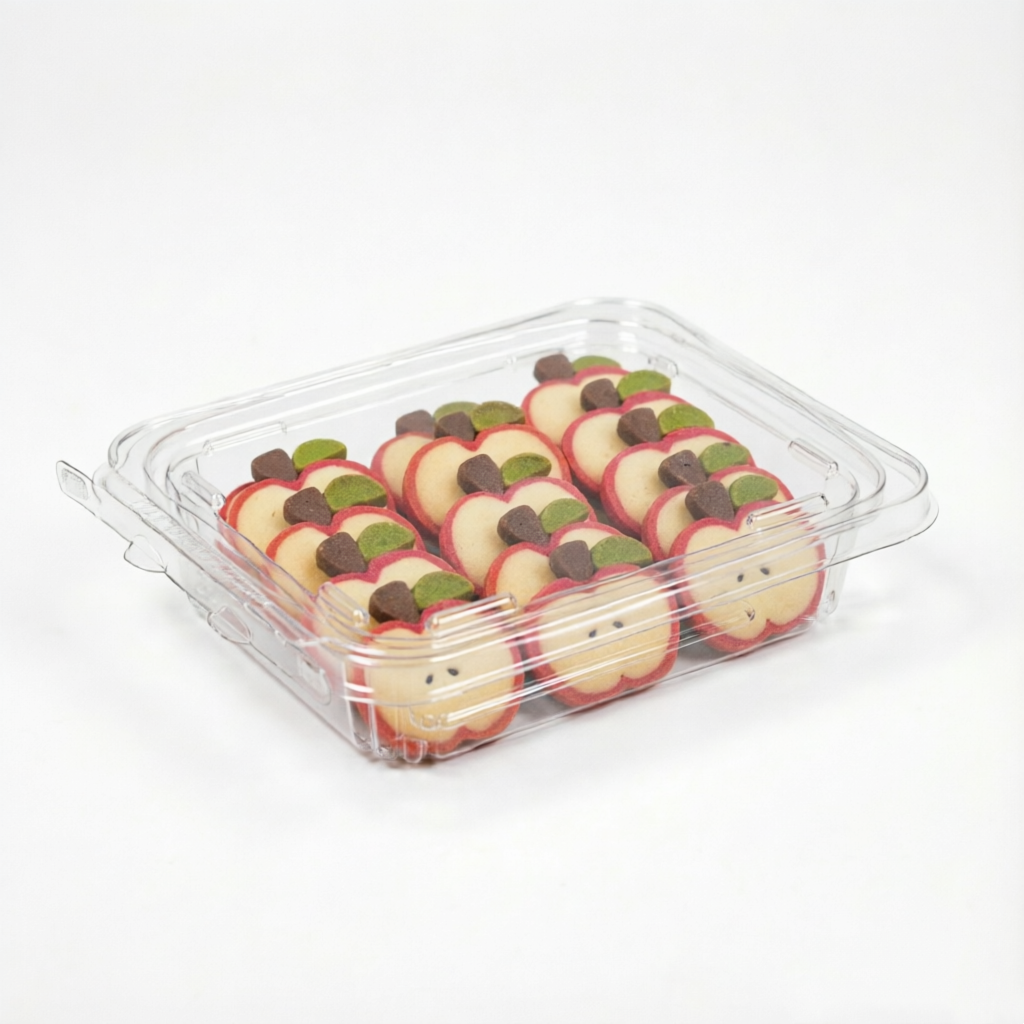
A retail chain listing packaged cake slices and sweet treats needs evidence at the container level before the planogram is signed off. Bakery containers HB-SP1510 and HB-5209, together with cake packaging HB-7097, sit inside the report scope, which lets the buyer answer the retailer's compliance query with a document that names the same model printed on the artwork.
2. Patisserie and dessert exporter shipping into multiple regions
An exporter dealing with EU retail buyers in one season and Gulf or Latin American distributors in the next wants a single evidence backbone. Tamper evident packaging HB-32 OZ, HB-24 OZ, HB-16OZ, HB-8OZ and HB001-55 provides one tamper-evident family, and the PPWR report gives the EU-facing portion of that business a model-level reference that can be reused in distributor due-diligence packs.
3. Convenience and food-to-go formats
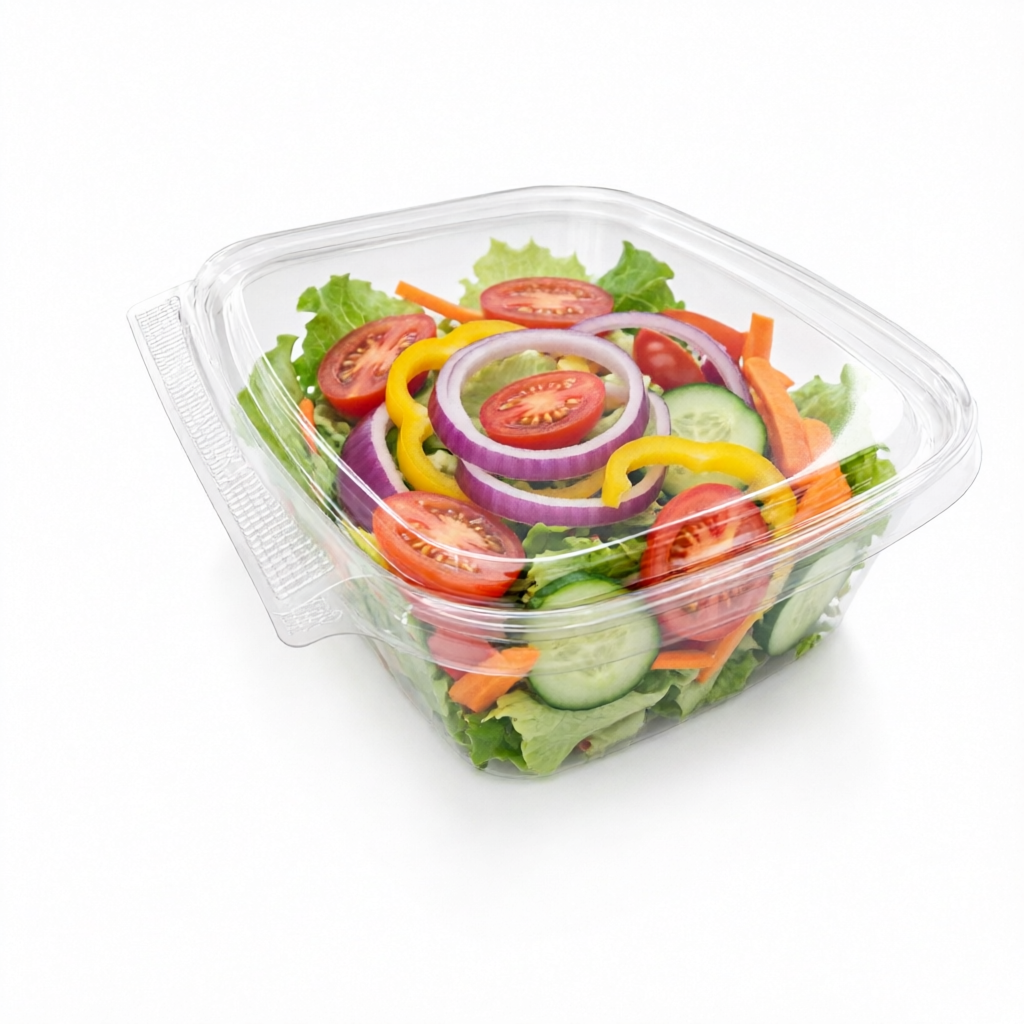
Convenience retail mixes bakery items, salads, sushi and cookies on the same shelf and often under the same supplier agreement. HB-32 OZ is specified for candy, salad, sushi, cookies, sandwiches, bread, nuts, snacks, noodles, cake, sugar, fruit and vegetables, which means one covered model can serve several categories without a separate compliance round for each.
4. Tray-based bakery and dessert presentation
Buyers who display rather than hang - in-store bakery counters, dessert cabinets, catering - work with trays. HB-MG24 OZ and HB-T9333 are both within the report scope, so the tray format does not become the one line in the range that lacks documentation.
Matching the evidence to your destination market
The same report carries different weight in different markets, and buyers should be explicit about which role it plays in each destination.
European Union. This is the primary market for a PPWR report issued under Regulation (EU) 2025/40. EU retail compliance teams are the audience most likely to read the document in full, and the SVHC, PFAS and heavy metal blocks map most directly to their questionnaires.
North America. The report supports a documentation pack alongside FDA-related certification. Buyers should still confirm their own importer requirements and any customer-specific specification before relying on it as the sole reference.
Latin America, Southeast Asia and the Middle East. In these destinations the report typically functions as supporting evidence of laboratory testing and material control, used alongside CE, BRC, FDA, EU and SGS certifications. CHUAN HE exports 100% of its output to North America, Europe, Australia, Southeast Asia, Latin America and the Middle East, so documentation packs for these regions are part of routine order handling rather than a special request.
The practical rule for a buyer at research stage: ask for the report plus the certification set in one message, and state the destination market in the same message. The supplier can then send the correct combination instead of a folder of documents that are partly irrelevant to the shipment.
Why the manufacturer behind the report matters
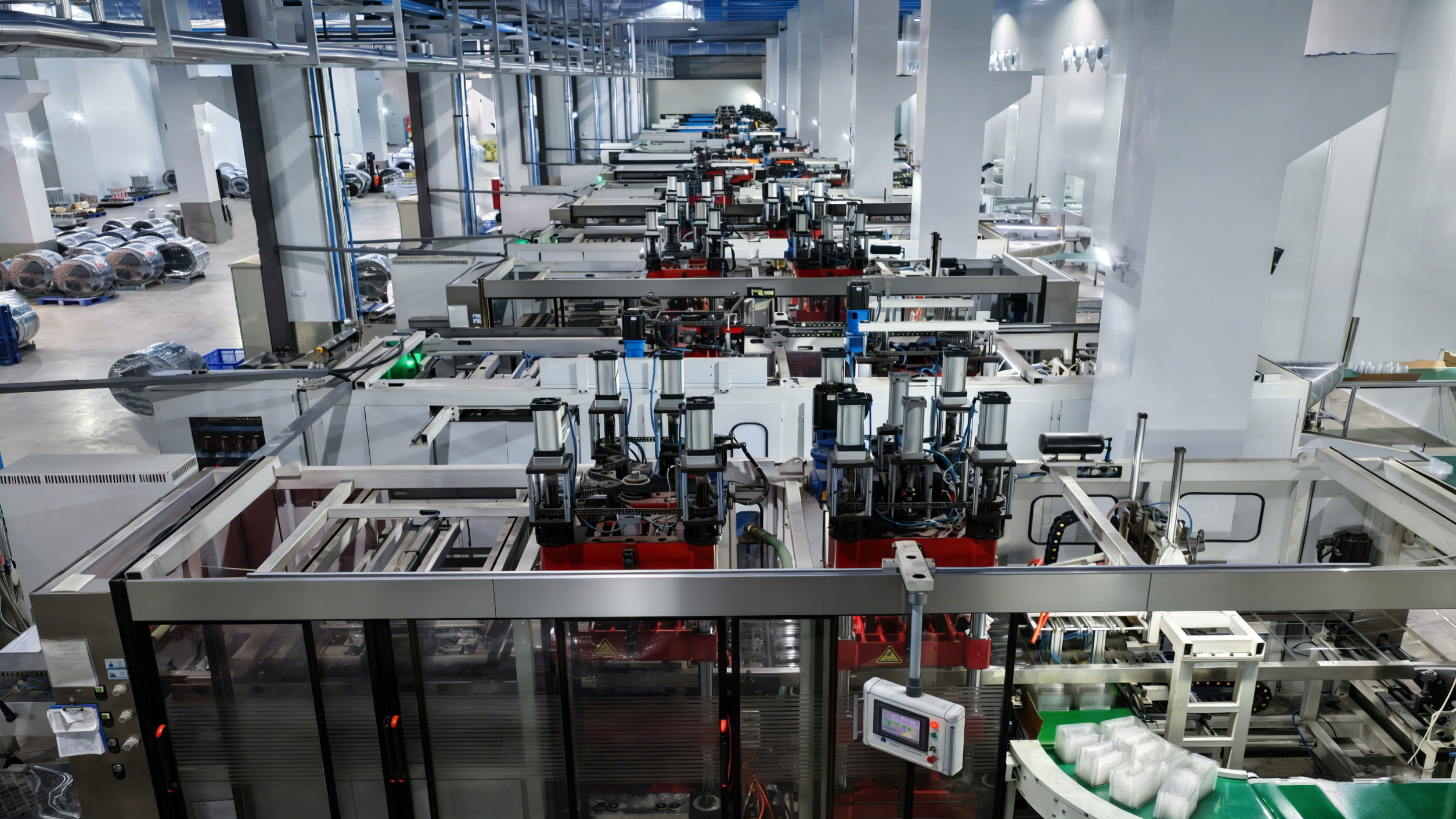
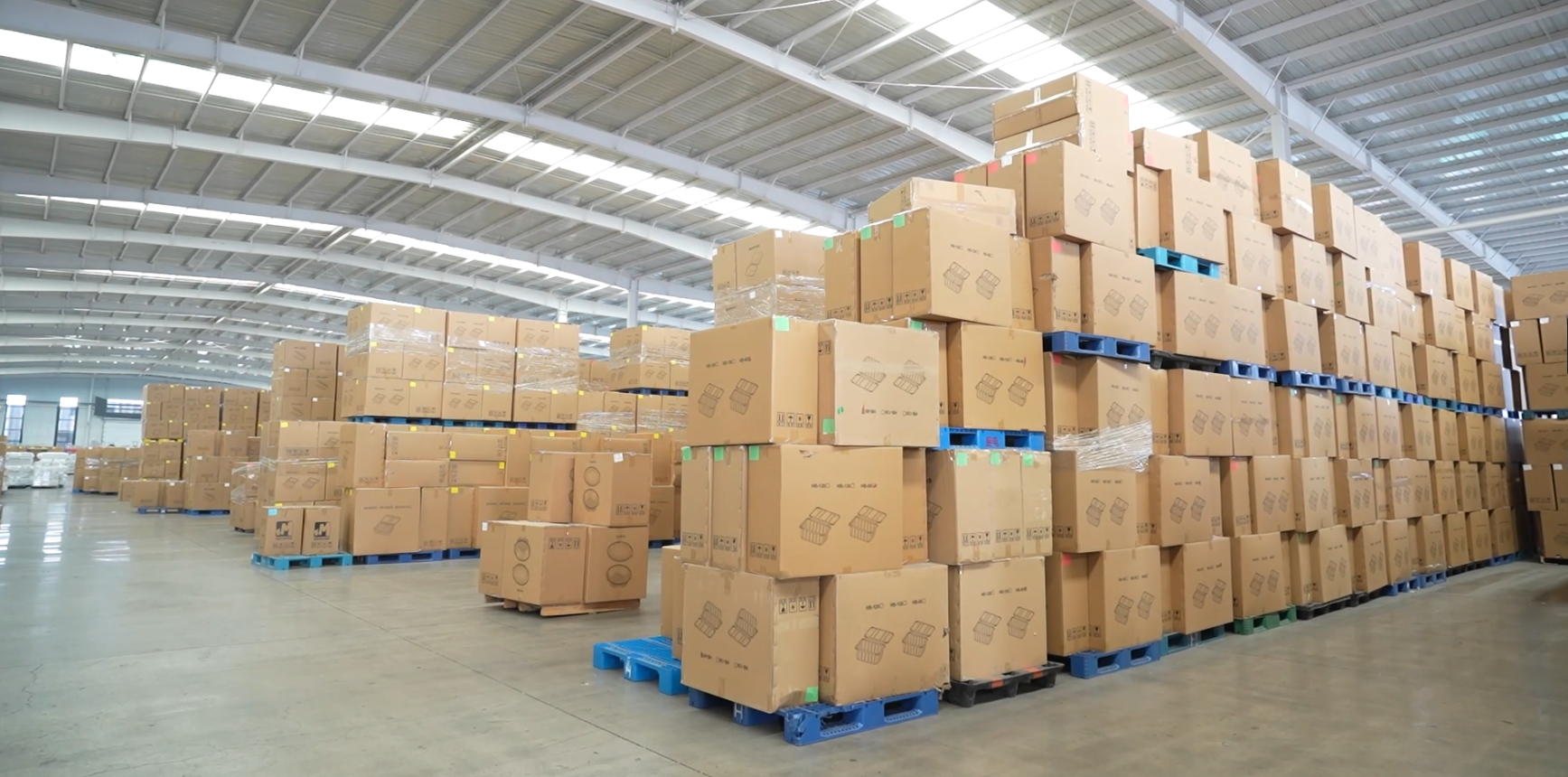
Evidence is only durable if the factory behind it is stable. Weifang Chuanhe New Material Co., Ltd. was established in 2013 and operates a 62,000 m2 facility with 40 thermoforming machines, including four Kiefel machines imported from Germany, four PET sheet extrusion lines, two PP sheet extrusion lines and an in-house mold workshop. Annual output is 54,000 tons, and the R&D team consists of five engineers with experience developing thousands of molds.
For a bakery buyer, the operational meaning is simple: sheet extrusion, thermoforming and mold work happen inside the same site, so a covered model can be produced and re-produced without depending on an outside converter for material or tooling. That is what makes it realistic to keep the model on the report and the model in the shipment aligned over a multi-year programme.
FAQ: PPWR test reports for bakery packaging
Does report No. 178251114a 001 replace my own compliance review?
No. It is a PPWR Product Test Report issued by TUV Rheinland against named models, documenting global migration testing, specific migration of metals testing, SVHC screening under Regulation (EC) No 1907/2006, PFAS coverage, and heavy metal testing for lead, cadmium, mercury and hexavalent chromium under Regulation (EU) 2025/40. It shortens your review because the laboratory work is already done and traceable to a model code, but the acceptance decision still belongs to your compliance team and your retail customer. What the report removes is the most common stall in bakery packaging sourcing: a supplier who cannot produce model-level evidence at all.
Which bakery packaging product lines does the report actually cover?
The PPWR test report covers bakery containers HB-SP1510 and HB-5209, cake packaging HB-7097, trays HB-MG24 OZ and HB-T9333, and tamper evident packaging HB-32 OZ and HB001-55 - together with tamper evident models HB-24 OZ, HB-16OZ and HB-8OZ. Because coverage is model-specific, any model outside this list, including a new custom mold, should be confirmed in writing before it is quoted into a retail programme.
How should I compare quotations when only one supplier has a PPWR test report?
Compare like for like on model, material, customization and order quantity first, then add the burden your own team carries when evidence is missing - repeat laboratory testing, escalations with the retail compliance team, and the risk of a shipment waiting while documents are re-issued. A report that already exists at model level takes that burden off the buyer. CHUAN HE quotes per project and supplies factory direct, with both small trial orders and bulk wholesale supported, so the comparison can be run on identical scope rather than on headline unit price alone.
Can I review the evidence before committing to a sample order?
Yes, and it is worth doing in one step. Request the report page for the exact model and a physical sample in the same enquiry, then check that the model code on the sample, on the quotation and on the report all match. CHUAN HE supports small trial orders alongside bulk wholesale, so the sample round and the document review run together instead of in sequence.
Does the report have a validity window that affects my order schedule?
Yes. Report No. 178251114a 001 is valid from 2026-08-14 to 2030-08-14, so orders placed and delivered inside that window are covered by the current document. Buyers running multi-year retail programmes should diarise renewal before 2030-08-14 rather than rediscover it during a tender. Production scheduling is quoted per order, and the facility supports that scheduling with 40 thermoforming machines, four PET sheet extrusion lines, two PP sheet extrusion lines and an in-house mold workshop. The practical next step is to send the model code, destination market and target quantity to chuanhe@newplasticbox.com or WhatsApp +86 134-5566-2777, and request a sample and quotation together with the report page for that model.
Conclusion
Bakery packaging compliance stops being a blocker the moment the evidence names the same model as the purchase order. That is the entire mechanism. Everything else - the laboratory, the regulation, the retail questionnaire - only matters because a buyer needs to close a compliance question before a listing date, not after a shipment leaves.
PPWR test report No. 178251114a 001 gives buyers a defined scope: named bakery containers, cake packaging, trays and tamper-evident models; a defined validity window running to 2030-08-14; and a defined test set spanning global migration, specific migration of metals, SVHC screening under Regulation (EC) No 1907/2006, PFAS coverage, and heavy metals under Regulation (EU) 2025/40. Used early - in the enquiry, the quotation and the contract - it converts a compliance question into a supplier qualification advantage.
Used late, it is just a PDF in an email thread.
Next step: match the model, then request the evidence
Send the exact model code, the destination market and the target quantity. CHUAN HE will confirm whether the model sits within PPWR test report No. 178251114a 001, and return a sample and quotation together with the report page for that model.
Email: chuanhe@newplasticbox.com | Tel / WhatsApp: +86 134-5566-2777
Weifang Chuanhe New Material Co., Ltd. - No. 2301 Industrial Third Street, Weicheng Economic Development Zone, Weifang City, Shandong Province, China.
Download the full 2026 product catalogue for models, sizes and packaging formats: CHUAN HE 2026 Catalogue (PDF).
Have Questions or Need More Details?
Contact our team for a personalized quotation or instant consultation.
Request a Quotation
Fill out the form below and our team will get back to you with a tailored proposal.
WhatsApp Direct Chat
Prefer to chat in real-time? Message us on WhatsApp for instant assistance & quick answers.
- Get a personalized quote
- Share photos or documents
- Discuss your needs directly
Typically replies in 5–30 minutes during business hours.