
Compartment, Clamshell, or Tamper Evident? A Fruit & Vegetable Packaging Glossary
Compartment, Clamshell, or Tamper Evident? A Fruit & Vegetable Packaging Glossary
Three words cause most of the mis-quotes in fresh produce packaging: compartment, clamshell and tamper evident. They are not competing categories, because each answers a different question. Compartment describes what happens inside the pack, where the base is divided into separate cells. Clamshell describes how the pack is built, with base and lid formed as one piece and joined along a hinge. Tamper evident describes what the closure proves, because an opened pack shows visible evidence that it has been opened. A single fruit & vegetable packaging item can be all three at once; most items are only one.
This glossary explains catalog vocabulary by form and function rather than by marketing language. The worked examples come from the CHUAN HE range: the HB-SG300ML fruit & vegetable container, the HB-MG40 OZ tray, the HB1720 salad container, and the HB-8OZ, HB-20 OZ, HB-24 OZ and HB-32 OZ tamper evident series. Every term below is tied to something you can check on a drawing, a data sheet or a physical sample before a purchase order is signed.
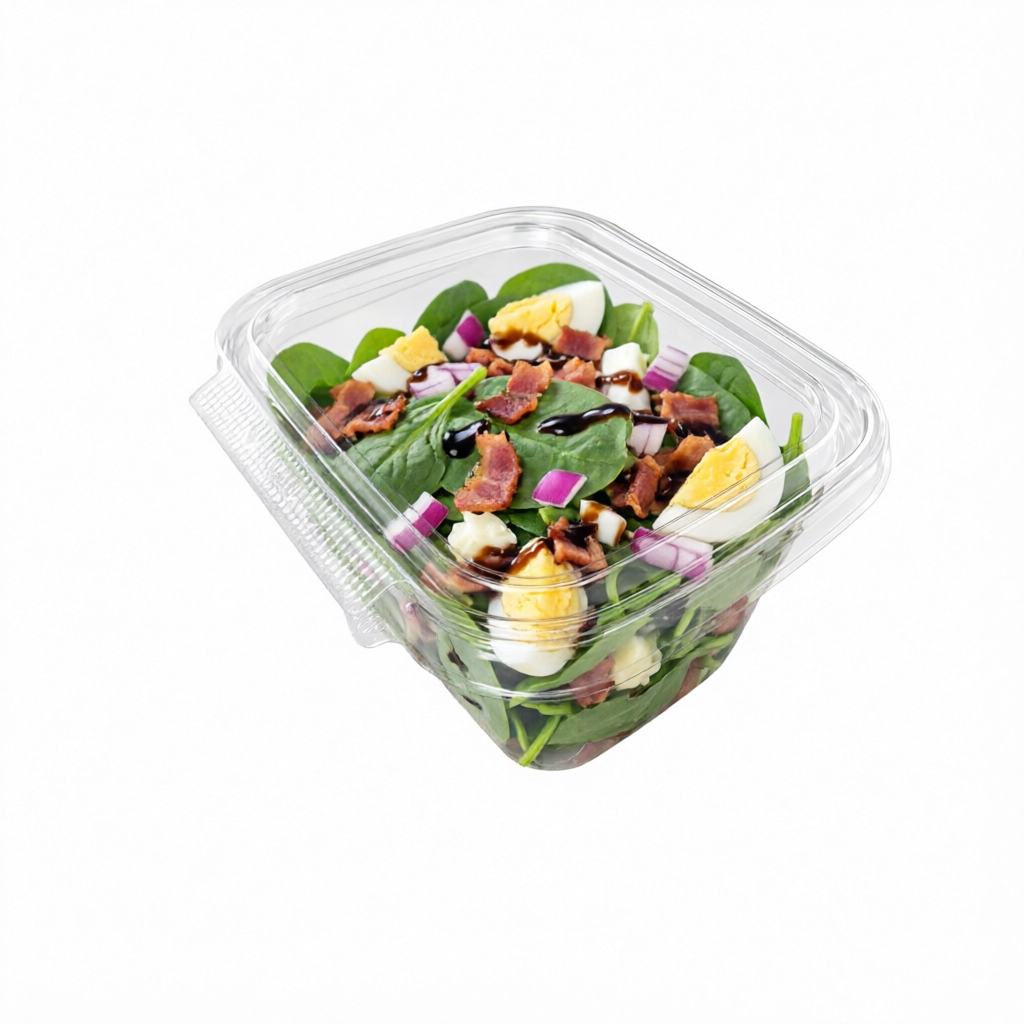
Clear PET packaging from the tamper evident series, indexed in the CHUAN HE catalog for fruit, vegetable, salad and dry fruit applications.
Why one catalog item carries several names
A catalog entry is usually indexed under every name a buyer might type. The HB5224 salad container is a single 17.1 × 12.3 × 5.6 cm PET item, and its type list carries seven form names: clear plastic salad boxes, airtight salad containers, stackable salad containers, clamshell salad containers, compartment salad containers, fridge salad storage containers and salad bowls. All seven describe the same model from different angles: construction, closure performance, stacking behaviour, internal structure and application.
That is convenient for discovery and risky for comparison. Two buyers who search different terms land on the same product and then quote it as though it were two alternatives. Three failures follow. Name-based shortlists mix formats that are not interchangeable. Tamper evident gets used as a synonym for has-a-lid, which removes the only property the term was carrying. And size labels get compared as if they were the same kind of number, when an ounce designation and a millilitre designation are not directly comparable without conversion.
Industry background: why the vocabulary turned technical
The category is large enough that vocabulary drift has commercial consequences. Market Research Future estimates the global produce packaging market at USD 38.08 billion in 2024 and projects USD 59.87 billion by 2035, in a report published on 15 September 2026. Treat that as a commercial research estimate rather than a government statistic, but it explains why catalogs have multiplied and why the same pack can carry half a dozen labels.
Material language drifted in the same way. The same commercial source estimates that PET held a 42% share of clamshell packaging material in 2026, with PP described as the faster-growing option on heat resistance. When one material dominates a format, suppliers start using the material name and the format name interchangeably, and PET clamshell becomes one word rather than two specifications.
Regulation added a third layer. Regulation (EU) 2025/40 on packaging and packaging waste entered into force on 11 February 2025 and has applied since 12 August 2026, replacing Directive 94/62/EC. It sets a recyclability obligation for all packaging from 1 January 2030 and a minimum 30% recycled content in the plastic part of contact-sensitive packaging made from PET as the major component from the same date. Recycled plastic in food contact applications is governed separately by Regulation (EU) 2022/1616, applying from 10 July 2023, and expanded polystyrene food containers have been restricted on the EU market since 3 July 2021 under the Single-Use Plastics Directive. Words such as recyclable, rPET and eco therefore carry legal weight, and a buyer should ask what a supplier means by them instead of assuming.
The four axes behind every product name
Reading a catalog line becomes faster once you accept that a product name usually names only one axis. Four axes matter.
- Internal structure: one open cavity, or a base divided into cells (compartment).
- Construction: one piece with a hinge (clamshell), a separate base and lid, or a tray closed by film, lid stock or over-wrap.
- Closure evidence: tamper evident, meaning the pack records that it has been opened, or not.
- Material and process: thermoformed PET or PP sheet, with the properties that follow from the polymer, such as clarity, rigidity and the recyclability route.
Two items can share a name and differ on three axes. That is why a specification written from a catalog title tends to fail at the sampling stage.
Term-by-term definitions
Fruit & vegetable container
Fruit & vegetable container is the umbrella term. It states intended contents and nothing about closure or internal structure, so two containers with the same label may open in completely different ways. In the CHUAN HE range the family includes models HB-SG300ML, HB-PG02 at 22.5 × 12 × 10 cm, HB-7123 at 12.9 × 9.7 × 7.2 cm and HB-8OZ-235 at 14.3 × 12.5 × 6 cm, all in PET. The listed traits are food-grade BPA-free material compliant with food contact safety standards, refrigerator-safe use, a stackable design that saves refrigerator and warehouse space, a clear transparent body for retail display, custom size, colour and logo options, and factory-direct supply that supports small trial orders as well as bulk wholesale. Read the term as a starting point and ask for the drawing before treating two containers as alternatives.
Trays packaging
A tray is the shallow, open-format member of the family, and it is often closed by something else, such as a lid, film or over-wrap, so the tray itself may arrive without a closure. The CHUAN HE trays packaging entry covers HB-MG40 OZ at 28 × 19.4 × 6.8 cm and HB-MG24 OZ at 18.6 × 18.6 × 8.9 cm, plus HB-T9333 at 16.8 × 11.4 × 3 cm, all in PET, and its type list names produce trays, bakery trays, MAP packaging trays, meat trays, compartment trays, clear display trays, disposable serving trays and custom blister trays. The stated traits are a rigid, sturdy structure that resists deformation and reduces goods damage in transit, compatibility with MAP modified atmosphere packaging lines, multiple sizes across produce, bakery, meat, poultry and ready meals, stackable design, a clear transparent body, custom shape, colour, embossing and logo options, and factory-direct supply. MAP compatibility is a statement about running on a line, not a shelf-life promise, because shelf life also depends on the film, the gas mix and the product.
Compartment tray
Compartment is a structure word, not a product family. A compartment tray is a tray whose base is divided into cells, so the term tells you how the inside is organised. Compartment trays appear inside the trays packaging type list, which is a family vocabulary: treat that list as the range of forms the series covers, not as proof that every model in the series has dividers. The structural detail matters beyond presentation. Because the EU overall migration limit for plastic food contact materials is expressed per unit of food contact area — 10 mg per dm² of food contact surface under Regulation (EU) No 10/2011, Article 12, with an alternative expression of 60 mg per kg of food for containers below 500 ml or above 10 litres — a divided base adds contact area per litre of product compared with a plain tray of the same footprint. The migration test justification should follow the geometry of the actual article, not the resin alone.
Clamshell
Clamshell is a construction word. A clamshell is a one-piece container whose base and lid are joined by a hinge, so it opens like a book and the lid cannot be separated from the base in normal use. In the CHUAN HE catalog the phrase appears as a form name within the salad container entry, where clamshell salad containers sit alongside compartment salad containers, stackable salad containers and airtight salad containers in the HB5224 type list. When a supplier calls a product a clamshell, check the drawing: if the lid is a separate part, the pack is not a clamshell regardless of what the listing says. Ask as well how the lid is held closed in transit and on shelf, because hinge construction and lid retention are two different design decisions.
Salad container
Salad container is an application word, and application words carry the functional claims. Wet, dressed or mixed contents place demands that a dry-goods container does not face. The HB5224 salad container at 17.1 × 12.3 × 5.6 cm is PET, with these listed traits: a leakproof and airtight lid that prevents salad dressing spilling during delivery, an optional compartment design that separates sauce from vegetables to keep ingredients fresh and crisp, a stackable structure, a durable anti-break material intended to lower transport damage, a clear transparent body for supermarket display, and multiple size options with custom logo printing. HB1720 is listed in the same salad container group. Note which of those statements are testable: leakproof, airtight and anti-break are performance properties, so they belong in a sample trial and in the purchase specification rather than in the marketing copy.
Tamper evident packaging
Tamper evident is a closure word. It means the pack is designed so that opening it leaves visible evidence. It is not a synonym for sealed, lidded or secure, and it does not by itself describe the shape of the container. The CHUAN HE tamper evident series covers HB-8OZ at 13.4 × 12.1 × 3.6 cm, HB-20 OZ at 14 × 11.6 × 7.9 cm, HB-24 OZ at 17.2 × 15.5 × 4.8 cm and HB-32 OZ within the same series, all in PET. The listed traits are customised shapes in rectangle, square, round or bespoke form, high transparency from the PET material, a wide application range that includes fruit and vegetable packs, salad, bakery, dry fruit, confectionery and prepared foods, custom colour and size options, and ODM/OEM support. The catalog states the application range and the transparency, but it does not describe the closure geometry of each model, so ask for the mechanism in writing and test a sample before committing a retail programme to it.
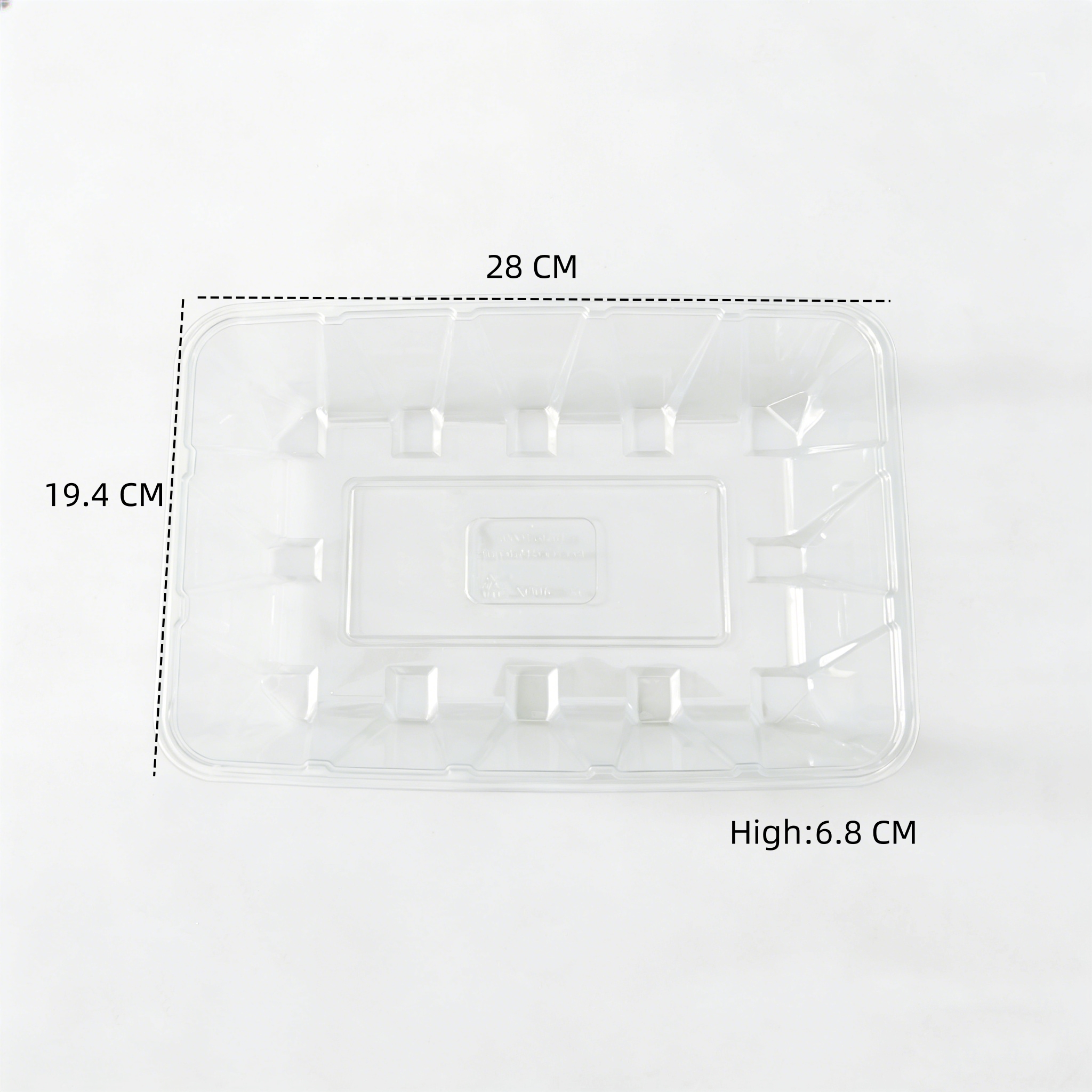
HB-MG40 OZ, a 28 × 19.4 × 6.8 cm PET tray from the trays packaging entry, listed as stackable and MAP line compatible.
Side-by-side comparison of the terms
| Term | Axis it describes | What it actually tells you | Catalog example | Confirm before ordering |
|---|---|---|---|---|
| Fruit & vegetable container | Intended contents | Umbrella use term; says nothing about closure | HB-SG300ML; HB-PG02 (22.5 × 12 × 10 cm); HB-7123 (12.9 × 9.7 × 7.2 cm) | Drawing, lid type, fill volume |
| Trays packaging | Format | Shallow open format, often closed by a separate lid or film | HB-MG40 OZ (28 × 19.4 × 6.8 cm); HB-MG24 OZ (18.6 × 18.6 × 8.9 cm); HB-T9333 (16.8 × 11.4 × 3 cm) | Closure method, MAP line compatibility |
| Compartment tray | Internal structure | Divided base keeps components apart | Indexed in the trays packaging type list | Number and depth of cells, usable volume per cell |
| Clamshell | Construction | One-piece hinged base and lid | Indexed as a form name under the salad container entry | Hinge behaviour, lid retention, sample |
| Salad container | Application | Wet, dressed or mixed contents with functional claims attached | HB5224 (17.1 × 12.3 × 5.6 cm); HB1720 in the same group | Leakproof and airtight performance, compartment option |
| Tamper evident | Closure evidence | Opening leaves visible evidence | HB-8OZ; HB-20 OZ; HB-24 OZ; HB-32 OZ | Closure mechanism, opening test on a sample |

HB5224 salad container: clear PET body, secure lid closure and stackable storage, listed with an optional compartment design.
What OZ and ML actually mean on a produce pack
Size labels are the most frequently mis-compared field in the category. One US fluid ounce equals 29.5735295625 millilitres, so the common nominal sizes convert as follows.
| Nominal size | Approximate volume (calculated) | Notes |
|---|---|---|
| 8 oz | approx. 236.6 ml | HB-8OZ tamper evident model |
| 16 oz | approx. 473.2 ml | Conversion reference only |
| 20 oz | approx. 591.5 ml | HB-20 OZ tamper evident model |
| 24 oz | approx. 709.8 ml | HB-24 OZ tamper evident model |
| 32 oz | approx. 946.4 ml | HB-32 OZ within the same series |
Two cautions apply. First, an oz designation on packaging is a trade name, not a measured fill volume; actual capacity depends on wall geometry and fill line and should be confirmed on the data sheet. Second, this range mixes naming systems: HB-SG300ML is named in millilitres while the tamper evident series is named in ounces. Converting 300 ml at the same factor gives approximately 10.1 oz (calculated), which places it between the 8 oz and 20 oz members of the series on nominal volume alone. Nominal volume is not the same as external footprint, and a tall narrow 20 oz pack may take less shelf depth than a shallow 24 oz pack. Compare external dimensions and stack height, not volume alone.
Compliance vocabulary: what food grade and food contact safe should mean
The catalog descriptions in this range state food-grade BPA-free material compliant with food contact safety standards. That is a supplier statement, and the useful question is which documents support it for the market you sell into.
In the EU the framework is Regulation (EC) No 1935/2004. Article 3 requires that materials do not transfer constituents to food in quantities that could endanger health, bring about an unacceptable change in the composition of the food, or deteriorate its organoleptic characteristics. Article 15 requires the words for food contact or a specific indication of use, or the wine-glass-and-fork symbol, unless the article is by its nature clearly intended for food contact. Article 16 requires traceability one step back and one step forward. For plastics, Regulation (EU) No 10/2011 adds the Union list of authorised substances in Annex I, the overall migration limit in Article 12, and the written declaration of compliance required at stages other than retail under Article 15.
The United States runs a different structure. Polyethylene phthalate polymers, the family that includes PET, are permitted for food-contact articles under 21 CFR 177.1630, and olefin polymers including polypropylene and polyethylene under 21 CFR 177.1520, each subject to the specifications and conditions of use in the regulation. The two regimes are not interchangeable: a sheet that satisfies the US listing does not by itself establish EU compliance, and a declaration written for one market should not be presented as evidence for the other.
Two further items belong on the checklist because they come from retail requirements rather than from the material specification. The GS1 Fresh Fruit and Vegetable Traceability Guideline covers case coding and labelling practice across the fresh produce supply chain. And for anything sold into the EU, the packaging dimension now has its own dates: recyclability of all packaging from 1 January 2030, and 30% recycled content in the plastic part of contact-sensitive PET-major packaging from the same date, with recycled content required to come through an authorised recycling route under Regulation (EU) 2022/1616.
Step by step: reading a catalog line before you request a quote
- Record the model code first. HB-MG40 OZ, HB1720 and HB-8OZ are unambiguous in a way that large salad clamshell is not.
- Extract material and dimensions. For HB-MG40 OZ that is PET and 28 × 19.4 × 6.8 cm; for HB5224 it is PET and 17.1 × 12.3 × 5.6 cm.
- Identify which axis the name uses. Salad container is application, clamshell is construction, compartment is structure, tamper evident is closure evidence, trays packaging is format.
- Check the property you actually need against a sample and a written specification. Leakproof, airtight, tamper evident, refrigerator safe and MAP line compatible are all claims that should survive a trial.
- Normalise the size. Convert ounces to millilitres, then compare external dimensions and stack height.
- Match documents to the destination market. Ask for the declaration of compliance, the migration test report and the labelling artwork for the specific article.
- Settle the customisation boundary. Custom shape, colour, embossing and logo printing are listed options; the open point is which of them needs new tooling and what that does to the sampling schedule.
The sequence matters because each step removes an ambiguity the next step would otherwise inherit. A quote built on a name rather than a model code cannot be compared with a second quote, and a sample approved against the wrong axis locks the error into production.
Matching the term to the job
The definitions become useful when they are read against what the pack has to do.
- Presentation-led retail: a clear tray or container lets the product sell itself. The listed clear transparent body across the tray and container families exists for that reason, and stackability protects shelf and warehouse space.
- Wet or dressed contents: the salad container's stated leakproof and airtight lid, plus its optional compartment design, addresses the specific failure mode of dressing leaking in transit.
- Mixed items sold as one unit: a compartment base keeps components apart without a second pack, and the divided geometry should be reflected in the migration test scope.
- Transit protection: the trays' rigid, anti-deformation structure and the salad container's anti-break material are both stated as damage-reduction measures, which is a transport concern rather than a display one.
- Brand and merchandising control: custom shape, colour, embossing and logo printing are listed across the tray, container and tamper evident ranges.
- Dry fruit and ambient lines: the tamper evident series lists dry fruit among its applications, and closure evidence matters most where the pack is handled outside a chilled cabinet.
Two cautions keep this honest. Ventilation and condensation performance are not described in the supplied specifications for these models, so if your product needs airflow, raise it as a separate requirement and ask what the supplier can provide rather than assuming a clear PET wall delivers it. And refrigerator safe describes a use condition for the fruit and vegetable container family; the supplied entries do not state microwave suitability, so that assumption should not travel into a specification.
Checking the manufacturer behind the glossary
Terminology is the easy part of supplier selection. The harder part is confirming that the business behind the catalog actually converts sheet into the packs it lists. Weifang Chuanhe New Material Co., Ltd. is a thermoformed packaging manufacturer founded in 2013 and based in Weifang, Shandong, next to Qingdao Port. The company reports a 62,000 m² facility, 51 to 100 employees, 54,000 tonnes of annual output and a five-engineer R&D team, with product lines for baking packaging and fruit and vegetable packaging. Its stated equipment includes 20 fully automatic thermoforming machines and 20 standard thermoforming machines, including four Kiefel machines imported from Germany, plus four PET sheet extrusion lines, two PP sheet extrusion lines and an in-house mould workshop. It reports CE, BRC, FDA, EU and SGS certification, and a 100% export ratio across the EU, the United States, North America, Latin America and the Middle East.
Those details are company-reported, so treat them as claims to verify rather than as independent findings. The verification is straightforward: ask for the factory address and a line list, ask for the declaration of compliance for the specific resin and article you are buying, ask for a sample of the exact model code, and ask who owns the tooling if a custom shape is involved. Sheet extrusion in-house is worth noting because it puts the material and the forming step inside one quality system, but it does not remove the need to read the declaration.

Workshop view from the Weifang production base, where PET and PP sheet are thermoformed into containers, trays and tamper evident packs.
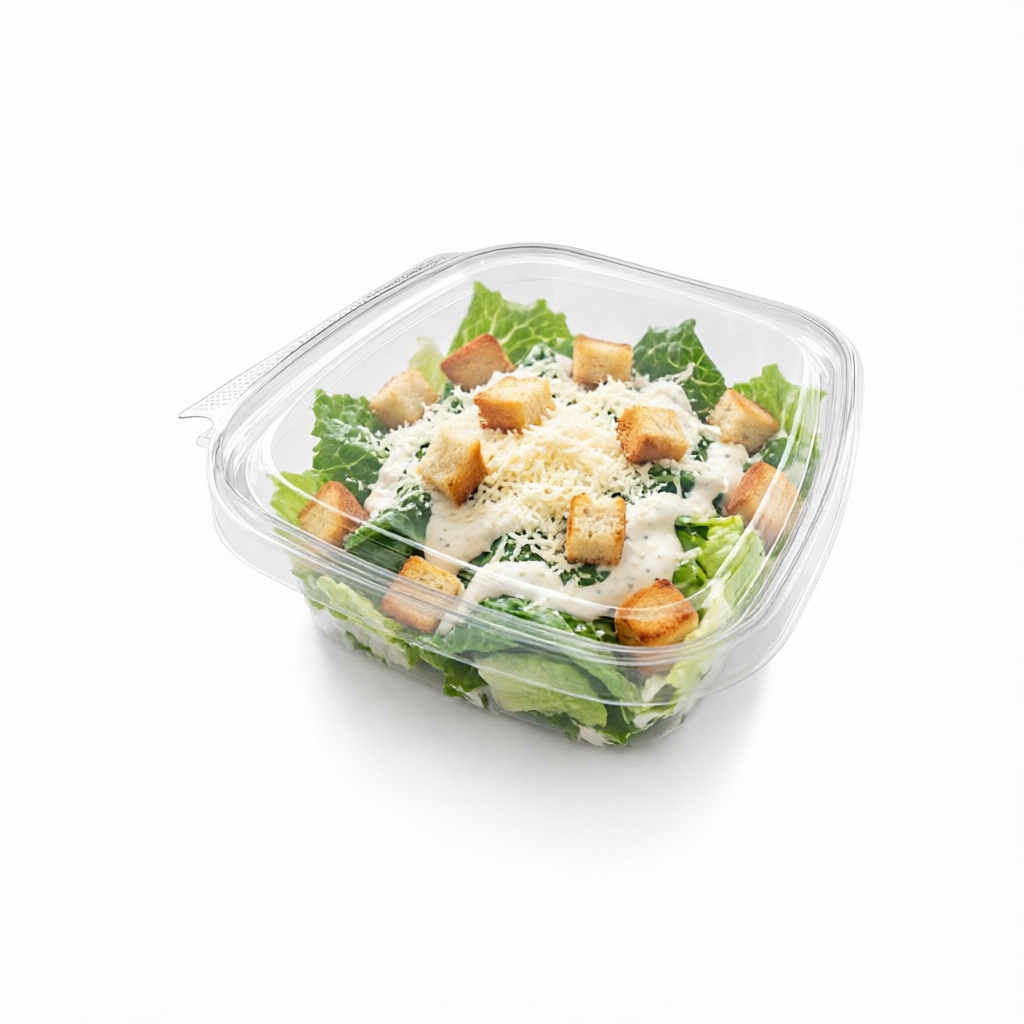
HB-24 OZ tamper evident container at 17.2 × 15.5 × 4.8 cm, one of four nominal sizes in the series.
FAQ
Who are fruit and vegetable packaging manufacturers?
They are converters that turn plastic sheet into finished packs: containers, trays, salad boxes, clamshells and tamper evident packs, usually by thermoforming, and often with sheet extrusion in the same facility. A manufacturer is not the same as a trader or distributor, and the distinction changes what you can verify. Weifang Chuanhe New Material Co., Ltd. is one example: a Weifang-based thermoformer reporting 20 fully automatic and 20 standard thermoforming machines, four PET and two PP sheet extrusion lines, an in-house mould workshop and a 100% export ratio. Whatever names are on your shortlist, ask for the factory address, the machine list, the declaration of compliance for the article, and a sample of the exact model code before comparing prices.
What is the difference between a compartment tray and a clamshell?
Compartment describes the inside of the pack; clamshell describes how the pack is built. A compartment tray has a divided base, while a clamshell has base and lid formed as one hinged piece. The two are independent, so a quotation should specify both: the number and depth of cells, and the closure construction. A listing that names only one of them has told you half of what you need to know.
Are these PET containers refrigerator safe, and are they microwave safe?
The CHUAN HE fruit and vegetable container entries state refrigerator-safe use, which suits chilled storage and display in a fridge or cold cabinet. The supplied specifications do not state microwave suitability for these models, so microwave use should not be assumed. Where heat tolerance is required, raise it as a separate requirement and ask for the material and the stated temperature range in writing.
What makes a container tamper evident?
A tamper evident container is designed so that opening it leaves visible evidence, which is a property of the closure rather than of the container shape. The question to ask is how the closure records the opening: what breaks, what deforms, and what the consumer actually sees. The HB-8OZ, HB-20 OZ, HB-24 OZ and HB-32 OZ models are indexed as tamper evident in PET, and the practical check is a sample opened by hand under the conditions your retail customer will use.
How do I compare an 8 oz pack with a 300 ml pack?
Convert first. Eight US fluid ounces is approximately 236.6 ml at 29.5735295625 ml per ounce, and 300 ml is approximately 10.1 oz (calculated). Then compare external dimensions, stack height and fill volume on the data sheet, because the ounce designation is a trade name rather than a measured capacity. Two packs with the same nominal ounces can occupy different shelf depth.
Conclusion
The three terms in the title are not alternatives on a shortlist; they are three different questions. Compartment asks what is inside the pack. Clamshell asks how the pack is built. Tamper evident asks what the closure proves. Add the fourth question — which material and which compliance route — and the catalog stops being a list of names and becomes a specification.
The working method is short. Take the model code, not the headline. Extract material and dimensions. Identify which axis the name is using. Test the property you actually need. Match the documents to the destination market. Record the answer once per SKU family, and the next quotation cycle becomes a comparison instead of a translation exercise.
The full CHUAN HE catalog covering containers, trays, salad boxes and tamper evident packs is available as a downloadable PDF, and samples of specific models can be requested together with the dimensions and closure type you need. Download the product catalog (PDF).
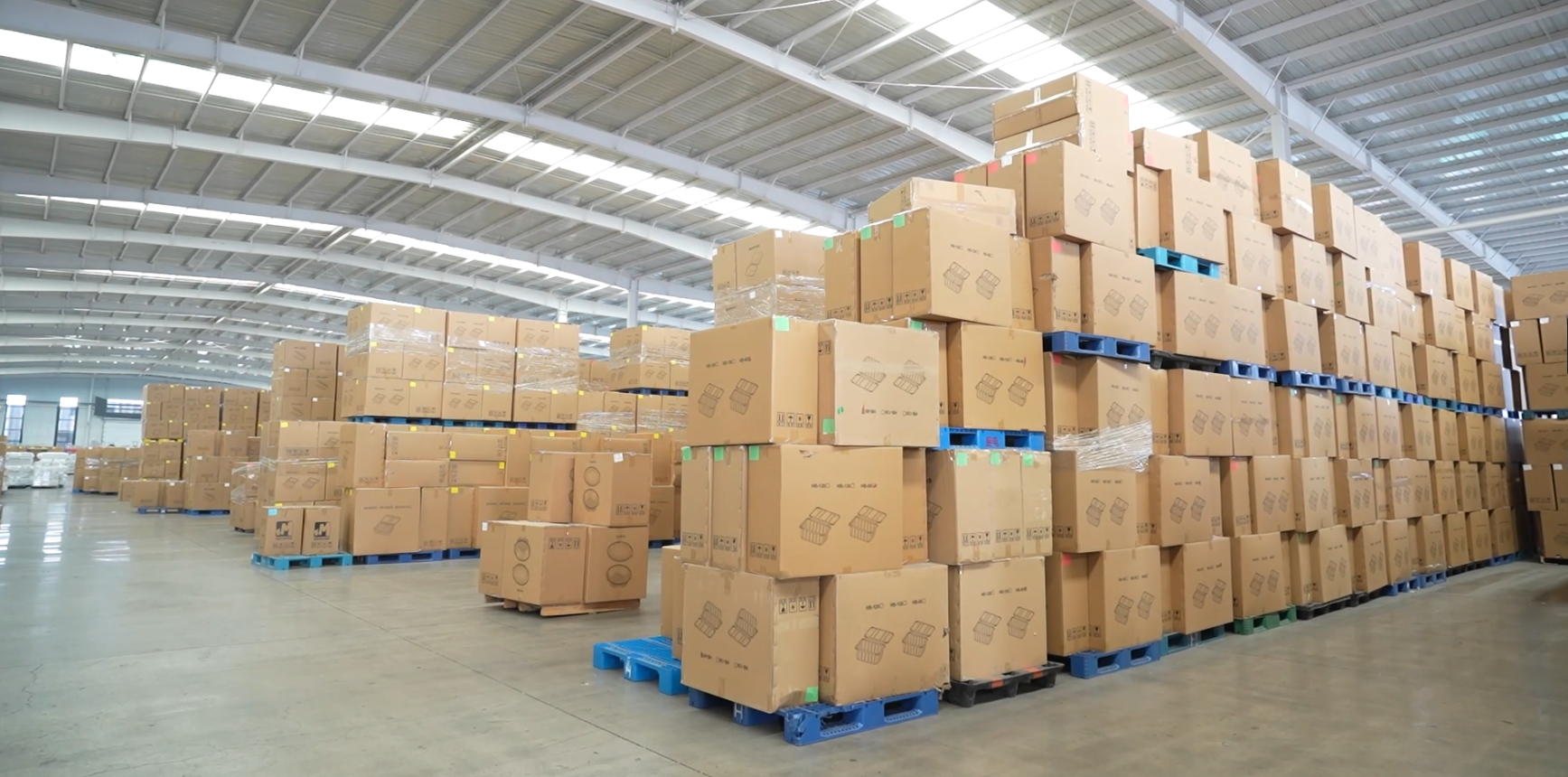
Stock and export preparation for PET produce containers, trays and tamper evident packs.
Have Questions or Need More Details?
Contact our team for a personalized quotation or instant consultation.
Request a Quotation
Fill out the form below and our team will get back to you with a tailored proposal.
WhatsApp Direct Chat
Prefer to chat in real-time? Message us on WhatsApp for instant assistance & quick answers.
- Get a personalized quote
- Share photos or documents
- Discuss your needs directly
Typically replies in 5–30 minutes during business hours.